OCI Power Distributed Energy Resources Part Leader Choi In-sun: “An Auction System Is Needed to Expand the Solar + ESS Market”
[Industry News, Reporter Lee Ju-ya] OCI is expanding its business portfolio around affiliate OCI Power to accelerate its energy solutions business. In particular, through the acquisition of the business operations of KACO New Energy, a subsidiary of Germany’s KACO New Energy, OCI has expanded beyond its existing solar power solution business to secure manufacturing technologies for solar inverters, PCS (Power Conditioning Systems), and related equipment.
By adding KACO New Energy’s manufacturing technologies to OCI’s existing ESS engineering and deployment capabilities, OCI Power has been able to create greater synergies in the ESS business. The company is also identifying new business opportunities through application development for the rapidly growing distributed energy market.
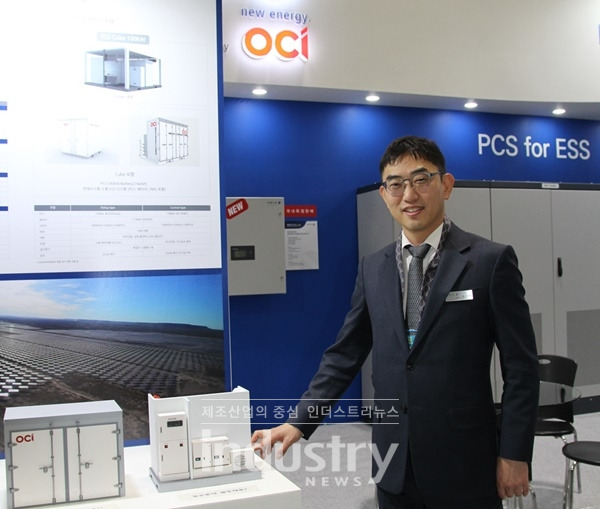 OCI Power Distributed Energy Resources Part Leader Choi In-sun said, “To expand the renewable energy and ESS markets, it is necessary to consider introducing an auction system.” [Photo = Industry News]
For ESS, engineering capabilities for the overall system are essential, including designing and operating PCS and battery capacities according to the intended application and site conditions, and we have secured these capabilities. In addition, we have accumulated deployment expertise by implementing a 51MWh ESS at our Gunsan plant in accordance with OCI Power’s own installation process. We are also focusing on operating and maintaining the installed ESS systems, and based on this experience, we are conducting various studies on lifespan analysis and life extension.
Q. What are the key features of the ESS systems OCI Power is focusing on?
OCI Power offers products across a wide range of ESS-related areas and conducts both EPC/SI businesses that engineer and deploy systems tailored to customers and standalone product sales. Based on OCI’s capabilities in the existing IPP (Independent Power Producer) business, we operate a one-stop service model from the customer’s perspective, enabling solar and ESS projects to proceed seamlessly from development and financing arrangements to EPC and operation. In particular, we provide solutions that help individual customers overcome difficulties in adopting ESS by combining financial products with the ESS Cube, an all-in-one system for small-scale solar power plants integrating the battery, PCS, PMS, and enclosure.
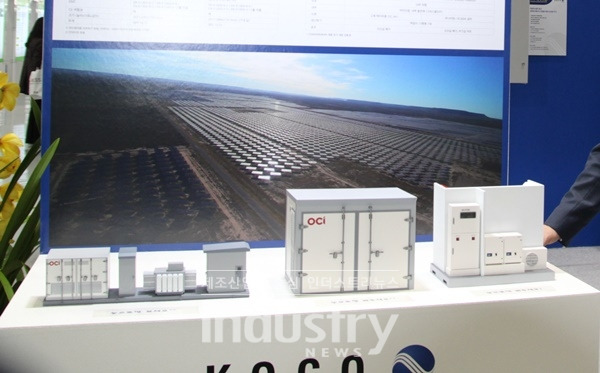 Product image of the IPS 1MW and 2MW integrated high-efficiency distributed energy systems and the ESS Cube 100kW integrating PCS, battery, PMS, and enclosure [Photo = Industry News]
For the ESS market to expand, stable adoption through financial products is essential. This requires optimized ESS design, safe product supply and installation by manufacturers, and reliable operation. Accordingly, it is necessary to demonstrate both the safety and profitability of ESS businesses by providing customers with safe and reliable products and guaranteeing their performance. Based on OCI’s ten years of solar power plant construction and operating data, we support smooth financing by verifying financial soundness through optimized ESS capacity design. In addition, through safe and reliable product design and construction and secure O&M, we support customers so that projects can be operated without problems for 15 years.
Q. What is your view on major ESS market issues and trends, including battery supply, fires, REC weighting, and the trend toward smaller systems?
The rapid growth of the ESS market in 2018 created significant difficulties in battery supply, which caused the industry to miss an opportunity for even stronger growth. However, the fire incidents that began occurring in the second half of the year reminded us that unchecked expansion without sufficient verification can lead to even greater losses. I believe this is a critical time to return to the mindset we had when the ESS business first began and to prioritize ESS design and deployment based on safety and reliability. We should also remember how sodium-sulfur batteries lost their market leadership to lithium-based batteries following a series of fires and take care not to repeat the same mistake.
Although it is disappointing that the REC weighting will be reduced to 4.0 beginning in 2020, with installed solar capacity now exceeding 2GW, REC buyers under the RPS system have already secured more than 90% of the REC volumes they require and therefore feel less urgency to purchase additional certificates. As a result, it will be difficult to expand the market through REC weighting alone. To expand both renewable energy and ESS markets, an auction system should be considered. For this to happen, regulations should also be improved to allow renewable energy project developers greater flexibility in designing the DC-side configuration, including solar panel capacity, currently limited to within 110% of inverter capacity, and ESS configuration.
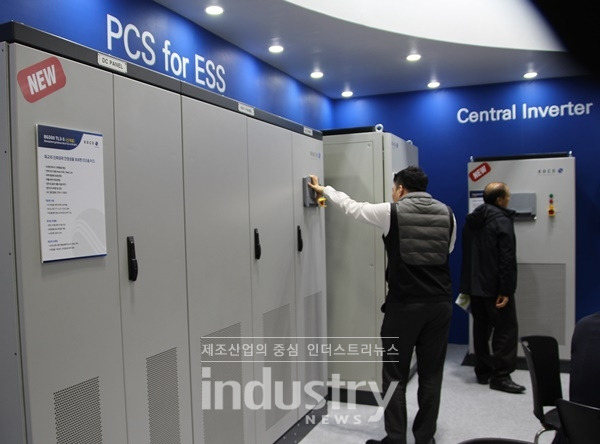 The newly launched ESS PCS “BG500 TL3-S” provides reliability and safety. [Photo = Industry News]
In an electricity market where electricity historically could not be stored, conventional market economy principles did not function effectively. In addition, as renewable energy penetration increases, grid reliability can inevitably decline, resulting in significant social costs. However, ESS participation in the power grid can help address both market and technical challenges. Countries such as those in Europe and Japan, where renewable energy has already reached a certain share of the energy mix, are applying various policies and technologies to reduce the burden of renewable energy on the grid, and ESS is the technology best positioned to provide direct control. Accordingly, policy support for commercialization of these technologies should be strengthened so that Korea’s ESS industry can become more competitive overseas.
Q. What are OCI Power’s ESS business plans and goals for this year?
OCI has expanded its business scope from its existing IPP and EPC businesses into manufacturing, making stable integration of these businesses important. We therefore plan to achieve domestic sales growth by increasing synergies between our existing businesses and standalone product businesses, while also working to expand into overseas markets where we already have strong capabilities.
Source :
인더스트리뉴스 (Industry News)


 List