[Industry News, Reporter Lee Ju-ya] OCI Power is concentrating its R&D capabilities on establishing safe system configurations, developing control algorithms that take battery safety into account, and creating solutions to prevent the spread of fires in order to address safety, one of the most significant challenges facing the ESS industry.
Choi In-sun, Head of OCI Power’s R&D Center, said, “These efforts are beginning to produce positive signals, including advancing to the final candidate stage in overseas tenders. However, projects are currently being delayed due to issues such as the global economic slowdown and COVID-19.” He added, “We are also conducting a battery reuse project with Hyundai Motor Company and plan to carry out pilot operations in Korea and the United States.”
'
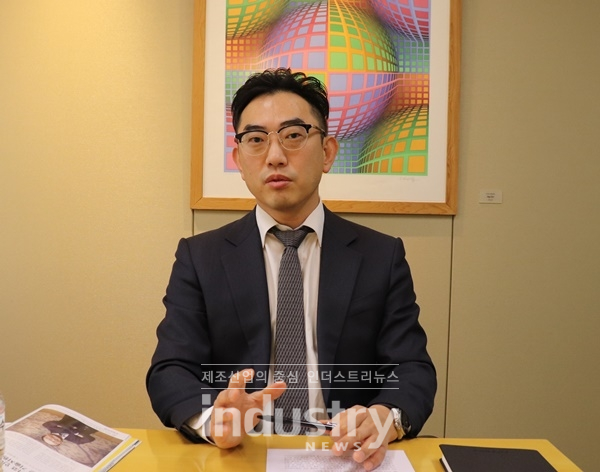 Choi In-sun, Head of OCI Power’s R&D Center, said, “For expansion into overseas markets, it is urgently necessary to validate technologies for ‘multifunctional ESS’ capable of supporting a variety of applications.” [Photo = Industry News]
Choi also emphasized that “restoring confidence is the most important factor in expanding the ESS market,” adding, “This appears to be a shared challenge for everyone from battery manufacturers to PCS, system integration, and EPC companies.” He continued, “OCI Power is also continuously working in this direction by analyzing various safety-related standards, including UL 9540 and IFC, and attempting to apply them directly to power plants that we operate ourselves.”
Choi said, “We are working to restore customer confidence in ESS by directly investing in new technologies, verifying them ourselves, and then introducing them to customers. These efforts have, in turn, served as validation of OCI Power’s ESS technologies and have resulted in positive evaluations.” He added, “Through technical reviews, development, and verification, we are increasing customer confidence and expanding the market, and as part of these efforts, we are also achieving meaningful results in overseas tenders.”
What are the key features of the ESS products OCI Power is focusing on this year?
We recently completed development of our new ESS PCS product, the OS500, and it is currently undergoing testing. KC certification and SGSF performance testing are scheduled to be completed before June. The OS500 is designed to accommodate a variety of battery types. We have also introduced a distributed system architecture to the PMS, resolving issues such as control delays or failures that can occur at large sites and creating a lighter, more flexible, and safer system.
OCI Power manages the entire ESS process, from equipment manufacturing and site construction to testing, through rigorous procedures. We systematize potential issues that may arise at sites and the required response measures so that customers’ valuable assets can be protected and operated effectively.
What solutions are being applied to ensure ESS system safety?
To ensure ESS safety, we apply all government fire prevention measures during system construction and implement safe construction practices that include enhanced grounding and measures to prevent condensation. We have also established methods for detecting and controlling faults on the grounding side and within the DC network between batteries and PCS. OCI-manufactured vacuum insulation panels are used in the enclosure, providing excellent fire-spread prevention and thermal insulation performance.
We have also deployed lightweight and stable distributed PMS systems at project sites to prevent control delays or failures and enable rapid response if an issue occurs. In addition, we prepare detailed response measures for potential site issues and provide them to customers. Based on these procedures, our Customer Service team responds in a way that minimizes inconvenience to customers while maintaining the highest possible level of system stability.
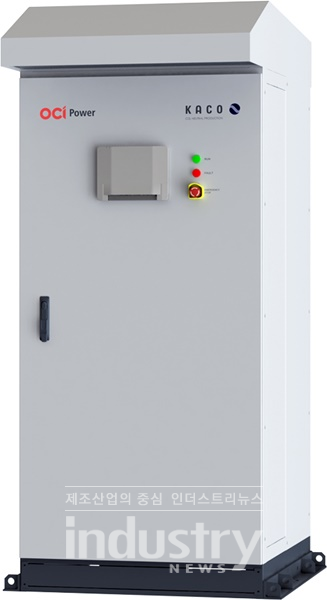 OCI Power’s ESS PCS “OS500 OD” is an IP65-rated outdoor product that offers competitive pricing, enhanced safety, and reduced construction costs. [Photo = OCI Power]
The downturn in Korea’s ESS market caused by falling REC prices is an even more significant issue than concerns over reliability following fire incidents. However, with SMP prices continuing to decline amid the current global oil market disruption, there have often been cases in which REC prices increased, providing some grounds for optimism. Fundamentally, relying solely on REC-based incentives places a burden on both the government and the market. New business models incorporating ESS technologies that can directly contribute to the power system should therefore be developed.
In overseas markets, multifunctional ESS systems utilizing diverse electricity pricing structures are already becoming more common. Rather than being limited to simple solar-linked applications or demand reduction, these systems combine multiple functions to address challenges within the power system and create a virtuous market cycle. To achieve this, policy improvements are needed to make it easier for ESS to participate in electricity markets, along with greater technical openness so that various ESS functions can be applied to the power system.
What expertise is required to build and operate safe ESS systems?
In an ESS, batteries composed of chemical materials account for most of the system. If a system is built without a clear understanding of battery characteristics, problems are inevitable. ESS fire incidents are a representative example, and we believe the only solution is to approach system design and construction with greater caution.
Problems emerged when systems were built rapidly and at low cost due to economic pressures while being installed alongside solar power, which is already considered close to grid parity. Therefore, batteries must be approached carefully, and systems must be designed appropriately around their characteristics. Thorough evaluation of multiple factors is essential, including an understanding of the power system, safe civil and architectural engineering, and fire protection systems for fire detection and prevention of fire propagation.
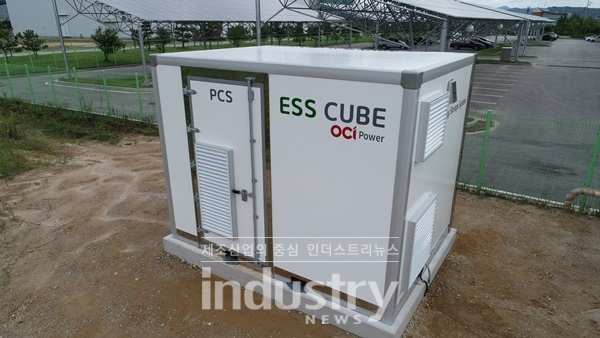 An ESS Cube with a 100kW output and 342kWh battery capacity is installed at OCI Specialty’s plant in Gongju,
Chungcheongnam-do. [Photo = OCI Power]
We believe technologies using ESS should be reflected in policy so that ESS can provide direct benefits to the power system. The ESS industry now needs to move beyond the Korean market and expand globally. To achieve this, Korea must analyze the “multifunctional ESS” concepts being considered overseas, rapidly apply them domestically, and validate the relevant technologies.
Overseas markets, particularly the United States, tend to take a practical approach, installing ESS primarily around functions genuinely needed by the power system. As a result, there is strong interest in multifunctional ESS capable of supporting a variety of applications. A large number of ESS installations alone does not guarantee export competitiveness. Companies need ideas about where and how ESS should be used, as well as proven track records demonstrating those applications. Therefore, revitalizing the ESS market requires policies centered not merely on REC weighting but on solutions that the power system genuinely needs.
What projects and marketing strategies are planned for this year?
This year, following the end of the REC weighting of 5.0, construction work on previously delayed investments proceeded during the first half of the year. However, declining REC prices have made reductions in capital investment costs essential. Lower battery prices are the most important factor in reducing investment costs, and we understand that battery manufacturers are also making significant efforts to reduce production costs.
OCI Power has also developed a cost-effective and reliable PCS. The OS500 is designed as an IP65-rated outdoor product and is competitively priced. One of the key advantages of an outdoor PCS is that it can minimize building construction costs. If both the PCS and electrical equipment are converted to outdoor specifications, the building area required for an ESS can be reduced by as much as half. This can reduce construction costs while also improving safety by mitigating issues such as condensation. Based on these competitive advantages, we plan to further expand our business. We are making every effort to provide customers with better products at more economical prices.
Source :
인더스트리뉴스 (Industry News)


 List
List