Follow OCI Power's progress through the latest news, resources, and project stories.
The need to protect Korean technology is gaining attention as Chinese products account for more than 80% of the market
Supply chain restructuring emerges as a key issue amid the government’s strengthened NDC and concerns over grid stability
Industry players begin discussions on joint strategies to strengthen the domestic solar inverter industry
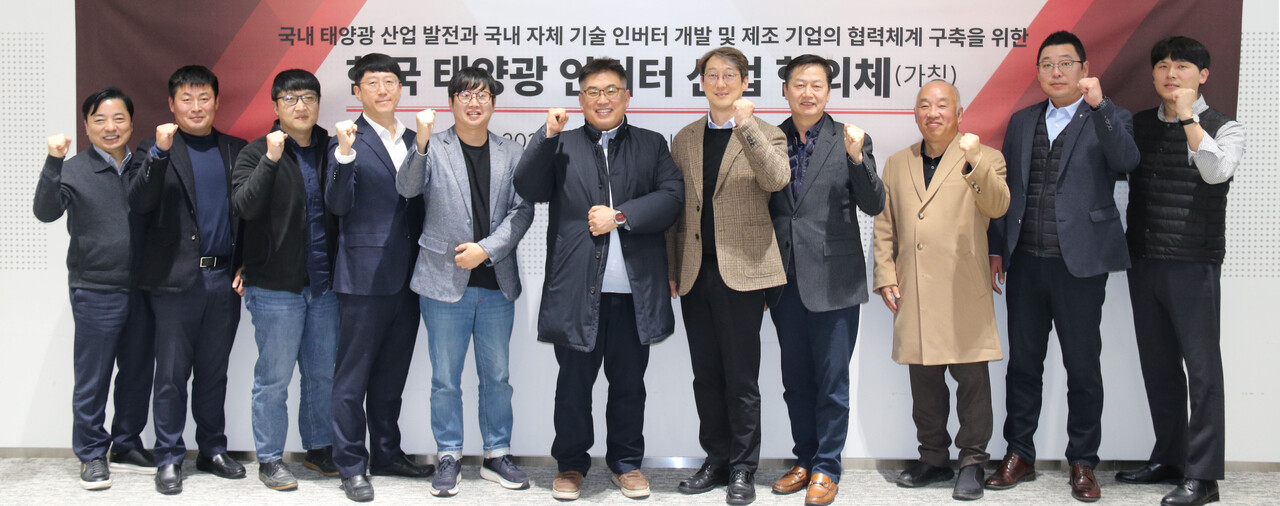
Representatives of Korean inverter manufacturers pose for a commemorative photo following the launch of the industry association. [Photo: OCI Power]
As concerns grow over the increasing penetration of foreign-made equipment and grid security amid the expansion of renewable energy, the strategic value of domestically manufactured solar inverters is once again gaining attention. In response, Korean inverter manufacturers have formed an alliance for the first time and begun joint efforts to protect technological sovereignty and strengthen the domestic industrial base.
The Korea Solar Inverter Industry Association (tentative name) held its first kick-off meeting on the 18th at OSCO in Cheongju, Chungcheongbuk-do, officially launching a joint response framework for the domestic inverter industry. Seven companies participated in the association: OCI Power, DASSTECH, ECOS, Dongyang E&P, DIK, Kumbi Electronics, and Inno Electric. All seven companies develop and manufacture solar inverters using their own technologies in Korea.
The launch marks the first official alliance among industry players amid growing calls for the preferential adoption of domestically manufactured products in equipment procurement by the government and public institutions. The association aims to identify practical policy alternatives and discuss strategies for the survival and growth of Korean manufacturers amid rapidly changing conditions in the renewable energy market.
The crisis facing Korea’s inverter industry is also evident in market statistics. The domestic market is estimated to be worth up to KRW 1 trillion annually, with more than 80% currently occupied by foreign-made products, primarily from China. Including simple ODM products, the foreign share is estimated to approach 90%. With foreign products having penetrated most market segments except for single-phase products and certain procurement areas, concerns have been raised that Korea’s domestic technology base is rapidly weakening.
These developments have also raised concerns from the perspective of grid security. In recent cases overseas, unauthorized communication modules were reportedly discovered in Chinese-made inverters and battery equipment, raising concerns over the possibility of unauthorized control or firewall bypasses and fueling debate over grid stability. Solar inverters are not simply power conversion devices; they also perform critical functions such as measuring power generation, controlling the power system, and real-time monitoring. As a result, equipment reliability is increasingly regarded as a direct component of energy security.
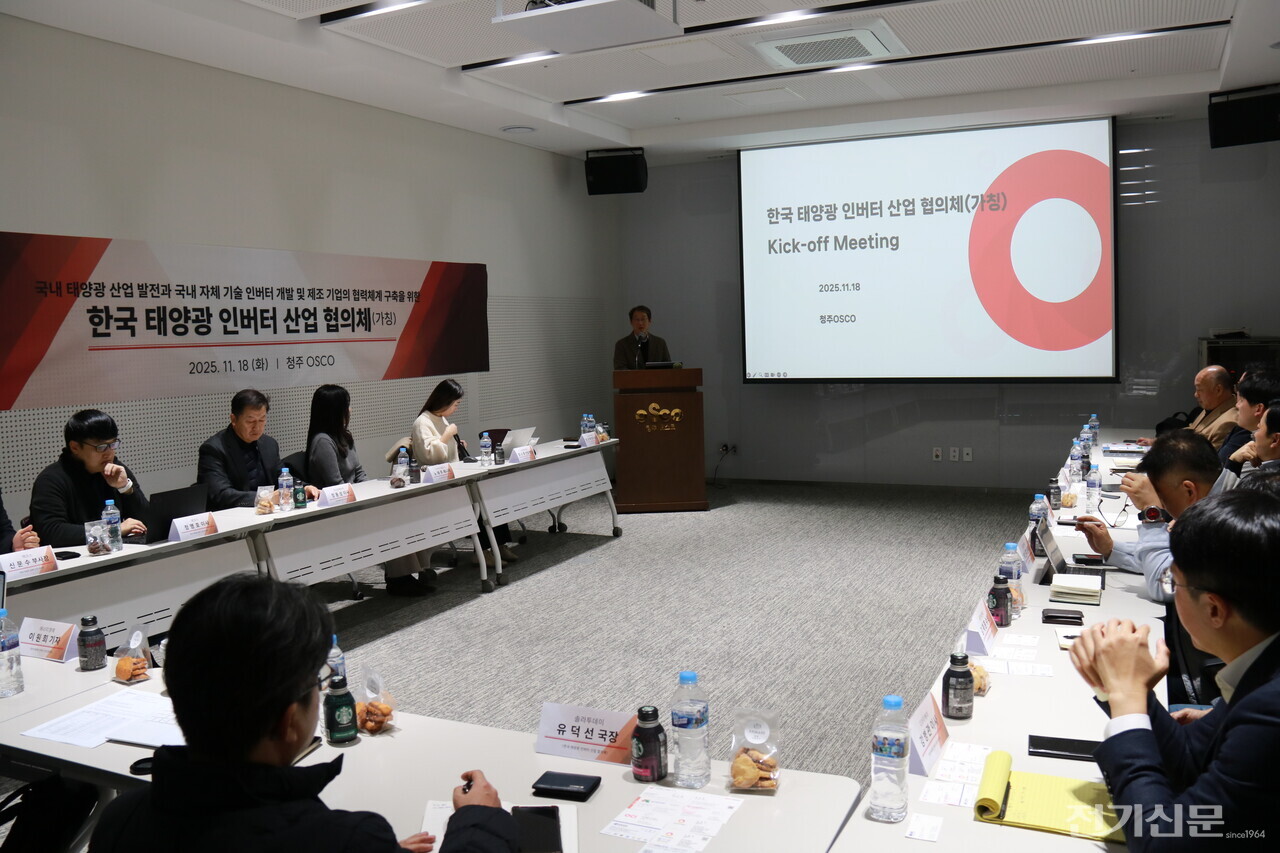
The Korea Solar Inverter Industry Association holds its kick-off meeting. [Photo: OCI Power]
Against this backdrop, the government’s policies to expand solar power are expected to mark a major turning point. At a plenary meeting of the 2050 Carbon Neutrality and Green Growth Commission, the government presented a strengthened 2035 national greenhouse gas reduction target, raising the power sector’s reduction target to 68.8–75.3%. It has also established plans to deploy 100 GW of renewable energy by 2030, including 80 GW of solar capacity. With the current domestic installed capacity standing at approximately 27 GW, more than 10 GW would need to be installed annually over the next five years, highlighting the simultaneous need for supply chain restructuring and localization strategies.
Despite this, the domestic inverter industry has historically had a relatively weak collective voice. The association shares the view that the existing solar business structure has repeatedly favored ODM inverters based on supply chain considerations, while individual manufacturers’ concerns have not been effectively consolidated into common industry demands.
Based on this shared understanding, the association plans to pursue practical activities beginning with the kick-off meeting, including participation in policy discussions, consolidation of industry opinions, and joint proposals to the National Assembly and government. It will also gradually review measures to strengthen the domestic inverter industry, including changes to power grid policies, improvements to the KS certification system, and enhancements to public procurement standards.
Source : 전기신문 (Electimes)


 List
List