Follow OCI Power's progress through the latest news, resources, and project stories.
By Hye-won Park | The Herald Business
SEOUL, South Korea — “The key to success in B2B business is proactive, on-site customer service. Through this approach, we aim to expand our business beyond Korea and into global markets.”
Sung Yeop Kim, CEO of OCI Power, a Korean solar inverter manufacturer, shared this vision during an interview with The Herald Business at OCI's headquarters in Jung-gu, Seoul, on October 12.
Having previously focused primarily on the domestic market, OCI Power is now preparing to expand its global presence in response to rapidly growing electricity demand driven by the artificial intelligence (AI) industry.
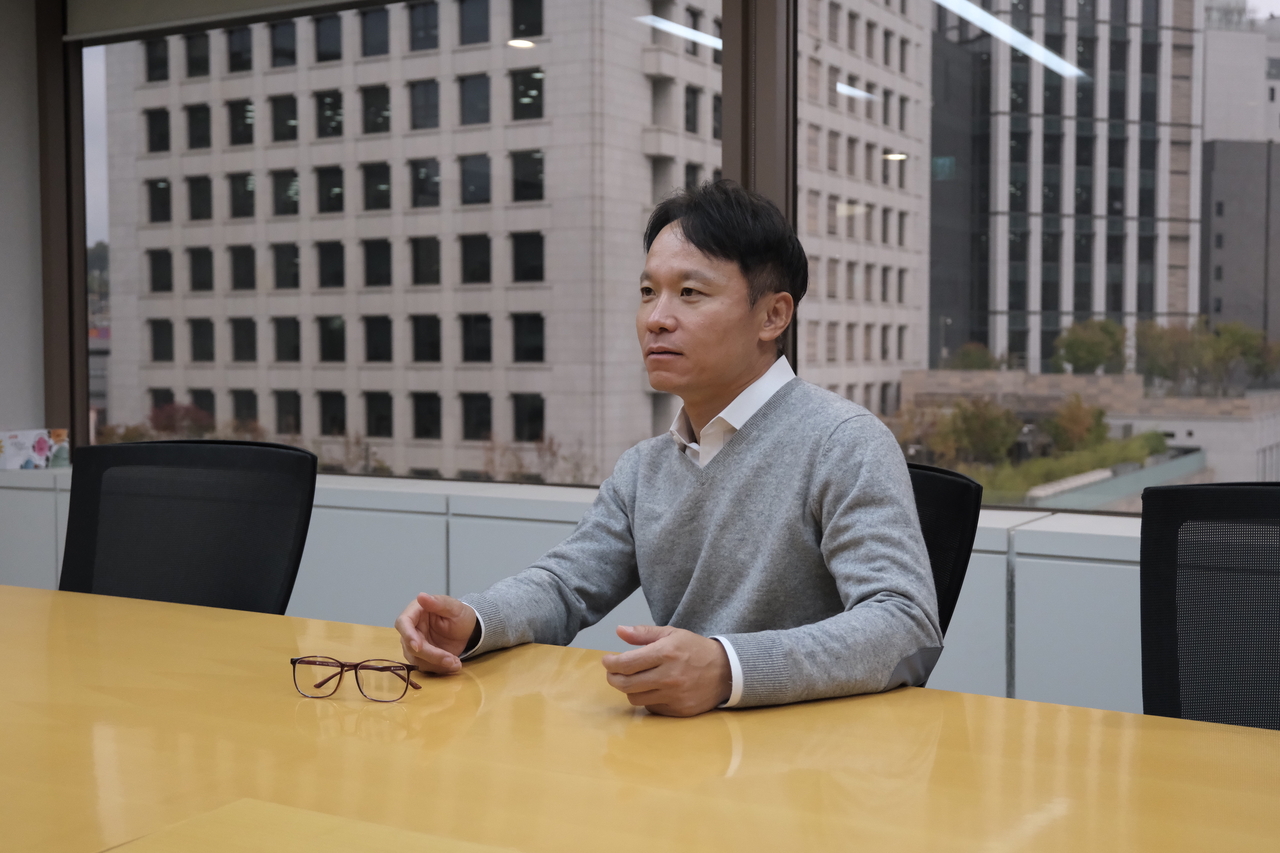
▲ Sung Yeop Kim, CEO of OCI Power, during an interview with The Herald Business at OCI headquarters on October 12. Photo: Hye-won Park
OCI Power traces its origins to the Korean subsidiary of KACO, a German solar inverter manufacturer.
In 2019, as the global solar industry faced challenging market conditions, Siemens acquired KACO's global operations, while OCI Group separately acquired its Korean business, laying the foundation for today's OCI Power.
Within OCI Group, which specializes in semiconductor and solar-related chemical materials, OCI Power occupies a distinctive position as a manufacturer of solar power equipment.
While OCI Holdings represents the upstream segment of the solar value chain through polysilicon production, OCI Power operates at the downstream end, supplying essential equipment for solar power generation.
Its flagship products are solar inverters, which convert electricity generated by sunlight into a form suitable for use in homes and industrial facilities.
The company also manufactures power conversion systems (PCS) for energy storage systems (ESS), which are gaining increasing attention for their role in ensuring stable electricity supply.
Kim joined OCI Power in March of last year to establish a clearer business direction following the acquisition of KACO's Korean operations.
One of his primary objectives was to transform OCI Power into a fully B2B-oriented company.
Kim began his career at IBM in 1999 and subsequently held senior leadership positions, including Northeast Asia Representative at Danfoss Korea, an energy solutions company, and Country President of Vertiv Korea, a data center infrastructure provider.
Through these roles, he developed extensive expertise in the data center and energy infrastructure industries.
“The chemical industry is capital-intensive and largely driven by government-related projects, whereas the equipment business is entirely B2B,” Kim explained. “Understanding market trends and proactively communicating our capabilities were among our most important priorities.”
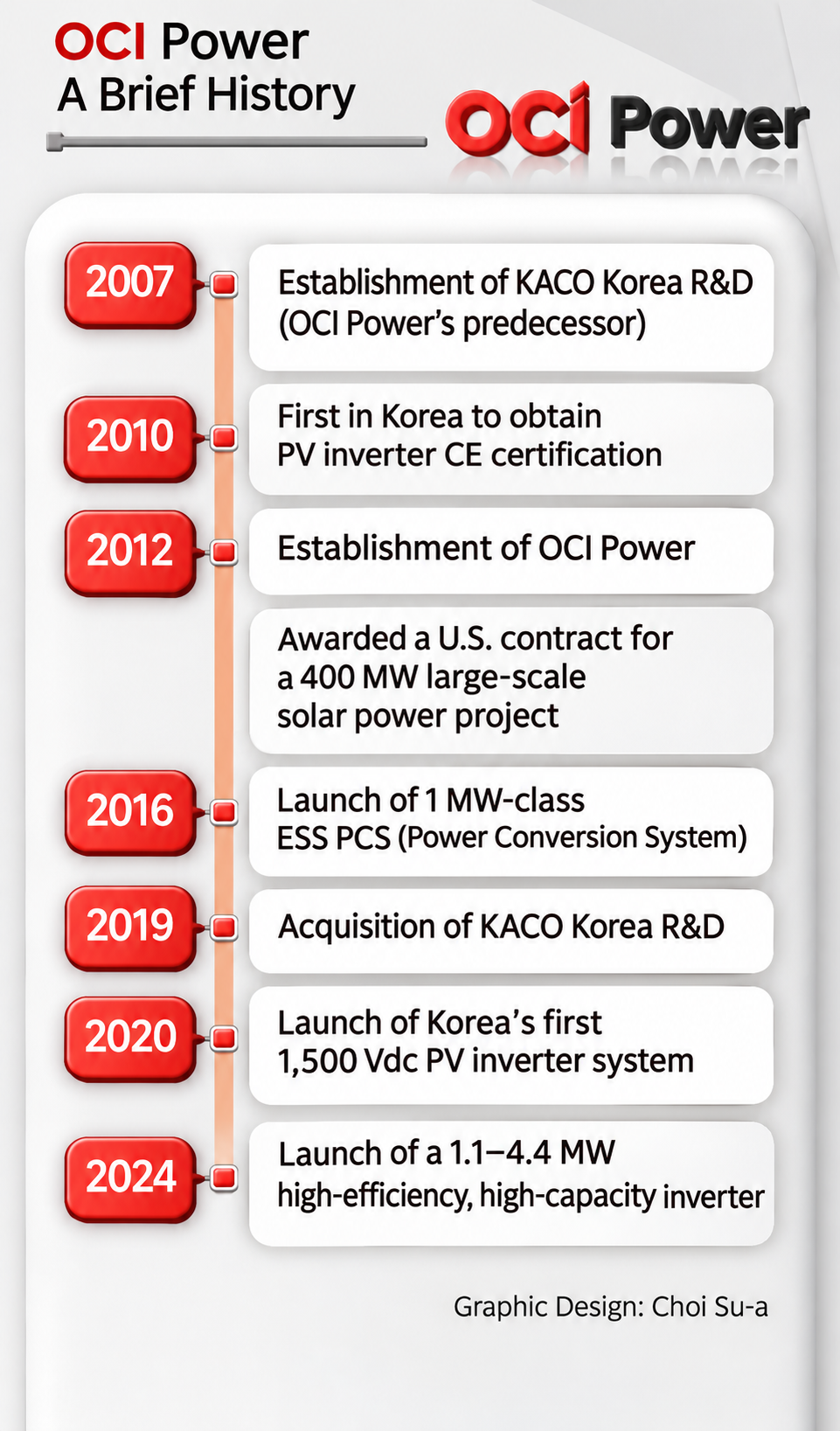 Against this backdrop, one of Kim's first initiatives was to rebuild OCI Power's business network in the United States.
Following OCI Group's acquisition of KACO's Korean operations, most of the business relationships with KACO's former U.S. customers had effectively been discontinued.
To restore these connections, Kim dispatched sales representatives to the United States to reconnect with existing customers.
“We began by reaching out to customers who had installed KACO inverters approximately ten years ago and offering maintenance and service support for their existing equipment,” Kim said.
“Through these engagements, we have also been introducing OCI Power's newly developed products and gradually rebuilding our customer network.”
Driven by the resumption of maintenance and service activities at solar power plants, OCI Power expects its global revenue to increase by more than 70% year-on-year in 2026.
Kim believes that further growth could follow as the company expands into full-scale product exports and project contracts.
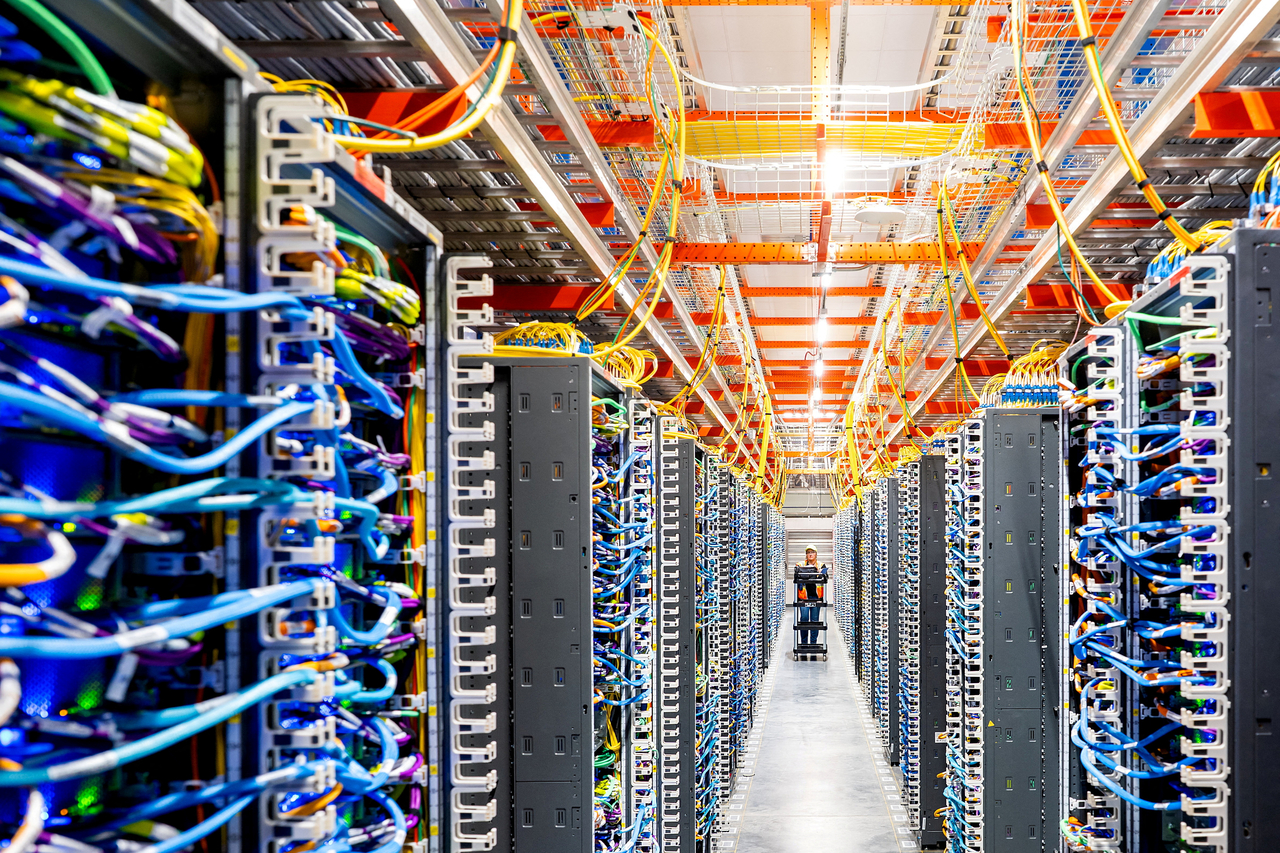
▲ Interior of an Amazon Web Services AI data center. Photo: Reuters
Growing investment in AI infrastructure, combined with ongoing U.S.–China trade tensions, is increasing the strategic importance of Korean solar technology in global markets.
Solar power is emerging as a promising energy source for meeting the substantial electricity demand associated with AI services.
With relatively low generation costs among renewable energy sources and comparatively straightforward project development, solar power is attracting significant investment from global technology companies.
These companies are investing not only in data centers but also in large-scale solar power plants.
Google, for example, is developing a 2.5 GW solar power project scheduled for completion in 2029.
“As global data center operators expand their use of renewable energy, we expect growing demand for stable power supply models that integrate solar generation with battery energy storage systems (BESS),” Kim explained.
Meanwhile, U.S. efforts to reduce reliance on Chinese solar products, driven partly by national security considerations, are expected to continue.
“In the past, price competitiveness was the most important factor in the solar inverter market,” Kim said.
“Today, supply chain reliability, cybersecurity, and long-term maintenance capabilities have become critical competitive factors.”
He emphasized that the role of inverters has evolved significantly.
“An inverter is no longer simply a device that converts electrical current. It is a critical component that connects power plants to the national grid while controlling power quality and system stability.”
In response to these market changes, OCI Power plans to prioritize product development tailored to the U.S. market.
“We are reducing our dependence on Chinese components and plan to pursue relevant U.S. product certifications,” Kim said.
The company also intends to gradually establish local manufacturing and supply capabilities in response to U.S. domestic investment requirements, while strengthening its maintenance and technical support services.
Beyond the United States, OCI Power is exploring opportunities in Japan and Southeast Asia.
Japan established its ESS market earlier than Korea, beginning in the 2010s, while Southeast Asia represents a promising emerging market where substantial power grid infrastructure development is expected.
“In Japan, Malaysia, and other markets, we are building relationships with local EPC and electrical engineering companies and exploring opportunities to enter these markets through joint project development,” Kim said.
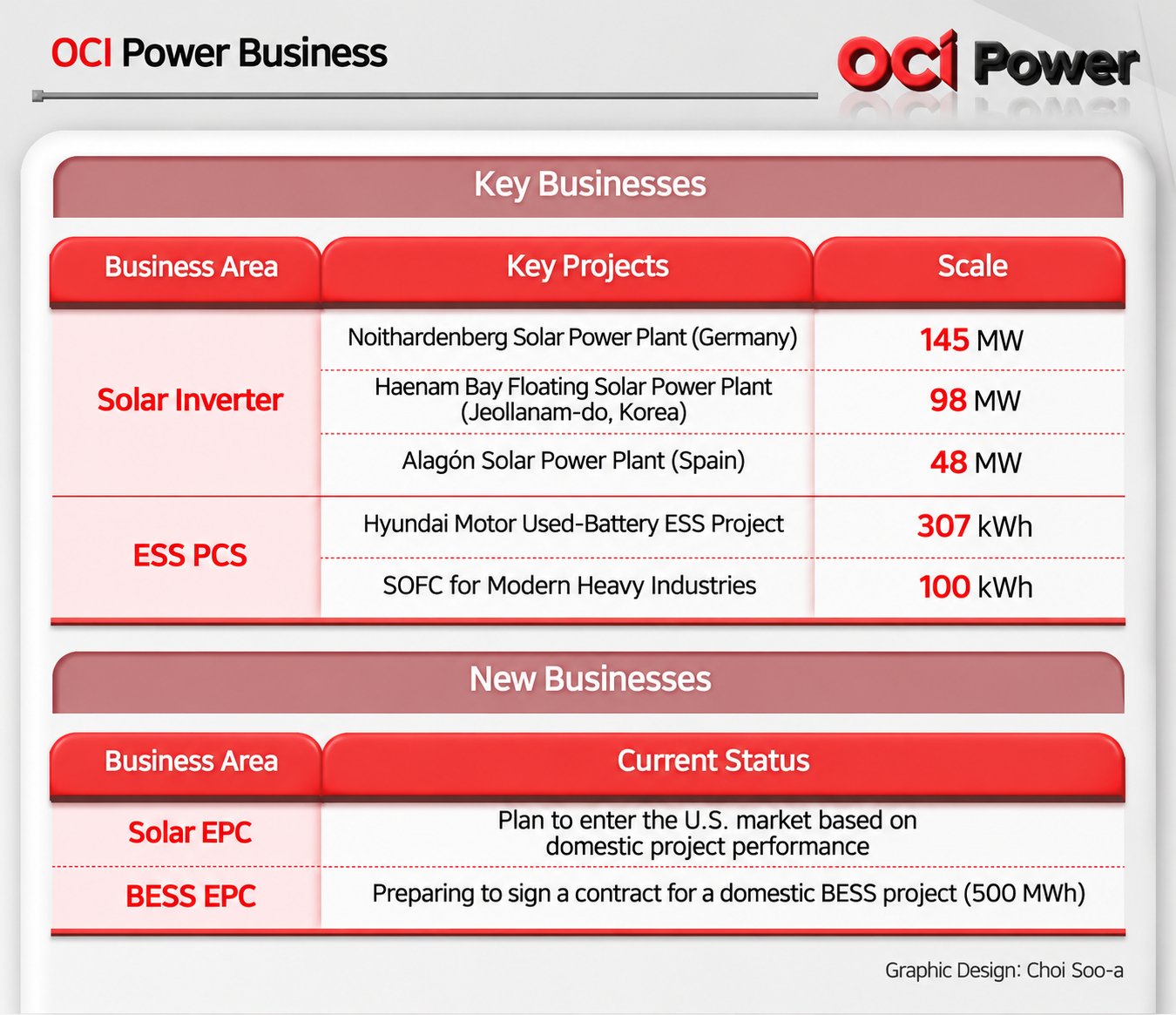
Looking ahead, OCI Power aims to expand beyond equipment supply into engineering, procurement, and construction (EPC) services.
Kim highlighted the growing technical challenges associated with supplying power to AI data centers.
“AI data centers experience rapid fluctuations in electricity consumption depending on computational workloads, making power stability more difficult to maintain,” he explained.
“In the future, it will become increasingly important not only to secure a stable electricity supply but also to precisely control voltage, frequency, and power quality.”
Unlike traditional data centers, which generally maintained relatively consistent power consumption, AI data centers repeatedly draw and reduce large amounts of electricity within seconds.
As a result, solar power plants supplying electricity to AI data centers must be designed not only to generate power but also to absorb and manage rapid fluctuations in electricity demand.
Kim believes OCI Power's expertise in inverter technology provides a strong foundation for expanding into EPC services.
“Inverter technology is among the most technically demanding elements of a solar power plant, while the remaining components are comparatively less complex,” he explained.
“We are expanding our R&D direction toward becoming an integrated energy solutions provider that seamlessly combines solar power generation, BESS, and PCS technologies, rather than simply supplying individual pieces of equipment.”
OCI Power has already begun expanding its business scope in the Korean market.
Since last year, the company has secured more than ten small- and medium-scale solar EPC projects, gradually building its project development and execution capabilities.
Building on this experience, OCI Power recently secured a 5.5 MW solar power project from Bright Energy Partners (BEP), a Korean independent power producer.
The company also plans to sign its first 500 MWh BESS EPC contract in November, marking another milestone in its business expansion.
Kim intends to apply a similar business model in overseas markets.
“We plan to transform our overseas business model in the same direction,” he said.
“In Southeast Asia in particular, we aim to expand joint development models with local partners, participating from the earliest stages of project development, including site acquisition, grid connection assessments, and feasibility studies.”
Ultimately, Kim envisions OCI Power evolving beyond a conventional equipment supplier.
“Our ultimate goal is to become a comprehensive energy solutions partner that delivers tangible value across the entire lifecycle of our customers' energy infrastructure, from development and construction to operation and maintenance.”
Through this transformation, OCI Power aims to strengthen its position as a trusted partner in the global renewable energy market.
Source: The Herald Business (헤럴드경제)
Original Article: https://biz.heraldcorp.com/article/10913006
Reporter: Hye-won Park


 List