Dedicated A/S Team and Component-Level Repairs to Minimize the Burden on Power Plant Operators
[Industry News | Reporter Jeong Han-kyo] As the electricity market becomes increasingly sophisticated and the role of inverters grows more important, inverters have recently emerged as a major issue in both the Korean and global solar markets.
 Cases of solar power plant operators being unable to receive A/S support despite inverter failures are increasing in Korea.
Photo unrelated to the article. [Photo: OCI Power]
Security has become a major concern in the global solar market. On May 14, Reuters reported that unauthorized communication devices had been discovered in Chinese-made solar inverters and batteries. As reports emerged that these devices could communicate with external servers, potentially enabling remote manipulation of power grids or the leakage of data, concerns about the security of critical national infrastructure have grown.
In Korea’s solar market, the key issue is O&M (Operations and Maintenance), as cases of inverter failures have increased sharply. Industry sources attribute a significant number of these failures to output curtailment.
When electricity generated by PV modules is supposed to be supplied to the grid, output curtailment can prevent electricity from being exported and cause it to accumulate within the system, resulting in inrush current or reverse current that places significant stress on the inverter.
If output is cut off under high-voltage or high-current conditions, internal components such as semiconductors can be easily damaged. Industry sources also point out that frequent output curtailment accumulates mechanical and thermal stress, increasing the likelihood of failure.
However, power authorities maintain that compensation cannot be provided because a causal relationship between output curtailment and inverter damage has not been established. As a result, power plant operators and manufacturers are expected to bear responsibility for inverter failures, but this is not always straightforward. Some manufacturers’ products are effectively impossible to repair when such failures occur.
Korean inverter manufacturers have long faced pressure from Chinese products in terms of price competitiveness. This has been compounded by the sharp contraction in Korea’s new solar installation market over the past several years, leading some domestic manufacturers to discontinue or effectively withdraw from the inverter manufacturing business.
Some foreign inverter manufacturers that entered the Korean solar market during its early stages have also withdrawn or reduced the scale of their operations due to the shrinking market and intensified competition. As technical support and A/S systems for their products have effectively disappeared, an increasing number of power plant operators are experiencing difficulties in plant operations.
The technical reliability of inverters and the availability of maintenance systems are important factors directly linked to the lifespan of solar power plants and could significantly affect the success of future renewable energy expansion policies. In particular, as inverter failures associated with output curtailment and security risks emerge simultaneously, the industry is calling for new standards for inverter operation and management.
To gain a closer understanding of the key issues facing Korea’s solar inverter market and potential response strategies, Industry News spoke with Hyun-jung Kim, Head of the O&M Business Team at OCI Power.
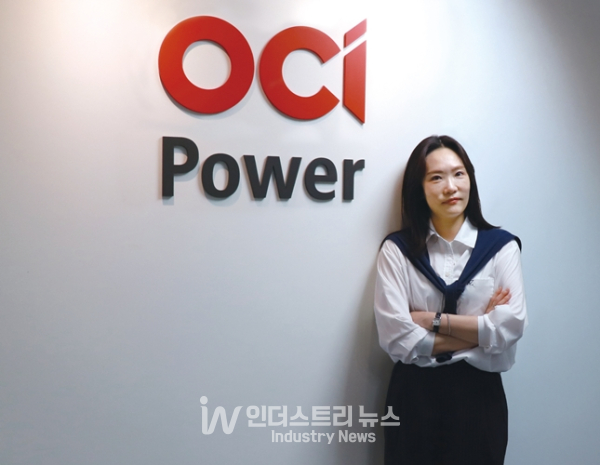 Hyun-jung Kim, Head of the O&M Business Team at OCI Power. [Photo: Industry News]
As inverter failures increase, solar power plants are increasingly facing situations where revisions or repairs are required. However, A/S support has become difficult due to some companies withdrawing from the market or reducing the scale of their businesses.
Even when there is no failure, inverters require continuous technical support to respond to changes in the grid. Large-scale power plants are generally built far from urban areas to secure suitable sites. As a result, grid conditions can be highly variable, making continuous technical support essential. However, the withdrawal of some companies from the market has made such technical support unavailable, creating operational difficulties for plant operators.
As the share of renewable energy increases, KEPCO is strengthening grid regulations and requiring various new functions from inverters. While inverter upgrades are needed to stabilize the grid, technical support has not always been provided flexibly or quickly enough. This can result in plants being selected for output curtailment or even prioritized for output shutdown, creating situations that operators may consider unfair.
Are products from companies that have withdrawn from the market essentially impossible to service?
Each manufacturer uses its own unique design, and the components used also differ from company to company. As a result, products from manufacturers that have withdrawn from the market are, in practice, extremely difficult to service.
We receive many inquiries from power plant operators asking us to repair such products, which is unfortunate. We can address commercially standardized electrical components using OCI Power’s engineering capabilities, but when a component incorporating a manufacturer-specific design element fails, there is little we can do.
Ultimately, these inverters need to be replaced. However, solar power plants that have been operating for more than five years often have older system equipment, meaning that modules, switchgear, transformers, and other interconnected equipment may not be compatible with recently released inverters.
In such cases, replacing the inverter alone is not sufficient, and the broader generation equipment may also need to be replaced, creating a significant financial burden for operators.
Reliability of solar power generation equipment is receiving more attention than ever. What is OCI Power’s inverter O&M strategy?
From the time we first began selling solar inverters in Korea to the present, OCI Power has consistently emphasized providing “sustainable service” to our customers. The clearest evidence is our long-running dedicated A/S team.
This is one of our biggest differentiators among the many inverter companies in Korea. It is now difficult to find an inverter manufacturer in Korea that operates its own dedicated A/S team.
Operating a dedicated A/S team increases overhead costs. From a purely profit-oriented perspective, it can be relatively inefficient. This is why many companies outsource their O&M activities.
OCI Power, however, receives A/S requests directly from customers, and engineers from our dedicated A/S team visit sites to resolve problems. We also have our own research center and manufacturing facilities, enabling us to continuously improve our engineering capabilities through ongoing technical exchange.
We are developing various service programs to maintain the A/S team and conducting a range of in-house technical initiatives to resolve field issues independently.
We are also working to expand our service coverage to include products from other manufacturers, not just our own. As mentioned earlier, many operators are struggling with A/S because manufacturers have recently withdrawn from the market. In addition, we are identifying service partners to respond more quickly to the growing number of sites, while providing various training programs to improve the technical capabilities of these partners.
Unlike the current domestic inverter market, where it can be difficult to source replacement parts for failed components, OCI Power maintains parts for even products manufactured 10 years ago in the parts warehouse at our Gunsan plant, allowing us to respond immediately to customer requests.
What is the difference between operating an in-house A/S team and outsourcing A/S?
Our engineers participate from the early stages of product development through installation at the site, giving them a high level of technical understanding and problem-solving capability.
The dedicated A/S team participates from the design stage, helping apply maintenance-friendly designs and continuously studying the role of each component throughout the development process.
Inverters can also malfunction due to external factors rather than problems with the inverter itself. More than half of inverter failures are caused by external factors.
Issues such as ground faults or problems with grid voltage cannot be solved simply by replacing a failed inverter with a new one. Even after replacement, the same problem is likely to occur again.
For this reason, we do not simply replace products. We first identify the exact cause of the problem and then resolve it through component-level repairs.
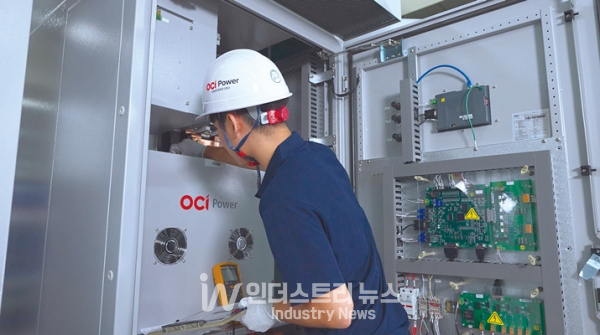 OCI Power operates its own dedicated A/S team. Engineers directly receive customer service requests, visit sites, and perform component-level repairs to resolve issues. [Photo: OCI Power]
An inverter does not operate independently. It is a device that generates energy in combination with various components of a power plant, including PV systems, AC switchgear, and the grid. Even if a problem occurs at the input or output side, the inverter itself can be damaged and fail.
Only by accurately diagnosing the situation and correcting the underlying problem at the power plant can we prevent the same failure from occurring again. This ability to conduct a comprehensive technical diagnosis through on-site visits is one of the major advantages of component-level repairs.
There are also cost advantages. If an inverter is replaced every time a failure occurs, the maintenance costs of a solar power plant operating over the long term can become a significant burden after the warranty expires, because a new inverter would need to be purchased.
With component-level repairs, however, the exact problem is identified and repaired, meaning that even after the warranty period ends, only the necessary components need to be repaired or replaced.
There is also a fundamental contradiction between replacing an entire product because only certain components have failed and the underlying goal of expanding renewable energy to build a sustainable future. A replaced inverter ultimately becomes waste.
In fact, a power plant operator in Jeju that installed our inverter in 2009 is still using the same product today. This demonstrates that equipment can be used for a long time when properly maintained.
Component-level repair therefore provides various benefits, including extending product lifespan, minimizing waste, and reducing maintenance costs.
Security concerns surrounding inverters are also growing in the global solar market.
As power grids become more sophisticated, the roles assigned to inverters are also expanding. This makes inverter security and reliability increasingly important.
In particular, information about a customer’s power plant could potentially be transmitted externally without the customer’s knowledge, not only through hacking but also through monitoring services. This could mean that national power system data is transmitted outside the country.
When selling its products, OCI Power recommends monitoring companies that have verified technologies through technical collaboration with OCI Power. For central inverters, we provide monitoring services using domestic servers.
All data is encrypted before storage, and accounts and passwords are securely managed. The HMI used for our inverters is also designed and developed by our own research center, enabling us to provide a more secure response to potential external hacking attempts.
Ultimately, OCI Power is a Korean company whose entire process—from design and development to manufacturing and maintenance—is conducted domestically. We have no reason to extract data from Korea’s power grid.
In addition, design data and intellectual property for our domestically manufactured inverters are held by Korean companies, and we develop all software and protocols in-house. Customers can therefore use our products with confidence without concerns about information leakage or hacking.
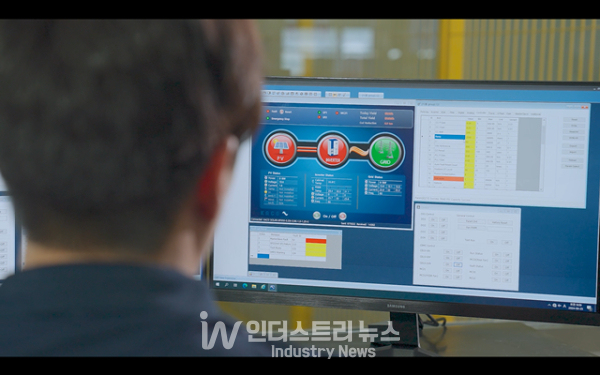 Inverters generate energy in combination with various power plant components, including PV systems, AC switchgear, and the grid. More than half of inverter failures can be attributed to external factors. Identifying and repairing the precise cause of failure is essential to preventing the same problem from recurring. [Photo: OCI Power]
OCI Power provides services based on the core philosophies of “sustainability” and “environmental protection” in renewable energy.
We do not communicate with customers only about problems with the inverter itself. We also work with customers to identify, investigate, and address issues within the power plant detected by the inverter.
As mentioned earlier, we have recently received many inquiries from customers asking whether OCI Power can repair products from other manufacturers or at least diagnose their problems.
Most members of our dedicated A/S team are professional engineers with more than five to ten years of experience. In addition to their accumulated field experience, they have acquired extensive inverter knowledge through technical collaboration beginning at the production stage.
Therefore, even when dealing with inverters from other manufacturers, we can adequately diagnose many types of problems.
However, components incorporating a manufacturer’s proprietary design techniques are effectively impossible for us to support. To address such challenges in the field, we are introducing inverter product lines designed to be compatible with older power generation equipment, including older modules and AC voltage specifications that may not be compatible with the latest inverter models.
These products can be replaced on a one-to-one basis with existing equipment. Rather than simply reproducing an older inverter model, the concept is to develop a new product specifically designed for older generation equipment.
Through technically differentiated services and customized solutions tailored to each customer’s situation, we aim to preserve the lifecycle of solar power plants that are expected to operate for more than 20 years.
Based on our core philosophies of sustainability and environmental protection in renewable energy, OCI Power will continue to do its utmost to help create a sustainable future.
Source :
인더스트리뉴스 (IndustryNews)


 List
List