From Sunlight to Electricity: How Solar Power Generation Works
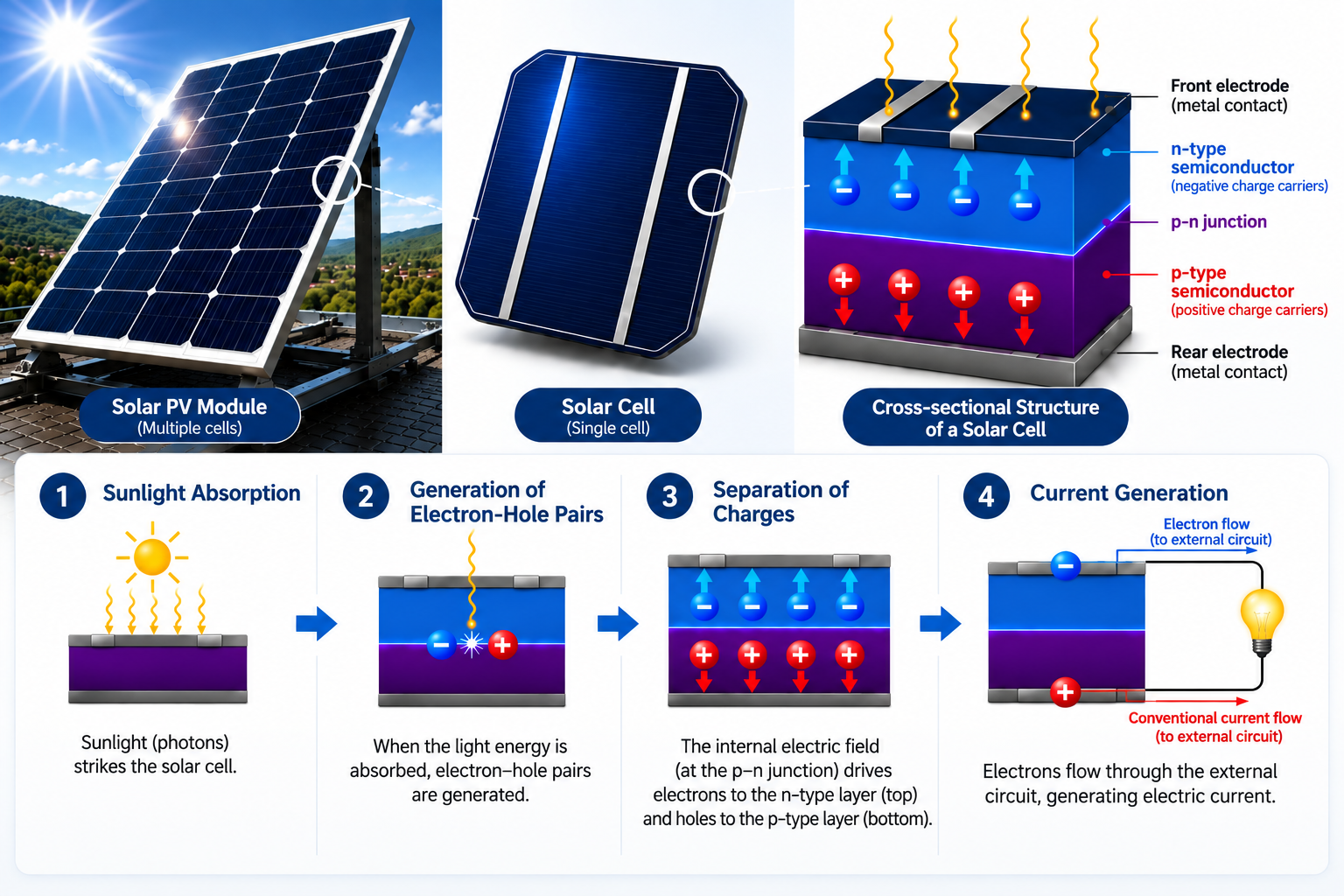
When sunlight reaches the solar cells that make up a solar module, the semiconductor absorbs light energy, generating electrons and holes. The generated electrons and holes move in opposite directions due to the electric field inside the solar cell. Electrons move toward the n-type semiconductor, while holes move toward the p-type semiconductor, where they gather at their respective electrodes. The electrons then move through an external circuit, generating an electric current.
Because solar power generates electricity using sunlight without burning fuel, it is an environmentally friendly form of power generation with no direct carbon emissions. It also produces very little noise or vibration during operation, allowing it to be used in a variety of settings, including homes and factories.
However, electricity generated by solar cells cannot be used directly. To supply this electricity to the grid, it must first be converted. This is where the inverter plays a key role.
[Term 1] Grid: An electricity supply network that delivers electricity generated by power plants to places where it is needed, such as homes and factories.
The Key Device Connecting Solar Cells to the Grid: The Inverter
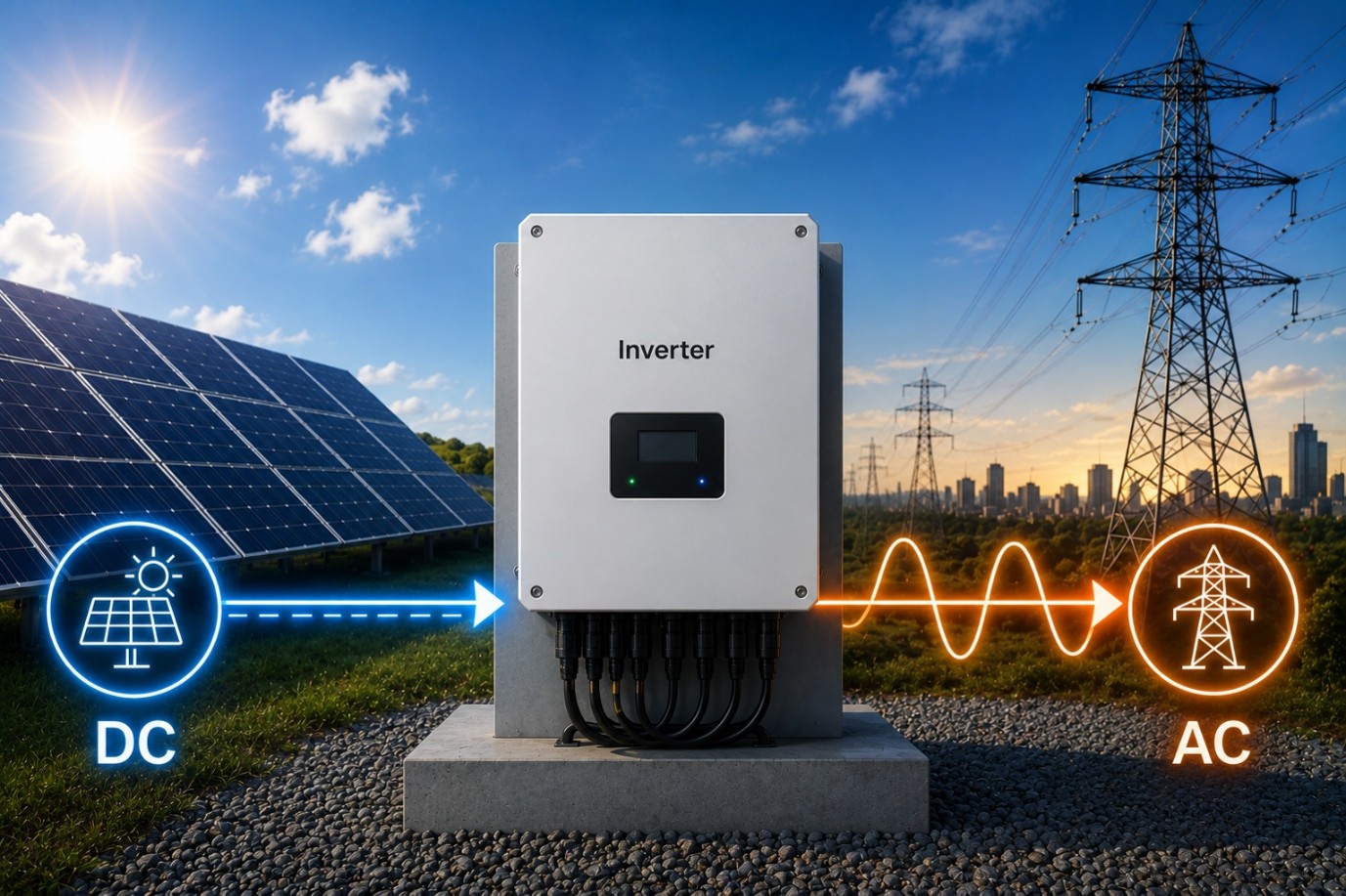
Electricity generated by solar cells is in the form of direct current (DC). However, the power grid uses alternating current (AC). An inverter converts the DC electricity generated by solar cells into AC electricity and supplies it to the grid.
[Term 2] Direct Current (DC): A form of electricity in which electric current flows continuously in one direction.
[Term 3] Alternating Current (AC): A form of electricity in which the magnitude and direction of electric current periodically change over time.
The role of an inverter goes beyond simply converting electricity. Solar power generation is inherently intermittent, as the amount of electricity generated varies depending on weather and solar irradiance.
In such conditions, the inverter controls the voltage and frequency of the electricity supplied to the grid, helping maintain stable power quality even when power generation fluctuates. It also monitors operating conditions in real time and protects the system when abnormalities occur.
Types of Inverters: String Inverters and Central Inverters
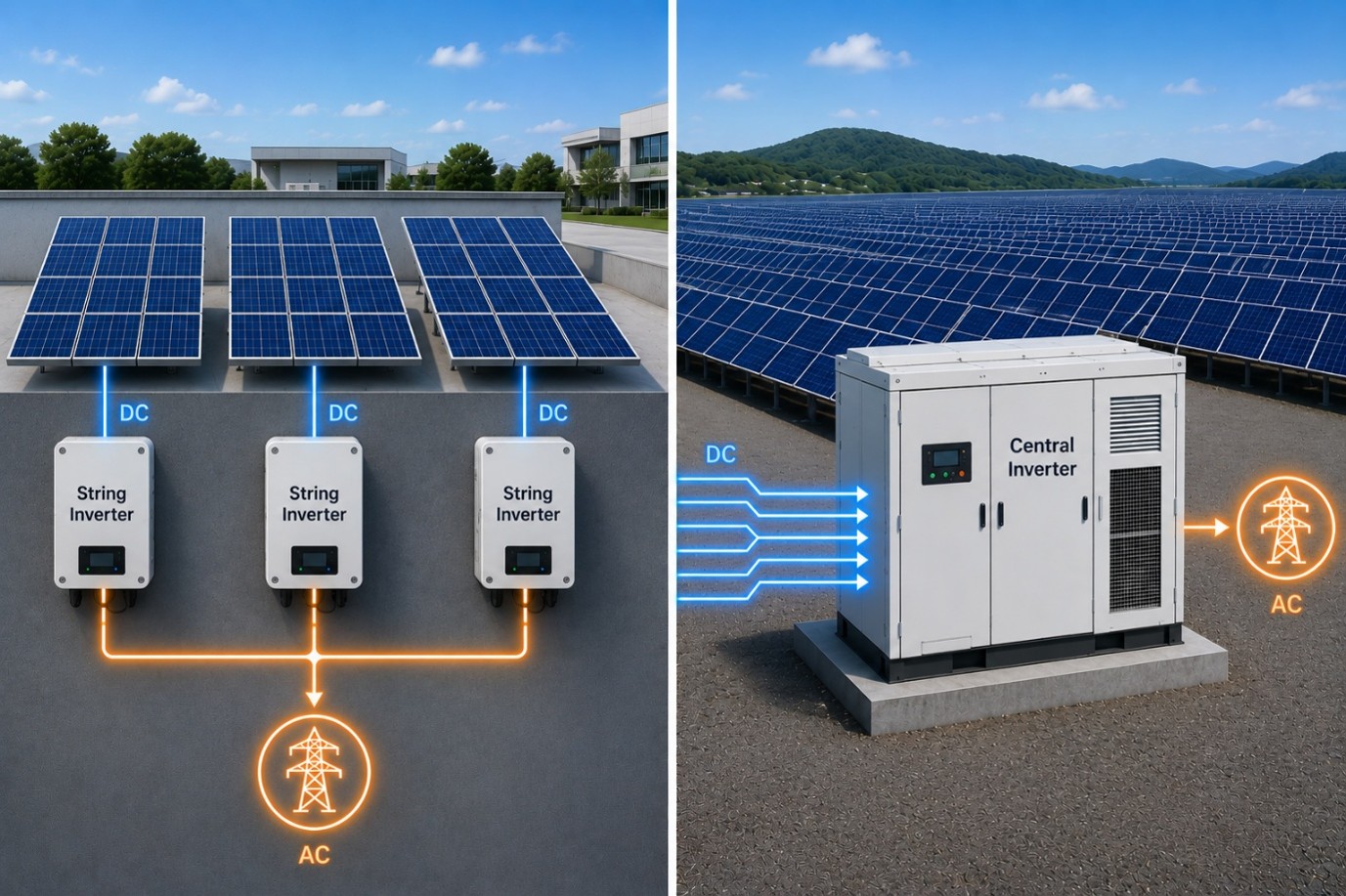
▲ String Inverter ▲ Central Inverter
Inverters can broadly be divided into string inverters and central inverters. Both convert DC electricity generated by solar cells into AC electricity, but they differ in how they process and manage power.
A string inverter uses a distributed architecture in which an inverter is installed for each string. Because the power from each string can be independently converted and managed, string inverters are relatively easy to maintain and are suitable for small-scale solar systems, such as residential and commercial buildings.
[Term 4] String: An electrical circuit consisting of multiple solar modules connected in series.
A central inverter, on the other hand, uses a centralized architecture in which multiple strings are connected to and managed by a single inverter. It can integrate and manage the power generated by multiple strings and is capable of reliably converting large amounts of electricity, making it primarily suitable for large-scale solar power plants.
So, which Korean company develops and manufactures these inverters? OCI Power.
OCI Power’s Inverter Technology
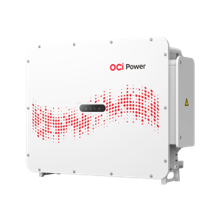
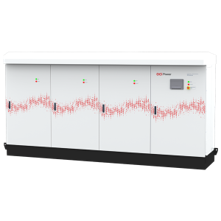 ▲ OCIP 350 String Inverter ▲ OG 4400 Central Inverter
OCI Power’s inverter technology has received international recognition for its performance. Its inverters have been certified by the globally recognized certification body Bureau Veritas for a power conversion efficiency of 98.7%, demonstrating world-class performance.
In the central inverter sector, OCI Power supplied Korea’s first DC 1,500V inverter in 2020 and has since expanded its product portfolio from 1.1 MW to 4.4 MW to meet the requirements of a wide range of projects.
Based on this technological expertise, OCI Power has supplied inverters to various solar projects in Korea and overseas, including a large-scale 600 MW solar power plant in Texas, USA. Today, the company continues to expand its competitiveness in the power conversion market, backed by cumulative installations exceeding 12 GW worldwide.
As the transition to renewable energy accelerates with the expansion of AI data centers and efforts toward carbon neutrality, the importance of power conversion technology continues to grow. Building on its accumulated technological expertise and extensive project experience, OCI Power is contributing to the transition toward sustainable energy.
(Written by Jae-in Shin, OCI Power Press Corps)