Driving Sustainable Energy
for a better tomorrow

Products

Media center

  • Newsroom

  • Blog

OCI Power Advances Solar Inverter Technology to Strengthen the Sustainability of Korea's Solar Industry
Newsroom

OCI Power Advances Solar Inverter Technology to Strengthen the Sustainability of Korea's Solar Industry

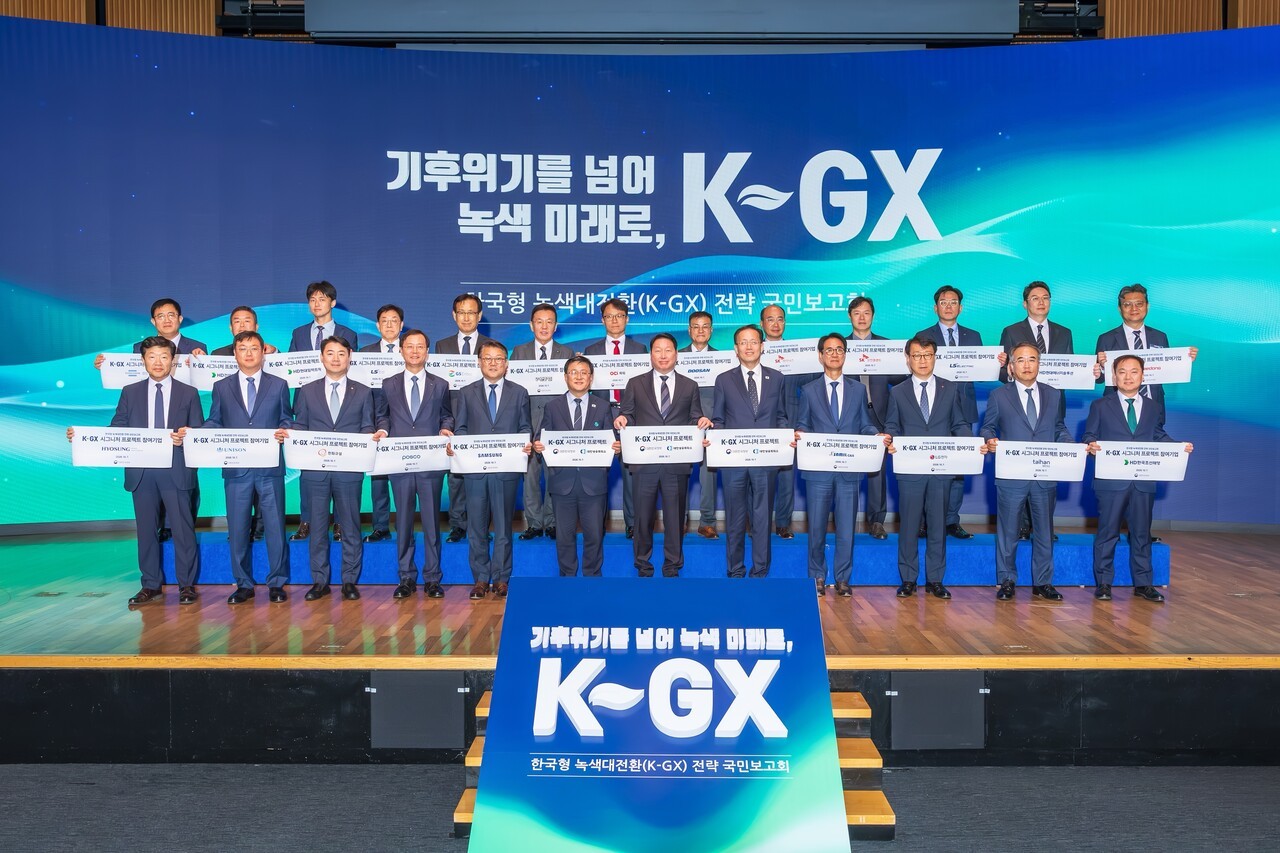
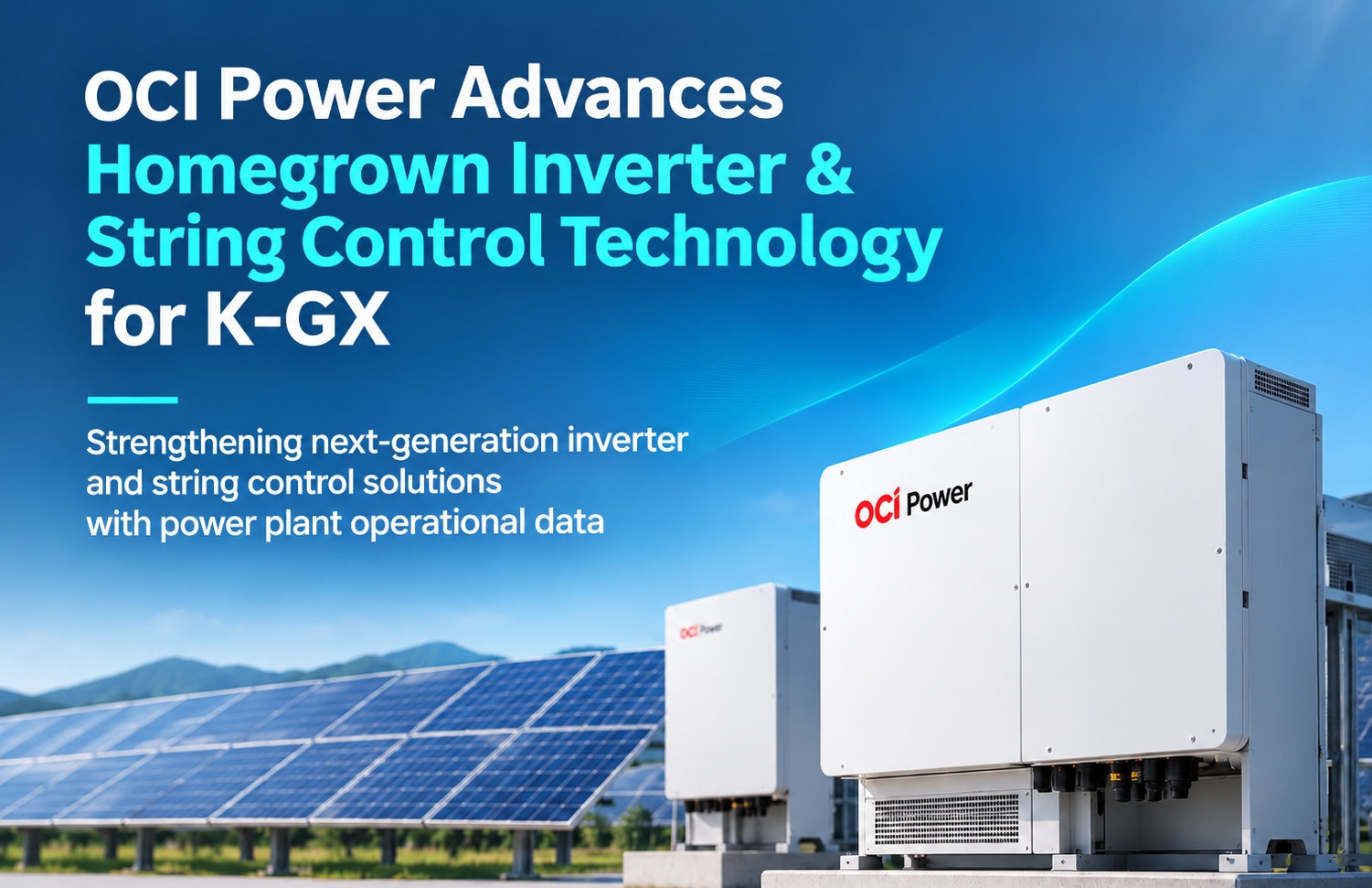
 SEOUL, South Korea, November 3, 2026 — OCI Power (CEO Sung Yeop Kim) announced on November 2 that it plans to advance Korean-made solar inverter and solar power plant control technologies in line with the Korean government's Korean Green Transformation (K-GX) strategy. ▲ OCI Power is advancing Korean-made solar inverter and solar power plant control technologies in alignment with the government's K-GX strategy. The photo shows the K-GX Strategy National Briefing held on October 7, 2026. [Photo: OCI Power] OCI Power plans to leverage field data accumulated through the operation of solar power plants in Korea to further develop next-generation Korean-made inverters and solar power plant control solutions.Through these efforts, the company aims to strengthen its technological capabilities in grid stabilization and contribute to greater technological self-reliance and supply chain competitiveness in Korea's solar industry.Building on its domestic research and development and manufacturing capabilities, OCI Power supplies a range of power conversion solutions, including central inverters, string inverters, and power conversion systems (PCS) for energy storage systems (ESS).The company has achieved more than 7 GW of cumulative installations across domestic and international markets.In particular, OCI Power develops and manufactures its own DC 1500V-class central inverters, leveraging its engineering expertise to provide power conversion and grid interconnection solutions for utility-scale solar power plants.“As renewable energy deployment expands, the localization of key components and supply chain stability are becoming increasingly important,” said Sung Yeop Kim, CEO of OCI Power.“Building on our domestic R&D and manufacturing capabilities, OCI Power will continue to enhance the competitiveness of Korean-made inverter technologies and contribute to technological self-reliance and sustainable growth in Korea's solar industry.”Meanwhile, the Korean government is pursuing the K-GX strategy to expand renewable energy deployment, strengthen domestic manufacturing capabilities for key components and equipment, and promote technological self-reliance.As a result, securing the competitiveness of Korean-made equipment and strengthening supply chain stability are emerging as key priorities for the domestic solar industry.Source: Industry News (인더스트리뉴스)Reporter: Han-kyo JeongOriginal Article: https://www.industrynews.co.kr/news/articleView.html?idxno=88774

View Details
OCI Power to Advance Korean-Made Solar Inverter Technology
Newsroom

OCI Power to Advance Korean-Made Solar Inverter Technology

SEOUL, South Korea, November 3, 2026 — OCI Power, a solar inverter manufacturer affiliated with OCI Group, announced on November 3 that it plans to advance its Korean-made solar inverter and solar power plant control technologies in line with the government's Korean Green Transformation (K-GX) initiative.Solar inverters are essential components that enable electricity generated by solar power systems to be reliably supplied to the power grid.OCI Power plans to leverage field data accumulated through the operation of solar power plants in Korea to further develop next-generation Korean-made inverters and solar power plant control solutions.The company also aims to strengthen its technological capabilities in grid stabilization, contributing to greater technological self-reliance and supply chain competitiveness in Korea's solar industry.Leveraging its domestic research and development and manufacturing capabilities, OCI Power has supplied a cumulative 7 GW of power conversion solutions in Korea, including solar inverters and power conversion systems (PCS) for energy storage systems (ESS).“As renewable energy deployment expands, the localization of key components and supply chain stability are becoming increasingly important,” said Sung Yeop Kim, CEO of OCI Power.“Building on our domestic R&D and manufacturing capabilities, OCI Power will continue to enhance the competitiveness of Korean-made inverter technologies and contribute to technological self-reliance and sustainable growth in Korea's solar industry.”Source: The Herald Business (헤럴드경제), November 3, 2026Reporter: Hye-won ParkOriginal Article: https://biz.heraldcorp.com/article/10923458

View Details
OCI Power CEO: “AI Data Center Competitiveness Depends on Energy Supply and Storage”
Newsroom

OCI Power CEO: “AI Data Center Competitiveness Depends on Energy Supply and Storage”

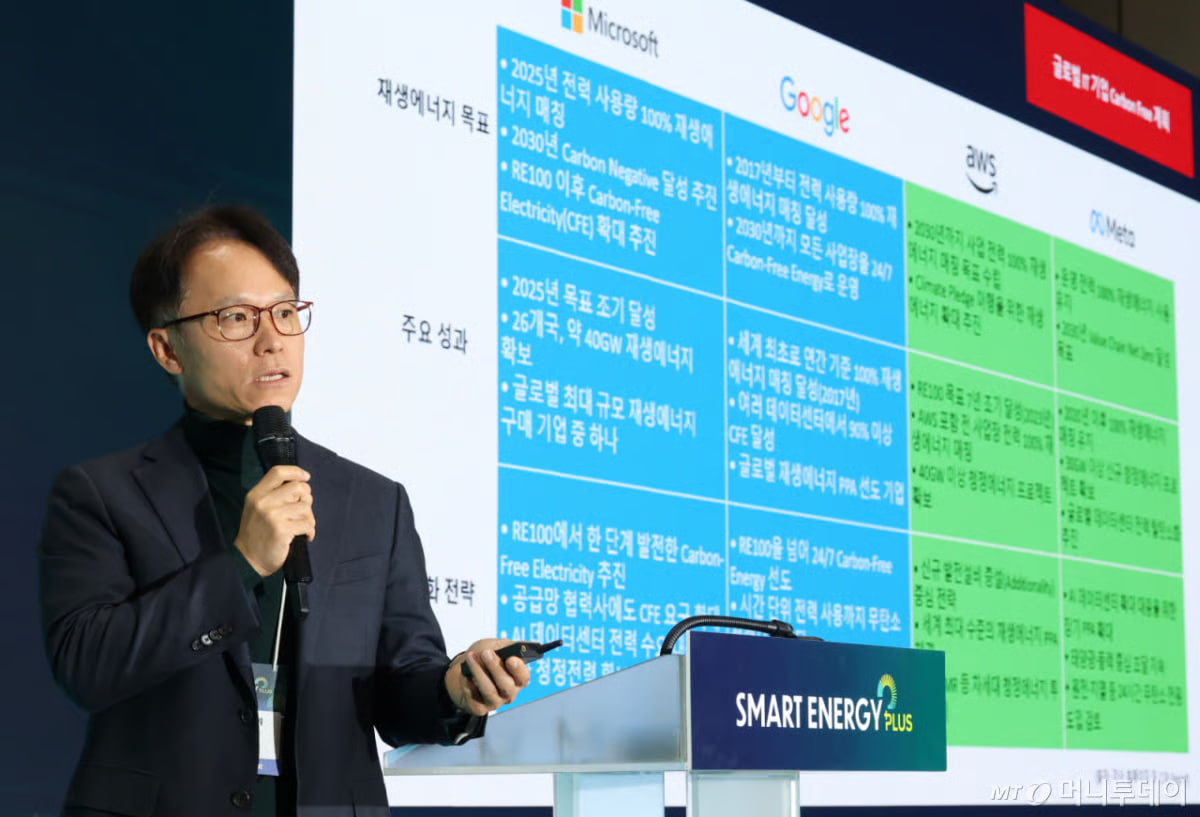
▲ Sung Yeop Kim, CEO of OCI Power, delivers a presentation titled “The Importance of Renewable Energy and BESS in AI Data Centers” at the AI Gold Rush – AIDC Power Grid session of Smart Energy Plus (SEP) 2026, held at COEX in Gangnam-gu, Seoul, on October 30. Photo by Lee Ki-beom.“Battery energy storage systems (BESS) and power conversion technologies that control them will become key competitive advantages in addressing the intermittency of renewable energy and rapid fluctuations in electricity demand.”Sung Yeop Kim, CEO of OCI Power, made these remarks at the AI Gold Rush conference held as part of Smart Energy Plus (SEP) 2026 on October 30 at COEX Hall B in Samseong-dong, Seoul.Speaking on the topic of “The Importance of Renewable Energy and Battery Energy Storage Systems (BESS) in AI Data Centers,” Kim identified stable electricity supply and energy storage technologies as critical factors determining the competitiveness of AI data centers.Renewable Energy Emerges as a Key Competitive Factor for AI Data CentersKim noted that securing renewable energy is becoming an increasingly important competitive factor in the AI data center market.“Global companies such as Microsoft and Google are moving beyond RE100, which focuses on sourcing 100% renewable electricity, toward the concept of Carbon-Free Energy,” he said.“Going forward, major AI data center customers will place greater importance on whether operators can secure electricity through renewable energy sources and power purchase agreements (PPAs).”However, the intermittency of renewable energy and fluctuations in AI data center electricity demand remain significant challenges.Renewable energy generation varies depending on weather and environmental conditions. Solar power generation is concentrated during daylight hours, while wind power output fluctuates according to wind conditions.At the same time, AI data centers experience substantial variations in electricity demand.Servers powered by accelerators such as GPUs and NPUs repeatedly perform large-scale computations and communications, causing power consumption to fluctuate rapidly on a millisecond (ms) timescale.“AI data centers consume large amounts of electricity when computational workloads begin, but power consumption can drop sharply during communication phases,” Kim explained.“When these fluctuations occur repeatedly, they can affect voltage and frequency, potentially undermining power grid stability.” BESS as a Solution for Stable Power SupplyKim proposed battery energy storage systems as a potential solution to these challenges.“In situations where data centers have been completed but cannot begin operations due to delays in electricity supply, BESS can help reduce the burden associated with power infrastructure development timelines,” he said.“BESS can also store electricity when renewable energy generation is high and supply it to data centers when needed.”He also pointed out that conventional battery systems alone may face limitations in responding to the rapid fluctuations in electricity demand experienced by AI data centers.As an alternative, Kim introduced a hybrid ESS configuration combining ultracapacitors (supercapacitors) with lithium iron phosphate (LFP) batteries.Unlike batteries, which store energy through chemical reactions, ultracapacitors store energy using an electric field.Although they have relatively lower energy storage capacity, ultracapacitors offer the advantage of extremely fast charging and discharging, making them suitable for responding to sudden changes in power demand.“Power loads in data centers fluctuate on a millisecond timescale, while conventional BESS have limitations in their charging and discharging speeds,” Kim said.“A hybrid approach combining supercapacitors and LFP batteries could help address these rapid power fluctuations.” Power Conversion Systems and Grid-Forming Technology Gain ImportanceKim also emphasized the growing importance of power conversion system (PCS) technology.He explained that beyond battery performance, technologies capable of reliably delivering stored electricity to power grids and data centers are equally important.In particular, Kim identified grid-forming technology as a potential key technology for the future.Grid-forming technology enables power conversion systems to independently regulate voltage and frequency rather than relying entirely on an external power grid.“Batteries can be sourced from various suppliers, but the power conversion system connected to the battery serves as the brain of the entire system,” Kim said.“Ultimately, securing not only battery technology but also power conversion and grid configuration technologies will be essential.”Source: Money Today (머니투데이), October 30, 2026Original Article: https://www.mt.co.kr/industry/2026/10/30/2026103015191147290

View Details
OCI Power Accelerates Global Expansion with Proactive On-Site Service Strategy
Newsroom

OCI Power Accelerates Global Expansion with Proactive On-Site Service Strategy

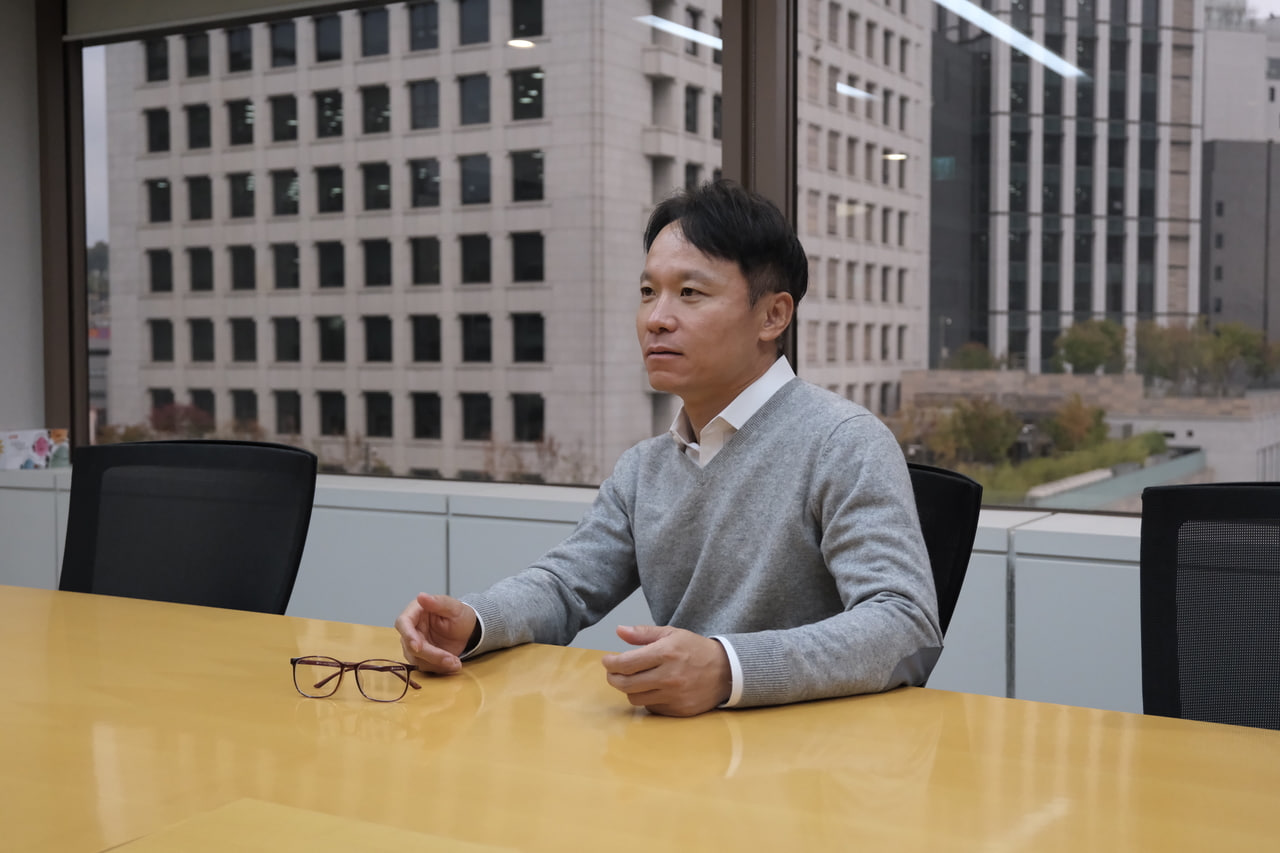
[Company Spotlight] Korean Solar Inverter Specialist Expands Global Presence Through Customer-Centric Service and Integrated Energy SolutionsBy Hye-won Park | The Herald BusinessSEOUL, South Korea — “The key to success in B2B business is proactive, on-site customer service. Through this approach, we aim to expand our business beyond Korea and into global markets.”Sung Yeop Kim, CEO of OCI Power, a Korean solar inverter manufacturer, shared this vision during an interview with The Herald Business at OCI's headquarters in Jung-gu, Seoul, on October 12.Having previously focused primarily on the domestic market, OCI Power is now preparing to expand its global presence in response to rapidly growing electricity demand driven by the artificial intelligence (AI) industry.From Upstream to Downstream: OCI Power's Role in the Solar Value Chain김성엽 OCI파워 대표가 지난 12일 OCI 사옥에서 헤럴드경제와 인터뷰를 진행하고 있다. 박혜원 기자 ▲ Sung Yeop Kim, CEO of OCI Power, during an interview with The Herald Business at OCI headquarters on October 12. Photo: Hye-won ParkOCI Power traces its origins to the Korean subsidiary of KACO, a German solar inverter manufacturer.In 2019, as the global solar industry faced challenging market conditions, Siemens acquired KACO's global operations, while OCI Group separately acquired its Korean business, laying the foundation for today's OCI Power.Within OCI Group, which specializes in semiconductor and solar-related chemical materials, OCI Power occupies a distinctive position as a manufacturer of solar power equipment.While OCI Holdings represents the upstream segment of the solar value chain through polysilicon production, OCI Power operates at the downstream end, supplying essential equipment for solar power generation.Its flagship products are solar inverters, which convert electricity generated by sunlight into a form suitable for use in homes and industrial facilities.The company also manufactures power conversion systems (PCS) for energy storage systems (ESS), which are gaining increasing attention for their role in ensuring stable electricity supply.Transforming into a B2B-Focused Company: Overseas Revenue Expected to Rise More Than 70%Kim joined OCI Power in March of last year to establish a clearer business direction following the acquisition of KACO's Korean operations.One of his primary objectives was to transform OCI Power into a fully B2B-oriented company.Kim began his career at IBM in 1999 and subsequently held senior leadership positions, including Northeast Asia Representative at Danfoss Korea, an energy solutions company, and Country President of Vertiv Korea, a data center infrastructure provider.Through these roles, he developed extensive expertise in the data center and energy infrastructure industries.“The chemical industry is capital-intensive and largely driven by government-related projects, whereas the equipment business is entirely B2B,” Kim explained. “Understanding market trends and proactively communicating our capabilities were among our most important priorities.”Against this backdrop, one of Kim's first initiatives was to rebuild OCI Power's business network in the United States.Following OCI Group's acquisition of KACO's Korean operations, most of the business relationships with KACO's former U.S. customers had effectively been discontinued.To restore these connections, Kim dispatched sales representatives to the United States to reconnect with existing customers.“We began by reaching out to customers who had installed KACO inverters approximately ten years ago and offering maintenance and service support for their existing equipment,” Kim said.“Through these engagements, we have also been introducing OCI Power's newly developed products and gradually rebuilding our customer network.”Driven by the resumption of maintenance and service activities at solar power plants, OCI Power expects its global revenue to increase by more than 70% year-on-year in 2026.Kim believes that further growth could follow as the company expands into full-scale product exports and project contracts.Korean Solar Technology Gains Momentum Amid AI Investment and U.S.–China Trade Tensions▲ Interior of an Amazon Web Services AI data center. Photo: ReutersGrowing investment in AI infrastructure, combined with ongoing U.S.–China trade tensions, is increasing the strategic importance of Korean solar technology in global markets.Solar power is emerging as a promising energy source for meeting the substantial electricity demand associated with AI services.With relatively low generation costs among renewable energy sources and comparatively straightforward project development, solar power is attracting significant investment from global technology companies.These companies are investing not only in data centers but also in large-scale solar power plants.Google, for example, is developing a 2.5 GW solar power project scheduled for completion in 2029.“As global data center operators expand their use of renewable energy, we expect growing demand for stable power supply models that integrate solar generation with battery energy storage systems (BESS),” Kim explained.Meanwhile, U.S. efforts to reduce reliance on Chinese solar products, driven partly by national security considerations, are expected to continue.“In the past, price competitiveness was the most important factor in the solar inverter market,” Kim said.“Today, supply chain reliability, cybersecurity, and long-term maintenance capabilities have become critical competitive factors.”He emphasized that the role of inverters has evolved significantly.“An inverter is no longer simply a device that converts electrical current. It is a critical component that connects power plants to the national grid while controlling power quality and system stability.”In response to these market changes, OCI Power plans to prioritize product development tailored to the U.S. market.“We are reducing our dependence on Chinese components and plan to pursue relevant U.S. product certifications,” Kim said.The company also intends to gradually establish local manufacturing and supply capabilities in response to U.S. domestic investment requirements, while strengthening its maintenance and technical support services.Beyond the United States, OCI Power is exploring opportunities in Japan and Southeast Asia.Japan established its ESS market earlier than Korea, beginning in the 2010s, while Southeast Asia represents a promising emerging market where substantial power grid infrastructure development is expected.“In Japan, Malaysia, and other markets, we are building relationships with local EPC and electrical engineering companies and exploring opportunities to enter these markets through joint project development,” Kim said. Expanding into Solar EPC: Building on Proven Domestic ExperienceLooking ahead, OCI Power aims to expand beyond equipment supply into engineering, procurement, and construction (EPC) services.Kim highlighted the growing technical challenges associated with supplying power to AI data centers.“AI data centers experience rapid fluctuations in electricity consumption depending on computational workloads, making power stability more difficult to maintain,” he explained.“In the future, it will become increasingly important not only to secure a stable electricity supply but also to precisely control voltage, frequency, and power quality.”Unlike traditional data centers, which generally maintained relatively consistent power consumption, AI data centers repeatedly draw and reduce large amounts of electricity within seconds.As a result, solar power plants supplying electricity to AI data centers must be designed not only to generate power but also to absorb and manage rapid fluctuations in electricity demand.Kim believes OCI Power's expertise in inverter technology provides a strong foundation for expanding into EPC services.“Inverter technology is among the most technically demanding elements of a solar power plant, while the remaining components are comparatively less complex,” he explained.“We are expanding our R&D direction toward becoming an integrated energy solutions provider that seamlessly combines solar power generation, BESS, and PCS technologies, rather than simply supplying individual pieces of equipment.” Becoming a Comprehensive Energy Solutions PartnerOCI Power has already begun expanding its business scope in the Korean market.Since last year, the company has secured more than ten small- and medium-scale solar EPC projects, gradually building its project development and execution capabilities.Building on this experience, OCI Power recently secured a 5.5 MW solar power project from Bright Energy Partners (BEP), a Korean independent power producer.The company also plans to sign its first 500 MWh BESS EPC contract in November, marking another milestone in its business expansion.Kim intends to apply a similar business model in overseas markets.“We plan to transform our overseas business model in the same direction,” he said.“In Southeast Asia in particular, we aim to expand joint development models with local partners, participating from the earliest stages of project development, including site acquisition, grid connection assessments, and feasibility studies.”Ultimately, Kim envisions OCI Power evolving beyond a conventional equipment supplier.“Our ultimate goal is to become a comprehensive energy solutions partner that delivers tangible value across the entire lifecycle of our customers' energy infrastructure, from development and construction to operation and maintenance.”Through this transformation, OCI Power aims to strengthen its position as a trusted partner in the global renewable energy market.Source: The Herald Business (헤럴드경제)Original Article: https://biz.heraldcorp.com/article/10913006Reporter: Hye-won Park

View Details
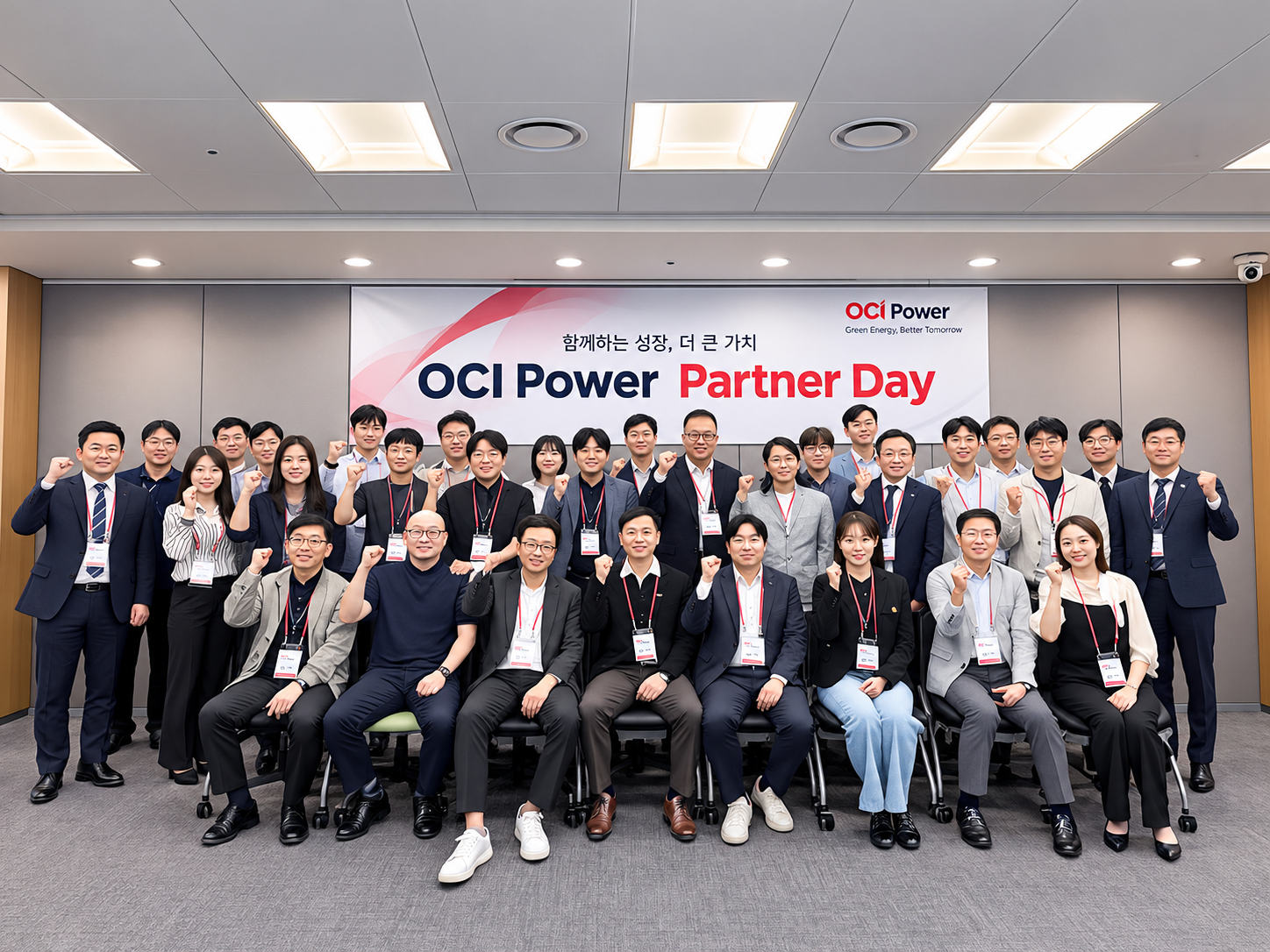
OCI Power Hosts Its First Partner Day with 14 Partner Companies to Foster Mutual Growth
Newsroom

OCI Power Hosts Its First Partner Day with 14 Partner Companies to Foster Mutual Growth

Shares Market-Specific String Inverter Portfolio and Partner Support Strategies with 14 Key PartnersIntroduces Partner Excellence Program (PEP) to Strengthen Partnerships and Advance Korean Inverter and Plant Control Technologies▲ OCI Power held the “2026 OCI Power Partner Conference” on October 6 at the OCI Building in Sogong-dong, Seoul, bringing together representatives from 14 key domestic partner companies.SEOUL, South Korea, October 21, 2026 — OCI Power (CEO Sung Yeop Kim) announced the successful completion of its first “2026 OCI Power Partner Conference,” held on October 6 at the OCI Building in Sogong-dong, Seoul, with representatives from 14 major domestic partner companies in attendance.The event was organized to strengthen collaboration with partners in response to the rapidly growing Korean solar market and to share strategies for enhancing sales competitiveness and achieving sustainable mutual growth.The conference brought together leading Korean solar industry partners, including Dongbaek Solar, SA ENG, Eversun, Cheongwoo Engineering, RST Solution, Shinmyung Engineering, Co&Co, SPV, G Solar, G3 Consultant Group, and Daeun E&C, among others.This marked OCI Power's first Partner Day dedicated to strengthening the competitiveness of its domestic solar partners and fostering long-term mutual growth. Two-Track String Inverter Strategy for Diverse Market NeedsDuring the conference, OCI Power introduced its Two-Track String Inverter Portfolio Strategy, designed to address the distinct requirements of Korea's private and public solar markets.The strategy offers differentiated product lineups tailored to the price-sensitive private sector and the policy and technical requirements of the public sector, enabling partners to respond more effectively to diverse customer needs. Introducing the Partner Excellence Program (PEP)OCI Power also unveiled its new Partner Excellence Program (PEP), a structured support initiative designed to provide differentiated benefits based on each partner's performance and contribution.Through this program, OCI Power aims to move beyond conventional product supply relationships by supporting partners in strengthening their business competitiveness and profitability while establishing a foundation for long-term collaboration. Strengthening Domestic Solar Technology Through PartnershipOCI Power emphasized the importance of creating a virtuous cycle in which expanded partner collaboration contributes to the advancement of Korea's solar technology capabilities.By offering a broader product portfolio, the company plans to expand its market presence and customer touchpoints. Operational data and customer feedback collected through these activities will be used to improve product quality and customer service.OCI Power also intends to leverage these field insights alongside its in-house research and development capabilities to advance next-generation Korean-made string inverters and solar power plant control solutions. Building Long-Term Partnerships for Sustainable Growth“In the rapidly growing solar industry, our partners are not simply sales channels but essential collaborators in achieving mutual growth,” said Sung Yeop Kim, CEO of OCI Power.“Starting with our string inverter promotions and the Partner Excellence Program, we will continue to expand support initiatives that help our partners strengthen their sales competitiveness and profitability.”Looking ahead, OCI Power plans to further expand its product portfolio tailored to the Korean solar market while leveraging its domestic R&D and manufacturing capabilities to enhance the competitiveness of its power conversion technologies and solar power plant control solutions.Through continued collaboration with its partners, the company aims to build a stronger foundation for sustainable growth in Korea's solar industry.Source: Electric Power (일렉트릭파워), October 21, 2026https://www.epj.co.kr/news/articleView.html?idxno=39615

View Details
OCI Power Signs MOU with KEPCO to Strengthen the Competitiveness of Korea’s Solar Inverter Industry
Newsroom

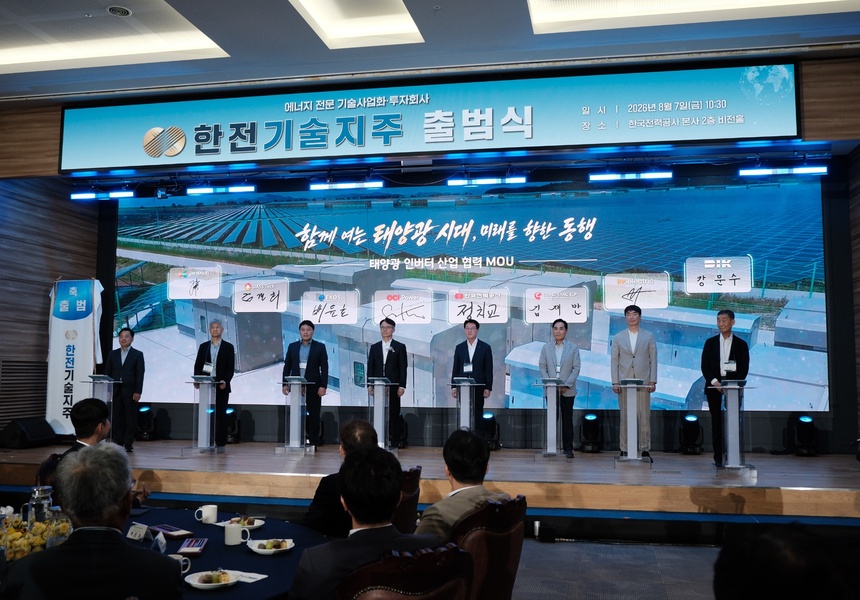
OCI Power Signs MOU with KEPCO to Strengthen the Competitiveness of Korea’s Solar Inverter Industry

Six manufacturers affiliated with the Korea Solar Inverter Industry Association participate in joint R&D and infrastructure development to strengthen technological capabilities ▲ OCI Power and KEPCO signed an MOU to strengthen the competitiveness of Korea’s solar inverter industry. ⓒ OCI PowerOCI Power announced on August 24 that it had signed an MOU on Strengthening the Competitiveness of Korea’s Solar Inverter Industry with Korea Electric Power Corporation (KEPCO) and domestic solar inverter manufacturers at the launch ceremony of KEPCO Technology Holdings, held at KEPCO’s headquarters on August 7.The agreement was signed by six manufacturers affiliated with the Korea Solar Inverter Industry Association, including OCI Power. Representing OCI Power, CEO Kim Seong-yeop signed the agreement.Under the MOU, KEPCO and the participating companies will collaborate on a range of initiatives, including ▲Joint R&D to strengthen solar inverter technology ▲Improvements to policies and systems to promote the industry ▲Support for certification costs and development of testing and demonstration infrastructure ▲Exchange of information on new technologies in Korea and overseas.Through these initiatives, the parties aim to strengthen the technological competitiveness of domestically manufactured solar inverters and establish a foundation for improved grid interconnection stability and enhanced communications and control security.Based on its domestic R&D and manufacturing capabilities, OCI Power develops and manufactures solar inverters and PCS for ESS in-house.Kim Seong-yeop, CEO of OCI Power, said “Solar inverters are key equipment that connects power generation facilities to the electrical grid, as well as strategic assets that support energy security. Based on our domestic R&D and manufacturing capabilities, OCI Power will actively contribute to advancing Korean inverter technology and strengthening the competitiveness of Korea’s energy infrastructure.”Source: 뉴데일리 (NewDaily)

View Details

OCI Power Completes Performance Verification of Solar Inverters at a Large-Scale Floating Solar Power Plant, Demonstrating Grid Stability
Newsroom

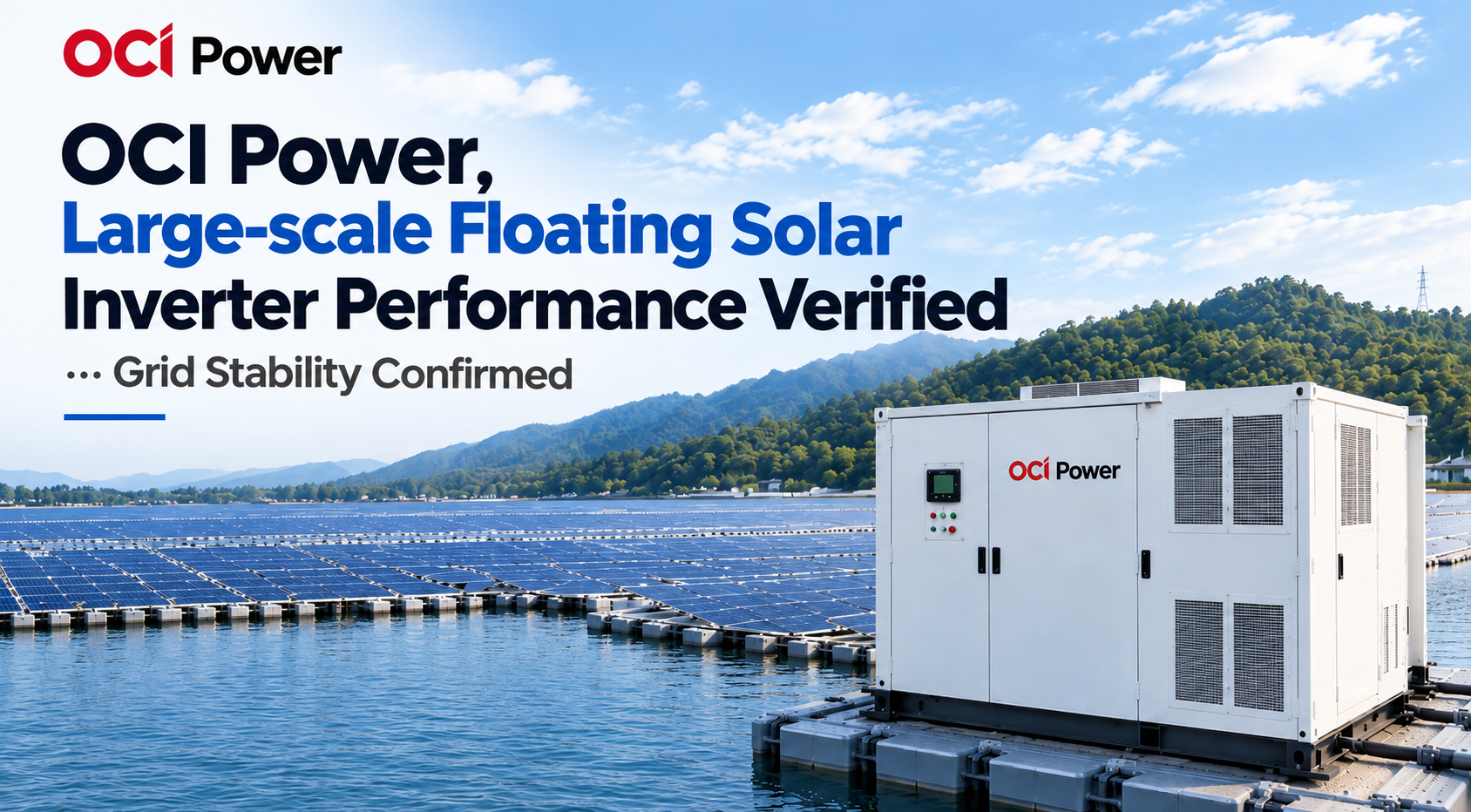
OCI Power Completes Performance Verification of Solar Inverters at a Large-Scale Floating Solar Power Plant, Demonstrating Grid Stability

 OCI Power, led by CEO Kim Seong-yeop, recently completed an Inverter Level Test to verify the grid interconnection performance of its proprietary solar inverters at large-scale floating solar power plants, the company announced on August 30.An Inverter Level Test is a mandatory test conducted before commercial operation to verify whether electricity generated by a solar power plant can be stably connected to the power grid. The test comprehensively evaluates whether the inverter can appropriately control parameters such as voltage and reactive power in response to changes in grid conditions and power generation, thereby maintaining grid stability.From April to June, OCI Power conducted tests at two large-scale floating solar power plants. The company verified the control performance of both the overall power generation complex and individual inverters, examining key functions required for grid interconnection, including: Power flow control across the power plant, Reactive power control, Power factor control, Q(V) control.According to the company, the tests confirmed that its proprietary solar inverters can maintain stable power control performance even in large-scale power generation environments. In particular, the inverters demonstrated their ability to maintain stable voltage and control the overall output of the power plant despite changes in grid operating conditions, establishing a technical foundation for commercial operation.An OCI Power representative said: “By successfully completing the inverter-level tests at large-scale power plants, we have established a foundation for stable commercial operation. We will continue to strengthen the competitiveness of domestically manufactured solar inverters through ongoing technology verification and quality improvements, while contributing to the stable expansion of renewable energy.”Source : 전기신문 (Electimes)

View Details
OCI Group Expands Its Presence in the U.S. Solar Market as Its Inverter Subsidiary Joins North America’s Largest Energy Exhibition
Newsroom

OCI Group Expands Its Presence in the U.S. Solar Market as Its Inverter Subsidiary Joins North America’s Largest Energy Exhibition

(Herald Economy Reporter Park Hye-won)OCI Power to Participate in RE+ 2026 in the United StatesJoining OCI’s Integrated Booth to Raise Brand Awareness Ahead of U.S. Market Expansion[Image generated using ChatGPT][Herald Economy = Reporter Park Hye-won] As electricity demand driven by artificial intelligence (AI) continues to surge, OCI Holdings’ affiliates are stepping up their efforts to expand in the U.S. solar market. Alongside investments in facilities by OCI Holdings’ U.S. solar business entities, OCI Power, an inverter manufacturer that has primarily focused on the Korean market, is also moving to accelerate its entry into the U.S. market.According to industry sources on August 24, OCI Power, an OCI Holdings affiliate specializing in solar inverters, will participate in RE+ 2026 in the United States for the first time this year. RE+ is the largest renewable energy exhibition in North America, with 995 companies expected to participate this year.Mission Solar Energy (MSE), OCI Holdings’ U.S. solar business entity, has participated in the exhibition every year together with key affiliates that have already established a presence in the U.S. market, including OCI Power and OCI Terrasus.OCI Power began supplying inverters to U.S. solar projects in 2013 and has continued to expand its equipment business in the market. This year, the company plans to further strengthen its sales activities, including the launch of new products. An OCI representative said: “Through collaboration among OCI affiliates, we plan to increase brand awareness and strengthen synergies in the U.S. market.”Alamo 1 solar project in Bexar County, San Antonio, Texas, operated by OCI Energy in the United States. [Provided by OCI Holdings]OCI Holdings’ aggressive expansion into the U.S. market comes as solar power emerges as a key energy source amid the surge in electricity demand driven by AI. While investment in the AI industry is rapidly increasing in the United States, the country faces challenges in securing sufficient electricity to support this growth. As a result, solar power is attracting attention as a relatively low-cost and rapidly deployable source of electricity.Source : 헤럴드경제 (Herald Economy)

View Details
Keeping Solar Power Running Without Interruption: Opening a New Chapter for Self-Consumption Solar Through Reverse Power Flow Control
Newsroom

Keeping Solar Power Running Without Interruption: Opening a New Chapter for Self-Consumption Solar Through Reverse Power Flow Control

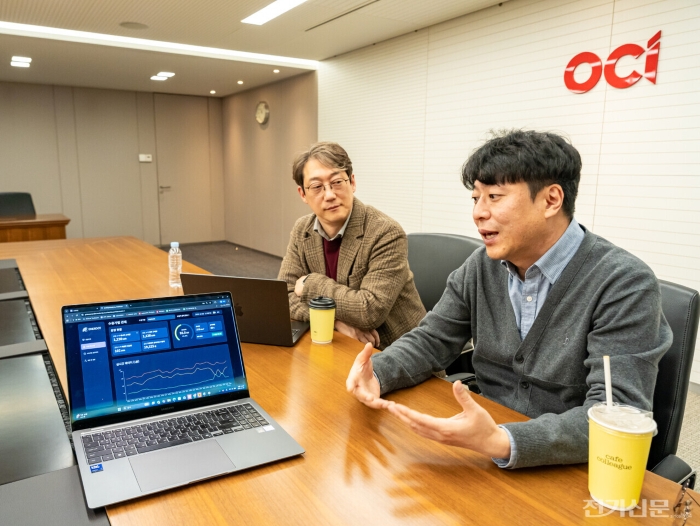
OCI Power and Enerdot Jointly Develop Real-Time Automatic Control Technology Without Interrupting Power GenerationSoftware-Based Control Overcomes the Limitations of Physical Shutdowns, Improving Grid Stability and Reducing Operational Losses97% Output Tracking Verified and Platform Integration Commercialized, Expanding Service Competitiveness ▲ Lim Seong-taek, Head of OCI Power’s Research Institute (left), and Jang Jin-wook, Head of Enerdot’s Research Institute (right), explain the demonstration results of the reverse power flow control solution. [Photo: Jin-hoo Kim]A technology that addresses the issue of reverse power flow from solar power systems through control rather than shutdown has been demonstrated for the first time in Korea. Unlike conventional output curtailment methods, which shut down equipment when reverse power flow is detected, the new approach keeps the solar power system operating while precisely adjusting its output. By addressing the seemingly conflicting objectives of grid stability and energy utilization simultaneously, the technology is expected to reduce operational losses and inefficiencies while opening new possibilities for the wider adoption of self-consumption solar power.In a recent interview with The Electrical Times, Lim Seong-taek, Head of OCI Power’s Research Institute, and Jang Jin-wook, Head of Enerdot’s Research Institute, explained the background behind the technology.“As self-consumption solar systems become more widespread, there are clear limitations to addressing reverse power flow solely through physical shutdowns.”The reverse power flow control technology jointly developed by the two companies is a prediction-based solution that automatically adjusts inverter output in real time to prevent reverse power flow from occurring in self-consumption solar systems.The system uses the actual electricity consumption of factories and buildings as a reference and controls solar output so that it does not exceed on-site demand. By responding through software before reverse power flow occurs, the system can maintain power generation rather than shutting down the equipment. The key feature is its ability to adjust output only to the minimum level required.The technology was demonstrated last year at a 215 kW self-consumption solar installation in Korea. It was the first case in the Korean solar market in which a reverse power flow control solution was deployed and operated at an actual site. The demonstration achieved output tracking of approximately 96–97% relative to electricity consumption, while solar power accounted for 29% of total daily electricity consumption.Because self-consumption solar systems are contracted on the assumption that electricity will not be exported to the grid, excess electricity flowing into the distribution network can result in contract violations and penalties. Unexpected reverse power flow can also cause protection relay malfunctions and equipment damage, and in severe cases may increase the risk of grid instability or power outages. This issue is particularly relevant to factories, where electricity consumption can differ significantly between weekdays and weekends. During holidays, electricity consumption can drop sharply while solar generation continues, increasing the possibility of reverse power flow.The problem is that conventional solutions have largely relied on shutdowns. When reverse power flow is detected, a circuit breaker trips in response to a protection relay signal, immediately stopping the system. While this approach ensures grid safety, system recovery depends entirely on manual intervention. If a physical trip occurs over a weekend or holiday and is not detected immediately, the equipment may remain offline for an extended period, resulting in accumulated generation losses.Lim Seong-taek, Head of OCI Power’s Research Institute, explained: “The limitation of conventional reverse power flow prevention is not a technological problem but an operational one. Although grid safety can be secured, losses continue to occur because subsequent operation depends on manual intervention.”The newly developed technology addresses this issue through automatic control. It collects and processes electricity consumption and generation data in real time and adjusts the output of multiple inverters either simultaneously or individually.Jang Jin-wook, Head of Enerdot’s Research Institute, said: “The key is to make the output follow electricity consumption instead of shutting down the power generation system. Predictive control is applied to prevent reverse power flow even when loads change rapidly.”Control is performed at the site level. A Remote Terminal Unit (RTU) collects and analyzes data at one-second intervals and also executes control commands. This means that the reverse power flow prevention function remains operational even if a communication failure occurs. Once communication is restored, control history and data are automatically reflected on the platform. Existing reverse power relays and circuit breakers based on conventional protection standards remain in place as the final layer of safety protection.The system also features an algorithm capable of simultaneously or individually adjusting the output of multiple inverters, providing advantages in terms of versatility and grid responsivenessThis technological shift could also affect the role of self-consumption solar in the energy market. Self-consumption solar systems have traditionally been viewed as a means of supplementing on-site electricity consumption without interacting with the grid. However, with precise control and data-driven operation, they could evolve into energy management assets. As industrial electricity prices remain higher than SMP and REC prices in certain market conditions, self-consumption solar is becoming more than a cost-saving measure—it is increasingly becoming part of corporate energy strategies. For companies operating self-consumption solar systems, the resulting data can also serve as a basis for internal reporting and investment decisions.With further regulatory development, self-consumption facilities could potentially evolve into prosumers that trade surplus electricity. The technology could also serve as a foundation for the expansion of VPPs (Virtual Power Plants) and EMS (Energy Management Systems).Jang Jin-wook explained: “Until now, self-consumption solar systems have lacked effective ways to systematically demonstrate how much electricity and cost they have actually saved. Through our platform, we plan to visualize and provide data on the share of solar power in total electricity consumption, cost savings before and after installation, and self-consumption performance by time of day.”The two companies are also developing a joint sales strategy. The plan is to equip inverters with basic control functions while maximizing the value of the solution through platform integration. OCI Power will contribute its equipment competitiveness, while Enerdot will provide its predictive control and platform capabilities. Together, the companies aim to address the self-consumption solar market as well as emerging centralized energy management systems.Distributing power generation across different time periods through output control could also help reduce grid congestion and expand the capacity for renewable energy interconnection.Lim Seong-taek added: “Self-consumption solar has now moved beyond simply asking how much capacity can be installed. The focus is shifting toward how reliably existing systems can be operated. When output control based on actual consumption becomes established, self-consumption solar can evolve beyond a simple cost-saving measure into a sustainable energy management model.”Source : 전기신문 (Electimes)

View Details
OCI Power CEO Kim Seong-yeop: “The Chinese Dominance of Solar Inverters Makes Localization a Matter of Survival”
Newsroom

OCI Power CEO Kim Seong-yeop: “The Chinese Dominance of Solar Inverters Makes Localization a Matter of Survival”

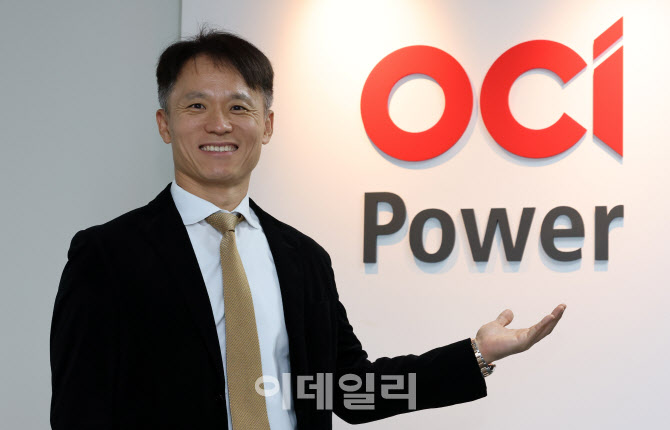
Chinese Companies Have Effectively Taken Over Korea’s Solar Value ChainMandatory Use of Korean-Made Products in Public Procurement Is EssentialOCI Power Develops and Manufactures Large-Scale Central Inverters In-HouseExpanding BIPV Supply for Distributed Renewable Energy and Urban Applications“Chinese solar inverter companies entering the Korean market are not here simply to make money in the short term. They are entering the market to clear excess inventory produced in China by aggressively lowering prices and triggering a price war in Korea. If Korean companies eventually withdraw from the market due to chronic losses and a monopoly structure is established, there may be little the Korean government can do when replacement prices are subsequently raised.”Kim Seong-yeop, CEO of OCI Power, issued this warning in an interview with Edaily held at OCI Building in Jung-gu, Seoul, on the 23rd. He warned that unless effective measures, such as mandatory use of domestically manufactured components, are implemented in a timely manner, not only small and medium-sized component manufacturers but also the remaining Korean solar companies could face difficulties surviving. “If the current trend continues, we could lose not only the possibility of developing ‘sovereign inverters’ but the entire solar value chain to China.”▲ Kim Seong-yeop, CEO of OCI Power, during an interview with Edaily on the 23rd. [Photo: In-kwon Bang, Edaily]Developing Central Inverters In-House to Compete with Chinese ProductsThe Korean government has recently taken measures in response to growing concerns that the domestic solar ecosystem is being undermined by Chinese products. To prevent cases in which Chinese-made inverters are relabeled and presented as domestic products using Korean components, the government plans to provide additional points in public procurement when products have a high proportion of domestically manufactured components. However, some industry observers argue that such measures remain insufficient because they are largely advisory in nature and because the domestic solar ecosystem has already lost competitiveness in areas such as technology and pricing.Kim said: “It is extremely difficult for Korean manufacturers to compete with Chinese inverter prices, which benefit from economies of scale, lower labor costs, and low production prices, even if we manufacture in Southeast Asia. Although the government has finally begun preparing measures, it needs to implement effective policies that would make the use of Korean-made inverters mandatory, at least for public projects, while significantly expanding support.”The solar power industry spans the value chain from polysilicon → ingot → wafer → cell → module → inverter. After domestic supply chains for wafers, cells, and modules were weakened by low-cost Chinese products, Chinese manufacturers have also come to account for an estimated 90% of the domestic solar inverter market. Against this backdrop, OCI Power is focusing on the development and in-house manufacturing of central inverters, rather than the small-scale string inverters that Chinese manufacturers primarily focus on.Kim explained: “Our central inverters meet grid interconnection standards tailored to the characteristics of the Korean power system. We also have advantages in rapid technological response through our domestic R&D and manufacturing resources, as well as maintenance through our domestic service personnel. We are doing our best to secure a competitive advantage in the inverter market by working together with small and medium-sized companies with which we have mutually beneficial relationships.”Regarding security concerns surrounding Chinese-made inverters, including potential backdoors and overseas transmission of data, Kim emphasized the need for stronger security measures.“Data showing domestic power generation patterns could potentially be transmitted to remote servers, or communications could be carried out without clearly identifying the manufacturer or operator. This could pose a serious threat to domestic power grid management. While it is important for individual companies to strengthen their internal security architectures, the government also needs to establish a system requiring rigorous security certification.”U.S. Sales Expected Next Year, with Solutions Linked to Edge Data CentersOCI Power plans to expand beyond the Korean market and accelerate its entry into the U.S. market next year. In the central inverter business, the company is preparing maintenance services for large-scale solar projects it carried out in the United States more than a decade ago, while also preparing to launch new products for the U.S. market in the second half of the year.Kim said: “When we carried out a solar power project in Texas in the early 2010s, we installed approximately 1 GW of central inverter capacity. Those projects are now reaching the maintenance stage, creating sales opportunities. Once we obtain certification from Underwriters Laboratories (UL) in the United States next year, we expect sales of new products for the U.S. market to begin in earnest in the second half of the year.”Since introducing Korea’s first central solar inverter to the market in 2012, OCI Power has continued to develop technologies and business capabilities in key power conversion equipment, including central inverters, PCS, and PowerStack, making it one of the few Korean companies maintaining a presence across these areas. The company also plans to actively pursue new businesses that could become future growth drivers.Kim said: “We see opportunities in renewable energy generation linked to edge data centers, a distributed renewable energy model in which electricity is generated, stored, and controlled near data centers rather than through centralized power generation. We are preparing integrated solutions for this market.Kim Seong-yeop, CEO of OCI PowerSource : 이데일리 (Edaily)

View Details