Driving Sustainable Energy
for a better tomorrow

Products

Media center

  • Newsroom

  • Blog

OCI Power Signs MOU with KEPCO to Strengthen the Competitiveness of Korea’s Solar Inverter Industry
Newsroom

OCI Power Signs MOU with KEPCO to Strengthen the Competitiveness of Korea’s Solar Inverter Industry

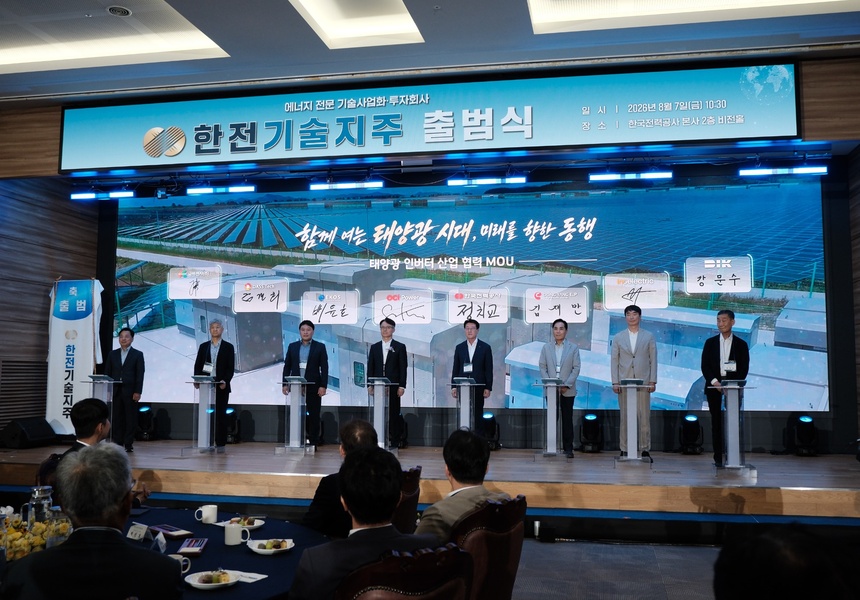
Six manufacturers affiliated with the Korea Solar Inverter Industry Association participate in joint R&D and infrastructure development to strengthen technological capabilities ▲ OCI Power and KEPCO signed an MOU to strengthen the competitiveness of Korea’s solar inverter industry. ⓒ OCI PowerOCI Power announced on August 24 that it had signed an MOU on Strengthening the Competitiveness of Korea’s Solar Inverter Industry with Korea Electric Power Corporation (KEPCO) and domestic solar inverter manufacturers at the launch ceremony of KEPCO Technology Holdings, held at KEPCO’s headquarters on August 7.The agreement was signed by six manufacturers affiliated with the Korea Solar Inverter Industry Association, including OCI Power. Representing OCI Power, CEO Kim Seong-yeop signed the agreement.Under the MOU, KEPCO and the participating companies will collaborate on a range of initiatives, including ▲Joint R&D to strengthen solar inverter technology ▲Improvements to policies and systems to promote the industry ▲Support for certification costs and development of testing and demonstration infrastructure ▲Exchange of information on new technologies in Korea and overseas.Through these initiatives, the parties aim to strengthen the technological competitiveness of domestically manufactured solar inverters and establish a foundation for improved grid interconnection stability and enhanced communications and control security.Based on its domestic R&D and manufacturing capabilities, OCI Power develops and manufactures solar inverters and PCS for ESS in-house.Kim Seong-yeop, CEO of OCI Power, said “Solar inverters are key equipment that connects power generation facilities to the electrical grid, as well as strategic assets that support energy security. Based on our domestic R&D and manufacturing capabilities, OCI Power will actively contribute to advancing Korean inverter technology and strengthening the competitiveness of Korea’s energy infrastructure.”Source: 뉴데일리 (NewDaily)

View Details
OCI Power Completes Performance Verification of Solar Inverters at a Large-Scale Floating Solar Power Plant, Demonstrating Grid Stability
Newsroom

OCI Power Completes Performance Verification of Solar Inverters at a Large-Scale Floating Solar Power Plant, Demonstrating Grid Stability

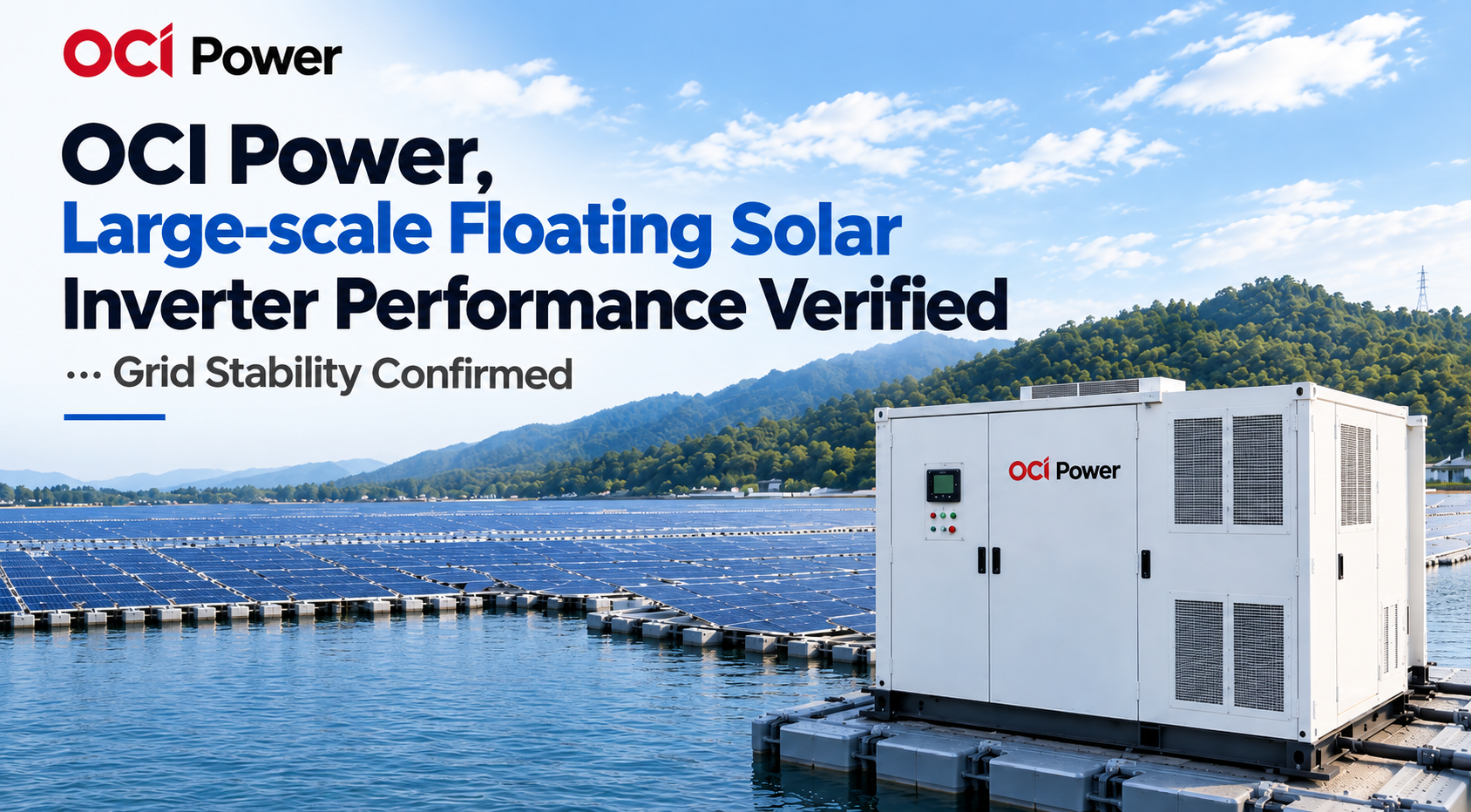
 OCI Power, led by CEO Kim Seong-yeop, recently completed an Inverter Level Test to verify the grid interconnection performance of its proprietary solar inverters at large-scale floating solar power plants, the company announced on August 30.An Inverter Level Test is a mandatory test conducted before commercial operation to verify whether electricity generated by a solar power plant can be stably connected to the power grid. The test comprehensively evaluates whether the inverter can appropriately control parameters such as voltage and reactive power in response to changes in grid conditions and power generation, thereby maintaining grid stability.From April to June, OCI Power conducted tests at two large-scale floating solar power plants. The company verified the control performance of both the overall power generation complex and individual inverters, examining key functions required for grid interconnection, including: Power flow control across the power plant, Reactive power control, Power factor control, Q(V) control.According to the company, the tests confirmed that its proprietary solar inverters can maintain stable power control performance even in large-scale power generation environments. In particular, the inverters demonstrated their ability to maintain stable voltage and control the overall output of the power plant despite changes in grid operating conditions, establishing a technical foundation for commercial operation.An OCI Power representative said: “By successfully completing the inverter-level tests at large-scale power plants, we have established a foundation for stable commercial operation. We will continue to strengthen the competitiveness of domestically manufactured solar inverters through ongoing technology verification and quality improvements, while contributing to the stable expansion of renewable energy.”Source : 전기신문 (Electimes)

View Details
OCI Group Expands Its Presence in the U.S. Solar Market as Its Inverter Subsidiary Joins North America’s Largest Energy Exhibition
Newsroom

OCI Group Expands Its Presence in the U.S. Solar Market as Its Inverter Subsidiary Joins North America’s Largest Energy Exhibition

(Herald Economy Reporter Park Hye-won)OCI Power to Participate in RE+ 2026 in the United StatesJoining OCI’s Integrated Booth to Raise Brand Awareness Ahead of U.S. Market Expansion[Image generated using ChatGPT][Herald Economy = Reporter Park Hye-won] As electricity demand driven by artificial intelligence (AI) continues to surge, OCI Holdings’ affiliates are stepping up their efforts to expand in the U.S. solar market. Alongside investments in facilities by OCI Holdings’ U.S. solar business entities, OCI Power, an inverter manufacturer that has primarily focused on the Korean market, is also moving to accelerate its entry into the U.S. market.According to industry sources on August 24, OCI Power, an OCI Holdings affiliate specializing in solar inverters, will participate in RE+ 2026 in the United States for the first time this year. RE+ is the largest renewable energy exhibition in North America, with 995 companies expected to participate this year.Mission Solar Energy (MSE), OCI Holdings’ U.S. solar business entity, has participated in the exhibition every year together with key affiliates that have already established a presence in the U.S. market, including OCI Power and OCI Terrasus.OCI Power began supplying inverters to U.S. solar projects in 2013 and has continued to expand its equipment business in the market. This year, the company plans to further strengthen its sales activities, including the launch of new products. An OCI representative said: “Through collaboration among OCI affiliates, we plan to increase brand awareness and strengthen synergies in the U.S. market.”Alamo 1 solar project in Bexar County, San Antonio, Texas, operated by OCI Energy in the United States. [Provided by OCI Holdings]OCI Holdings’ aggressive expansion into the U.S. market comes as solar power emerges as a key energy source amid the surge in electricity demand driven by AI. While investment in the AI industry is rapidly increasing in the United States, the country faces challenges in securing sufficient electricity to support this growth. As a result, solar power is attracting attention as a relatively low-cost and rapidly deployable source of electricity.Source : 헤럴드경제 (Herald Economy)

View Details
Keeping Solar Power Running Without Interruption: Opening a New Chapter for Self-Consumption Solar Through Reverse Power Flow Control
Newsroom

Keeping Solar Power Running Without Interruption: Opening a New Chapter for Self-Consumption Solar Through Reverse Power Flow Control

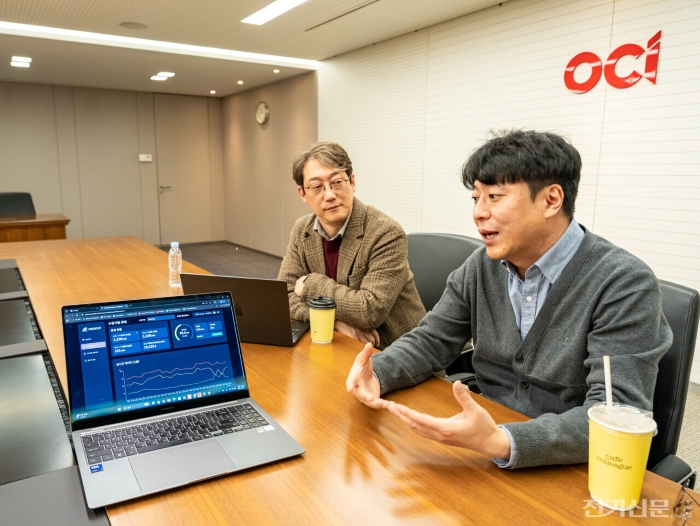
OCI Power and Enerdot Jointly Develop Real-Time Automatic Control Technology Without Interrupting Power GenerationSoftware-Based Control Overcomes the Limitations of Physical Shutdowns, Improving Grid Stability and Reducing Operational Losses97% Output Tracking Verified and Platform Integration Commercialized, Expanding Service Competitiveness ▲ Lim Seong-taek, Head of OCI Power’s Research Institute (left), and Jang Jin-wook, Head of Enerdot’s Research Institute (right), explain the demonstration results of the reverse power flow control solution. [Photo: Jin-hoo Kim]A technology that addresses the issue of reverse power flow from solar power systems through control rather than shutdown has been demonstrated for the first time in Korea. Unlike conventional output curtailment methods, which shut down equipment when reverse power flow is detected, the new approach keeps the solar power system operating while precisely adjusting its output. By addressing the seemingly conflicting objectives of grid stability and energy utilization simultaneously, the technology is expected to reduce operational losses and inefficiencies while opening new possibilities for the wider adoption of self-consumption solar power.In a recent interview with The Electrical Times, Lim Seong-taek, Head of OCI Power’s Research Institute, and Jang Jin-wook, Head of Enerdot’s Research Institute, explained the background behind the technology.“As self-consumption solar systems become more widespread, there are clear limitations to addressing reverse power flow solely through physical shutdowns.”The reverse power flow control technology jointly developed by the two companies is a prediction-based solution that automatically adjusts inverter output in real time to prevent reverse power flow from occurring in self-consumption solar systems.The system uses the actual electricity consumption of factories and buildings as a reference and controls solar output so that it does not exceed on-site demand. By responding through software before reverse power flow occurs, the system can maintain power generation rather than shutting down the equipment. The key feature is its ability to adjust output only to the minimum level required.The technology was demonstrated last year at a 215 kW self-consumption solar installation in Korea. It was the first case in the Korean solar market in which a reverse power flow control solution was deployed and operated at an actual site. The demonstration achieved output tracking of approximately 96–97% relative to electricity consumption, while solar power accounted for 29% of total daily electricity consumption.Because self-consumption solar systems are contracted on the assumption that electricity will not be exported to the grid, excess electricity flowing into the distribution network can result in contract violations and penalties. Unexpected reverse power flow can also cause protection relay malfunctions and equipment damage, and in severe cases may increase the risk of grid instability or power outages. This issue is particularly relevant to factories, where electricity consumption can differ significantly between weekdays and weekends. During holidays, electricity consumption can drop sharply while solar generation continues, increasing the possibility of reverse power flow.The problem is that conventional solutions have largely relied on shutdowns. When reverse power flow is detected, a circuit breaker trips in response to a protection relay signal, immediately stopping the system. While this approach ensures grid safety, system recovery depends entirely on manual intervention. If a physical trip occurs over a weekend or holiday and is not detected immediately, the equipment may remain offline for an extended period, resulting in accumulated generation losses.Lim Seong-taek, Head of OCI Power’s Research Institute, explained: “The limitation of conventional reverse power flow prevention is not a technological problem but an operational one. Although grid safety can be secured, losses continue to occur because subsequent operation depends on manual intervention.”The newly developed technology addresses this issue through automatic control. It collects and processes electricity consumption and generation data in real time and adjusts the output of multiple inverters either simultaneously or individually.Jang Jin-wook, Head of Enerdot’s Research Institute, said: “The key is to make the output follow electricity consumption instead of shutting down the power generation system. Predictive control is applied to prevent reverse power flow even when loads change rapidly.”Control is performed at the site level. A Remote Terminal Unit (RTU) collects and analyzes data at one-second intervals and also executes control commands. This means that the reverse power flow prevention function remains operational even if a communication failure occurs. Once communication is restored, control history and data are automatically reflected on the platform. Existing reverse power relays and circuit breakers based on conventional protection standards remain in place as the final layer of safety protection.The system also features an algorithm capable of simultaneously or individually adjusting the output of multiple inverters, providing advantages in terms of versatility and grid responsivenessThis technological shift could also affect the role of self-consumption solar in the energy market. Self-consumption solar systems have traditionally been viewed as a means of supplementing on-site electricity consumption without interacting with the grid. However, with precise control and data-driven operation, they could evolve into energy management assets. As industrial electricity prices remain higher than SMP and REC prices in certain market conditions, self-consumption solar is becoming more than a cost-saving measure—it is increasingly becoming part of corporate energy strategies. For companies operating self-consumption solar systems, the resulting data can also serve as a basis for internal reporting and investment decisions.With further regulatory development, self-consumption facilities could potentially evolve into prosumers that trade surplus electricity. The technology could also serve as a foundation for the expansion of VPPs (Virtual Power Plants) and EMS (Energy Management Systems).Jang Jin-wook explained: “Until now, self-consumption solar systems have lacked effective ways to systematically demonstrate how much electricity and cost they have actually saved. Through our platform, we plan to visualize and provide data on the share of solar power in total electricity consumption, cost savings before and after installation, and self-consumption performance by time of day.”The two companies are also developing a joint sales strategy. The plan is to equip inverters with basic control functions while maximizing the value of the solution through platform integration. OCI Power will contribute its equipment competitiveness, while Enerdot will provide its predictive control and platform capabilities. Together, the companies aim to address the self-consumption solar market as well as emerging centralized energy management systems.Distributing power generation across different time periods through output control could also help reduce grid congestion and expand the capacity for renewable energy interconnection.Lim Seong-taek added: “Self-consumption solar has now moved beyond simply asking how much capacity can be installed. The focus is shifting toward how reliably existing systems can be operated. When output control based on actual consumption becomes established, self-consumption solar can evolve beyond a simple cost-saving measure into a sustainable energy management model.”Source : 전기신문 (Electimes)

View Details
OCI Power CEO Kim Seong-yeop: “The Chinese Dominance of Solar Inverters Makes Localization a Matter of Survival”
Newsroom

OCI Power CEO Kim Seong-yeop: “The Chinese Dominance of Solar Inverters Makes Localization a Matter of Survival”

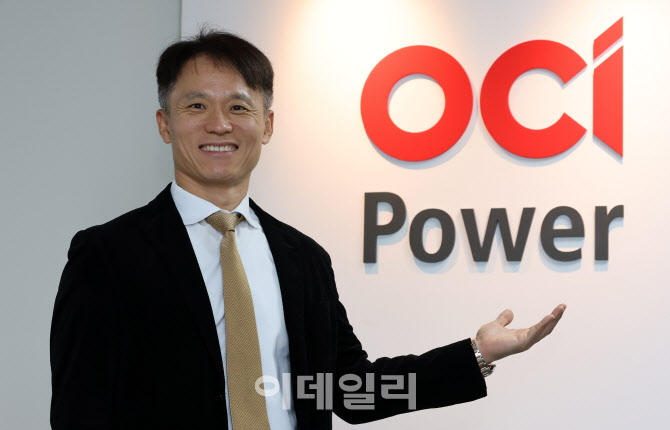
Chinese Companies Have Effectively Taken Over Korea’s Solar Value ChainMandatory Use of Korean-Made Products in Public Procurement Is EssentialOCI Power Develops and Manufactures Large-Scale Central Inverters In-HouseExpanding BIPV Supply for Distributed Renewable Energy and Urban Applications“Chinese solar inverter companies entering the Korean market are not here simply to make money in the short term. They are entering the market to clear excess inventory produced in China by aggressively lowering prices and triggering a price war in Korea. If Korean companies eventually withdraw from the market due to chronic losses and a monopoly structure is established, there may be little the Korean government can do when replacement prices are subsequently raised.”Kim Seong-yeop, CEO of OCI Power, issued this warning in an interview with Edaily held at OCI Building in Jung-gu, Seoul, on the 23rd. He warned that unless effective measures, such as mandatory use of domestically manufactured components, are implemented in a timely manner, not only small and medium-sized component manufacturers but also the remaining Korean solar companies could face difficulties surviving. “If the current trend continues, we could lose not only the possibility of developing ‘sovereign inverters’ but the entire solar value chain to China.”▲ Kim Seong-yeop, CEO of OCI Power, during an interview with Edaily on the 23rd. [Photo: In-kwon Bang, Edaily]Developing Central Inverters In-House to Compete with Chinese ProductsThe Korean government has recently taken measures in response to growing concerns that the domestic solar ecosystem is being undermined by Chinese products. To prevent cases in which Chinese-made inverters are relabeled and presented as domestic products using Korean components, the government plans to provide additional points in public procurement when products have a high proportion of domestically manufactured components. However, some industry observers argue that such measures remain insufficient because they are largely advisory in nature and because the domestic solar ecosystem has already lost competitiveness in areas such as technology and pricing.Kim said: “It is extremely difficult for Korean manufacturers to compete with Chinese inverter prices, which benefit from economies of scale, lower labor costs, and low production prices, even if we manufacture in Southeast Asia. Although the government has finally begun preparing measures, it needs to implement effective policies that would make the use of Korean-made inverters mandatory, at least for public projects, while significantly expanding support.”The solar power industry spans the value chain from polysilicon → ingot → wafer → cell → module → inverter. After domestic supply chains for wafers, cells, and modules were weakened by low-cost Chinese products, Chinese manufacturers have also come to account for an estimated 90% of the domestic solar inverter market. Against this backdrop, OCI Power is focusing on the development and in-house manufacturing of central inverters, rather than the small-scale string inverters that Chinese manufacturers primarily focus on.Kim explained: “Our central inverters meet grid interconnection standards tailored to the characteristics of the Korean power system. We also have advantages in rapid technological response through our domestic R&D and manufacturing resources, as well as maintenance through our domestic service personnel. We are doing our best to secure a competitive advantage in the inverter market by working together with small and medium-sized companies with which we have mutually beneficial relationships.”Regarding security concerns surrounding Chinese-made inverters, including potential backdoors and overseas transmission of data, Kim emphasized the need for stronger security measures.“Data showing domestic power generation patterns could potentially be transmitted to remote servers, or communications could be carried out without clearly identifying the manufacturer or operator. This could pose a serious threat to domestic power grid management. While it is important for individual companies to strengthen their internal security architectures, the government also needs to establish a system requiring rigorous security certification.”U.S. Sales Expected Next Year, with Solutions Linked to Edge Data CentersOCI Power plans to expand beyond the Korean market and accelerate its entry into the U.S. market next year. In the central inverter business, the company is preparing maintenance services for large-scale solar projects it carried out in the United States more than a decade ago, while also preparing to launch new products for the U.S. market in the second half of the year.Kim said: “When we carried out a solar power project in Texas in the early 2010s, we installed approximately 1 GW of central inverter capacity. Those projects are now reaching the maintenance stage, creating sales opportunities. Once we obtain certification from Underwriters Laboratories (UL) in the United States next year, we expect sales of new products for the U.S. market to begin in earnest in the second half of the year.”Since introducing Korea’s first central solar inverter to the market in 2012, OCI Power has continued to develop technologies and business capabilities in key power conversion equipment, including central inverters, PCS, and PowerStack, making it one of the few Korean companies maintaining a presence across these areas. The company also plans to actively pursue new businesses that could become future growth drivers.Kim said: “We see opportunities in renewable energy generation linked to edge data centers, a distributed renewable energy model in which electricity is generated, stored, and controlled near data centers rather than through centralized power generation. We are preparing integrated solutions for this market.Kim Seong-yeop, CEO of OCI PowerSource : 이데일리 (Edaily)

View Details
PV·ESS리더스클럽, “다시 뛰는 산업, 협업·전환·혁신으로 재도약 이끌자”
Newsroom

PV·ESS리더스클럽, “다시 뛰는 산업, 협업·전환·혁신으로 재도약 이끌자”

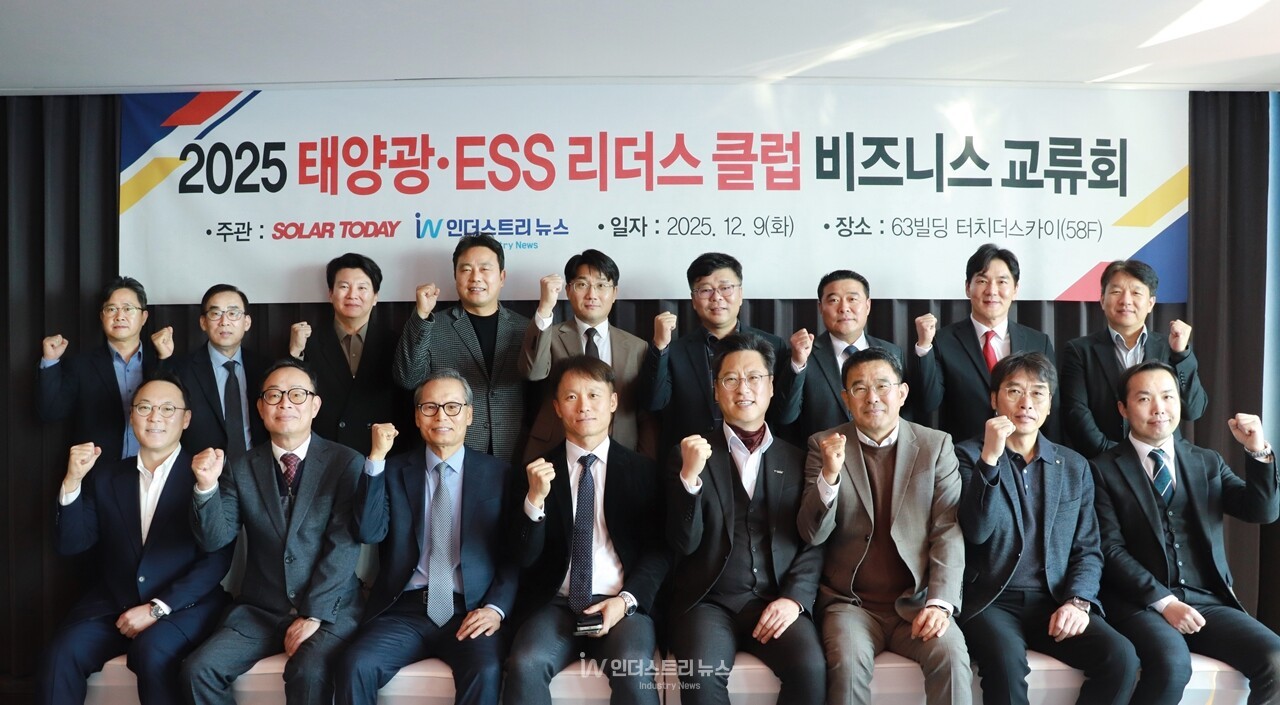
[인더스트리뉴스 정한교 기자] 지난해에 이어 국내·외 태양광 및 ESS(에너지저장시스템) 산업을 이끄는 주요 기업 대표들이 한 자리에 모였다. 지난해 첫 모임을 통해 업계 협력을 강화한 데 이어, 올해는 새로운 에너지 시장 환경 속 ‘재편·전환·도약’ 전략을 공유하며 동반 성장을 다짐하는 자리로 마련됐다. ‘2025 태양광·ESS 리더스클럽 비즈니스 교류회’ 참석자들이 기념촬영을 하고 있다. [사진=인더스트리뉴스]<솔라투데이>, <인더스트리뉴스>는 2024년 1월부터 ‘Change The World’라는 의미를 담아 탄소중립과 디지털 전환에 기여하고, 관련 산업을 선도하고 있는 국내 대표기업 CEO 인터뷰를 매달 릴레이 형식으로 연재하고 있다.올해로 2회째를 맞이한 ‘태양광·ESS 리더스클럽 비즈니스 교류회’는 2024년 1월 HD현대에너지솔루션 박종환 대표를 시작으로, 올해 12월 그랜드썬기술단 위난구 대표까지 총 24명의 태양광 및 ESS 주요 기업 대표들이 대상자로 선정됐다.이에 따라 9일 서울 여의도 63빌딩에서 개최된 ‘2025년 태양광·ESS 리더스클럽 비즈니스 교류회’에는 2024년 인터뷰를 진행했던 솔라플레이 안병준 대표(8월), 비엠이 이상곤 대표(9월), 비에이에너지 강태영 대표(10월), 브라이트에너지파트너스(BEP) 김희성 의장(11월), 대연씨앤아이 신대현 대표(12월)가 참석해 자리를 빛냈다.이와 함께 2025년 인터뷰를 진행한 인셀 정창권 대표(1월), 솔랩 김정식 대표(2월), 선그로우파워코리아 김호섭 지사장(3월), 대건소프트 이재명 대표(4월), 에타솔라 한 민 대표(5월), 화웨이코리아 디지털파워사업부 친 원 부서장(8월), OCI파워 김성엽 대표(9월), 에스디엔 정성원 대표(10월), 에스지에너지 이진섭 대표(11월)가 참석했다.HD현대에너지솔루션 박종환 대표(2024년 1월), 신성이엔지 이지선 대표(2024년 2월), 소울에너지 안지영 대표(2024년 4월), 에스피브이 김성권 대표(2024년 5월), 해줌 권오현 대표(2024년 6월), 다쓰테크 금만희 대표(2024년 7월), 한화솔루션 큐셀부문 유재열 전무(2025년 6월), 엔라이튼 이영호 대표(2025년 7월), 그랜드썬기술단 위난구 대표(2025년 12월)는 개인 사정으로 인해 이번 교류회에 참석하지 못했다.최근 국내 재생에너지 시장은 전력시장 개방 논의, ESS 제도 개편, AI 기반 에너지 운영(VPP·EMS) 확산 등 새로운 화두가 집중 조명되고 있다. 이에 화답하듯, 참석자들은 국내 경기 침체와 글로벌 공급망 변화로 업계 전반에 어려움이 가중되는 가운데, 힘을 모아 대응 전략을 마련해야 한다는 데 뜻을 모았다. ‘2025년 태양광·ESS 리더스클럽 비즈니스 교류회’가 9일 서울 여의도 63빌딩에서 개최됐다. [사진=인더스트리뉴스]처음으로 인사를 시작한 대연씨앤아이 신대현 대표는 “올 한해를 결산해보니 힘들수록 직원들에게 의지할 수밖에 없더라”며, “1998년 설립된 대연씨앤아이는 꾸준히 굴러가려고 노력하고 있다. 당사가 계속 굴러갈 수 있도록 많은 도움과 조언 부탁드린다”고 포문을 열었다.대건소프트 이재명 대표는 “당사 역시 2025년 여전히 힘든 한 해를 보냈고, 내년을 기대하면서 힘차게 나아가고자 한다”며, “인공지능(AI) 기반 예측 솔루션이 향후 수익 증가와 안정성 확보의 핵심이라 보고, 전체 시스템으로 확대할 수 있도록 많은 시도와 노력을 이어가고 있다”고 밝혔다.선그로우파워코리아 김호섭 지사장은 “재작년도 어려웠고, 작년도 어려웠고, 올해도 어려웠다. 항상 어려운 것 같다”며, “그럼에도 여기 모인 대표님들과 함께 대한민국의 건강한 시장을 다 같이 만들어갈 수 있도록 목표했으면 한다”고 말했다.솔라플레이 안병준 대표는 “시행·시공사인 솔라플레이를 발전사업 운영으로 사업을 전환하려 했지만, 재생에너지 확산이라는 국가적 목표에 동참하고자 다시금 나아가기로 했다”고 운을 띄웠다.이어 안 대표는 “현재 한국태양광공사협회 회장직을 맡으면서 목표한 것 중 하나가 회원사 수를 200개까지 늘리는 것”이라며, “함께 목소리를 낼 수 있도록 많은 관심 부탁드린다”고 소개했다.솔랩 김정식 대표는 “태양광 산업은 인류가 멸망하지 않는 한 계속적인 화두가 될 것”이라며, “솔랩은 이러한 태양광 산업이 지속적으로 성장할 수 있도록 기술 발전을 거듭하기 위한 노력을 기울이고 있다”고 말했다.브라이트에너지파트너스(BEP) 김희성 의장은 “태양광에 대한 다양한 이야기가 오가고 있지만, 지난 10~20년의 재생에너지 공급량은 결국 태양광이 채워왔다”며, “태양광은 조용히 자기 할 일을 하는 분야이며, 앞으로도 당사는 이를 기반으로 우리나라의 넷제로 달성에 기여하도록 하겠다”고 밝혔다.비에이에너지 강태영 대표는 “올해는 지난해 목표였던 해외 진출을 이룬 한해”라며, “내년에는 배터리 밸류체인 전반으로 고객군을 더욱 넓힐 수 있도록 노력하고자 한다”고 포부를 밝혔다.비엠이 이상곤 대표는 “올해 국내외적으로, 특히 정치적으로 급변한 한해였다”며, “내년 태양광 산업은 긍정적으로 좋아질 전망이며, 비엠이도 열심히 이를 뒷받침하고자 한다”고 밝혔다.에스지에너지 이진섭 대표는 “2025년 제로에너지건축 의무화로 BIPV 시장이 크게 성장 중”이라며, “2027년쯤이면, 시장이 지금의 10배 규모로 성장할 것이다. 시장점유율 1위를 기록 중인 에스지에너지가 BIPV 성장에 더욱 기여할 수 있도록 노력하고 있다”고 말했다.에스디엔 정성원 대표는 “국내 모듈 제조 환경이 매우 어려운 시기”라며, “지난 몇 년간 외산 모듈과의 경쟁에 부침이 심했지만, 현 정부 들어서서 국산 모듈에 대한 문의가 다시금 늘어나고 있다. 내년에는 국산 모듈이 더욱 힘을 낼 수 있지 않을까 기대하고 있다”고 말했다.화웨이코리아 디지털파워사업부 친 원 부서장은 “한국 태양광 시장은 가장 터프한 시장 중 하나”라며, “화웨이는 태양광, ESS뿐만 아니라 데이터센터, AI, EV 충전 등 다양한 솔루션 협업 가능성이 있다. 이에 많이 기업과 함께 협력해 한국의 탄소중립 달성을 지원하고자 한다”고 말했다.에타솔라 한 민 대표는 “태양광 외에도 ESS·BIPV 등 새로운 시장 변화가 빠르게 일어나고 있다”며, “시장 변화 속도가 빨라 적응이 점점 어려워지고 있는데, 기업들이 협업해 새로운 시장에서 기회를 만들었으면 한다”고 말했다.OCI파워 김성엽 대표는 “최근 국내 태양광 시장이 많이 어렵다. 이에 당사는 앞으로의 20년 준비가 더 중요하다고 판단해 네트워크를 확대하고 있다”며, “생태계가 성장해야 회사도 동반 성장할 수 있다. 생태계가 성장할 수 있도록 OCI파워가 힘을 보태고자 한다”고 밝혔다.마지막으로 인셀 정창권 대표는 “그동안 침체돼 있던 ESS 시장이 다시금 성장의 기지개를 켜고 있다”며, “인셀은 이러한 시장에서 안전성을 강화한 액침형 ESS를 통해 성장을 뒷받침하고자 한다”고 소개를 마쳤다.본지는 지난해에 이어 2025년에도 빠르게 변화하는 에너지 시장에서 협력과 혁신의 플랫폼으로 자리매김해 재생에너지 산업의 지속 성장을 이끄는 기업 CEO들을 만났다. 태양광 및 ESS 업계 변화를 주도하는 ‘태양광·ESS 리더스클럽’은 2026년에도 지속될 예정이다.뉴스본문: 인더스트리뉴스

View Details
에너지·계통안보 목소리 뭉쳤다...첫 韓 인버터 제조사 연합 전격 출범
Newsroom

에너지·계통안보 목소리 뭉쳤다...첫 韓 인버터 제조사 연합 전격 출범

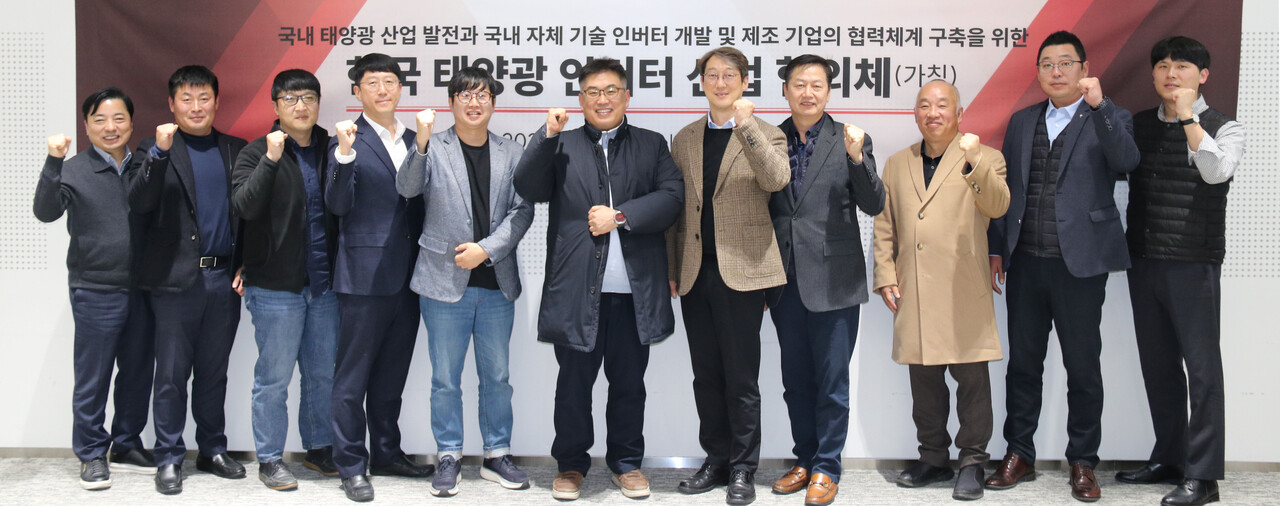
中 점유율 80% 넘는 구조 속 국산 기술 보호 필요성 부각정부 NDC 상향과 전력망 안정성 논란 속 공급망 재편 필요성 부상국산 인버터 산업 기반 강화 위한 공동 전략 논의 본격화 국내 인버터 제조사 관계자들이 협의체 출범과 함께 단체 기념촬영을 하고 있다. [제공=OCI파워]재생에너지 확대 기조 속 외산 장비의 시장 잠식과 계통안보 우려가 커지면서 국산 태양광 인버터의 전략적 가치가 다시 부각되고 있다. 이에 국내 인버터 제조사들이 처음으로 연합체를 꾸리고 기술 주권과 산업 기반을 지키기 위한 공동 대응에 나서기 시작했다.'한국 태양광 인버터 산업 협의체'(가칭)는 18일 충북 청주 OSCO에서 첫 킥오프 미팅을 열고 국산 인버터 산업의 공동 대응 체계를 공식 출범시켰다. 이번 협의체에는 ▲OCI파워를 비롯해 ▲다쓰테크 ▲에코스 ▲동양이앤피 ▲디아이케이 ▲금비전자 ▲이노일렉트릭 등 국내에서 자체 기술로 태양광 인버터를 개발하고 제조하는 7개 기업이 참여했다.이번 출범은 정부와 공공기관의 장비 도입 과정에서 국산 제품 우선 사용 필요성이 제기되는 가운데 관련 업계가 처음으로 공식 연대를 구축한 사례다. 협의체는 현실적인 정책 대안을 모색하고 급변하는 재생에너지 시장 환경에서 국산 제조사의 생존 전략을 논의하는 것을 목표로 한다.국내 인버터 산업의 위기는 통계로도 뚜렷이 나타난다. 국내 시장 규모는 연간 최대 1조원 규모로 추산되지만 이중 80% 이상을 중국 등 외산 제품이 차지하고 있는 실정이다. 단순 ODM 형태까지 포함하면 점유율은 90%에 근접한다는 평가다. 단상 시장이나 일부 조달 영역을 제외한 대부분의 영역이 외산에 잠식된 상황으로 국산 기술 기반이 빠르게 약화되고 있다는 지적이 제기돼 왔다.이 때문에 계통안보 측면에서도 우려가 커지고 있다. 최근 해외에서 중국산 인버터 및 배터리 장비에서 승인되지 않은 통신 모듈이 발견돼 무단 제어나 방화벽 우회 가능성이 제기되면서 전력망 안정성 논란이 확산된 바 있다. 태양광 인버터는 단순 전력변환기가 아니라 발전량 측정 전력계통 제어 실시간 모니터링 기능을 수행하는 핵심 장비이기 때문에 장비 신뢰성은 직접적인 에너지안보 요소로 평가된다. 한국 태양광 인버터 산업 협의체가 킥오프 미팅을 진행하고 있다. [제공=OCI파워]이런 가운데 정부가 추진 중인 태양광 확대정책은 주요 변곡점이 될 전망이다. 정부는 2050 탄소중립녹색성장위원회 전체회의에서 2035년 국가 온실가스 감축 목표를 기존보다 상향 제시했고 전력부문 감축 목표는 68.8~75.3% 수준으로 높였다. 동시에 2030년 설비용량 기준 태양광 80GW를 포함한 재생에너지 100GW 보급 계획을 세운 상태다. 현재 국내 보급량은 27GW 수준으로 향후 5년간 연간 10GW 이상 설치가 필요해 공급망 재편과 국산화 전략의 필요성이 동시에 부각되고 있다.그럼에도 그간 국내 인버터 산업을 직접 대변하는 목소리는 약했던 것이 사실이다. 기존 태양광 사업에선 공급망 논리에 따라 ODM 인버터가 채택되는 구조가 반복됐고 제조기업 개별 요구가 산업 공통 요구로 묶이지 못하는 구조적 한계가 있었다는 게 협의체의 공통된 문제의식이다.이를 토대로 마련된 협의체는 이날 킥오프 미팅을 시작으로 정책 간담회 참여 산업계 의견 통합 국회 및 정부 대상 공동 건의 등 실질적 활동을 추진한다는 계획이다. 향후 전력망 정책 변화 KS 인증 체계 보완 공공조달 기준 개선 등 국산 인버터 산업 기반 강화 방향도 순차적으로 검토할 예정이다.뉴스본문: 전기신문

View Details
[OCI파워 뉴스] OCI파워 김성엽 대표, AI 데이터센터와 재생에너지 융합 해법 제시
Newsroom

[OCI파워 뉴스] OCI파워 김성엽 대표, AI 데이터센터와 재생에너지 융합 해법 제시

[OCI파워 뉴스] OCI파워 김성엽 대표는 지난 9월 19일 COEX에서 열린 「Cloud & Datacenter Convention」과 22일 SK그룹 주최로 열린 「AI DC SEMINAR」에서 각각 패널과 강연자로 참여해 AI 확산으로 증가하는 데이터센터 전력 수요에 대응하기 위한 재생에너지 기반 솔루션을 제안했습니다. 「Cloud & Datacenter Convention」 패널 토론에서 발언중인 OCI파워 김성엽 대표(오른쪽에서 두번째)「Cloud & Datacenter Convention」 패널 토론에서 김 대표는 모듈러 데이터센터의 속도·확장성·지속가능성을 핵심 경쟁력으로 꼽았습니다. 기존 데이터센터 대비 수개월 내 구축이 가능하며 수요 증가에 따라 단계적 확장이 용이하며, 태양광 및 에너지저장시스템(ESS) 등 재생에너지 인프라와 유연하게 연계할 수 있다는 점을 강조했습니다. 「AI DC SEMINAR」에서 강연중인 OCI파워 김성엽 대표이어 「AI DC SEMINAR」 강연에서는 AI 도입으로 인한 데이터센터의 전력 수요 급증에 따르는 친환경 에너지 전환의 불가피성을 짚었습니다. 김 대표는 글로벌 IT 기업들의 RE100 전략, 국내 데이터센터 친환경 규제 강화, 액체 냉각 등 최신 기술 전환 사례를 공유하며 “AI와 ESG의 교차점에서 새로운 차원의 에너지 수급 전략이 필요하다”고 밝혔습니다.김 대표는 끝으로 “OCI파워는 재생에너지와 전력 인프라 분야에서 축적한 기술력을 바탕으로, AI 시대가 요구하는 친환경·초고효율 데이터센터 솔루션을 제공하며 ESG와 기술 혁신을 동시에 실현해 나가겠다”고 강조했습니다.

View Details
[PV·ESS리더스클럽 21] OCI파워 김성엽 대표, “국산 인버터 기술력 기반해 글로벌 통합 에너지 플랫폼 기업 도약”
Newsroom

[PV·ESS리더스클럽 21] OCI파워 김성엽 대표, “국산 인버터 기술력 기반해 글로벌 통합 에너지 플랫폼 기업 도약”

[인더스트리뉴스 이건오 기자] 전 세계적으로 RE100과 탄소중립이 산업계 전반의 생존 조건으로 자리 잡은 가운데, 인버터는 발전소 운영의 두뇌 역할을 담당하며 에너지 안보와 직결되는 전략 자산으로 부상하고 있다.이러한 변화의 중심에서 OCI파워는 R&D-제조-유지보수 등 순수 수직계열화 역량을 갖춘 국산 인버터 기업으로 BESS·PCS·BIPV 등으로 사업 영역을 확장하며 글로벌 시장을 겨냥하고 있다. OCI파워 김성엽 대표는 “태양광은 단순한 보완재가 아니라 산업계의 주류 에너지원으로 자리매김하고 있다”며, “태양광발전소의 두뇌 역할을 하는 인버터의 선택과 관리가 사업 성패를 좌우한다”고 전했다. [사진=인더스트리뉴스]OCI파워를 이끌고 있는 김성엽 대표는 스스로를 여전히 ‘팔로워’라 부른다. 끊임없이 배우고 질문하며 역사와 철학 속에서 경영의 길을 찾는 그는 학습형 리더이자 사색가형 경영자다.김 대표는 “태양광은 단순한 보완재가 아니라 산업계의 주류 에너지원으로 자리매김하고 있다”며, “태양광발전소의 두뇌 역할을 하는 인버터의 선택과 관리가 사업 성패를 좌우한다”고 전했다.이어 그는 “최고 효율을 자랑하는 센트럴 인버터 기술을 기반으로 BESS, AI 예지보수, 원격 관제 등 첨단 운영 솔루션을 통합한 에너지 플랫폼 구축에 주력하고 있다”고 사업 내용을 설명했다.본지는 올해 태양광, ESS 업계 CEO 릴레이 인터뷰 기획을 통해 관련 산업 대표 리더들의 목소리를 조명하고, 산업 발전을 위한 전략과 비전을 공유하고 있다. 이번 호의 주인공은 OCI파워 김성엽 대표다. 올해 태양광 산업의 최대 화두는 무엇인가?올해 태양광 산업의 최대 화두는 통합 에너지 전환, 탄소중립의 본격 실현, 그리고 소버린(주권형) 인버터라고 생각한다.첫째, 국내외 모든 시장에서 태양광 발전의 간헐성 극복과 전력계통의 안정성을 위해 BESS(배터리에너지저장장치)와의 통합, 스마트 인버터 기술, AI 기반 발전소 운영 솔루션 결합이 빠르게 산업 표준이 되고 있다. 태양광발전소는 이제 단순 전력 생산 설비를 넘어 인버터, BESS, AI 예지 시스템이 유기적으로 결합한 ‘스마트 에너지 플랫폼’으로 진화하고 있다.둘째, ESG 공시의 글로벌 의무화와 RE100 실천은 대기업뿐 아니라 전 산업과 공급망의 생존 조건이 됐다. 태양광은 단순한 ‘보완재’가 아니라 실제 산업계의 주류 에너지원으로 자리매김하며 데이터센터, EV, 제조 대기업, 민간·공공 전 부문에서 투자와 시장 확대를 이끌고 있다.셋째, 산업 내 매출 비중은 높지 않아도 ‘두뇌’ 역할을 하는 고효율·고신뢰 인버터의 선택과 관리가 사업 성패를 좌우하고 있다. 특히 발전소 운영 데이터의 보안, 인버터의 주권성 확보가 ‘에너지 안보’와 직결된다는 인식이 그 어느 때보다 강화되고 있다.OCI파워 취임 이후 가장 강조하고 있는 부분은?고객 가치 창출을 중심에 두고 혁신적 에너지 전환 솔루션 기업으로 도약하는 데 역량을 집중하고 있다. 우선 최고 효율을 자랑하는 센트럴 인버터 기술을 기반으로 BESS, AI 예지보수, 원격 관제 등 첨단 운영 솔루션을 통합한 에너지 플랫폼 구축에 주력하고 있다. 또한 단순 제조를 넘어 EPC, 시공, 운영, 유지보수(O&M)를 포괄하는 토털솔루션 기업으로의 진화를 추진하고 있다.고객의 현장 목소리를 최우선으로 듣고 고장 예지 진단, 무중단 서비스, 전체 수명 비용(TCO) 절감 등 실질적 고객 만족을 최우선 가치로 삼는다. 더불어 스마트팩토리화, 전국 A/S 네트워크, 고객 맞춤형 현장 대응력 강화, 내부 소통문화 혁신에도 힘쓰고 있다.ESS용 PCS·BIPV 등 재생에너지 분야 사업 다각화의 배경과 전망은 무엇인가?사업 다각화의 배경은 에너지 시장의 근본 변화와 고객 니즈의 진화에 있다. 전력망의 24시간 안정적 공급, RE100 달성, 탄소중립 실현, 분산형·도시형 발전 확대 등 다차원 수요에 맞춰 태양광+BESS(ESS용 PCS) 통합이 에너지 신사업의 핵심으로 부상하고 있다. 도시화 및 상업용 빌딩에서는 제로에너지빌딩, RE100 요구가 커지면서 고효율 BIPV/BAPV 솔루션 확대가 이뤄지고 있다.향후에는 AI 예측운영, VPP, 데이터 기반 O&M까지 포괄하는 통합 에너지 서비스로 시장과 사업 영역을 넓혀갈 계획이다. 신재생 기술과 엔지니어링, 플랫폼 역량을 결합해 실질적 고객 가치를 극대화하겠다.OCI파워의 공급망 전략과 경쟁력은 무엇인가?공급망 리스크 적극 대응과 독자 경쟁력 확보가 핵심 전략이다. 주요 원부자재 국산화, 다양한 소싱 및 공동구매, 스마트팩토리 기반 생산 체계로 중국 등 글로벌 공급망 리스크에 능동적으로 대응한다. 전북 군산공장과 R&D센터를 통해 설계·생산·품질·테스트의 전 과정을 원스톱으로 처리하며 맞춤형·신속 생산이 가능하다.OCI파워는 국내 유일하게 R&D-제조-유지보수까지 ‘수직계열화’ 역량을 갖춘 인버터 전문기업이다. 미국·유럽·동남아 각국의 규격과 인증을 충족하며 현지 영업·생산 파트너십도 강화하고 있다. 아울러 빅데이터, AI 등 첨단 운영 기술과 글로벌 A/S 네트워크를 통해 ‘품질·서비스·신뢰성’에서 차별성을 확보하고 있다.RE100, 분산에너지, PPA 등 전력시장 구조 및 환경 변화와 OCI파워의 전략은 무엇인가?전력시장의 RE100, 분산형 발전, PPA 다변화는 산업 구조 대변혁의 신호탄이라고 본다. 2025년부터 RE100 글로벌 참여 대기업과 그들의 공급망까지 ‘RE100 이행 가능성’이 기본 역량이 된다.패러다임은 중앙집중형에서 ‘지산지소’ 분산형, ESS·VPP 연계, AI 기반 실시간 최적화로 이동하고 있다. 데이터센터, EV, AI 등 신수요 확장, 피크 수요 관리, 지역 분산형 시장 확산은 모두 에너지 솔루션의 새로운 기회다.OCI파워는 단순 장치 공급에서 한발 더 나아가 △RE100 지원 고효율 인버터 △대용량·분산형 맞춤 플랫폼 △ESS/PCS+BESS 통합·PPA 결합형 사업 △B2B·데이터센터 맞춤 EPC/O&M 확장 등을 통해 미래 시장 흐름을 선도하고 에너지 혁신 리더이자 플랫폼 솔루션 기업으로 발전해 나가겠다.국내 태양광 산업 활성화를 위한 정책 제언은 무엇인가?‘가격’만 보는 시장에서 벗어나 국가·산업 안보, 품질, 데이터 주권까지 고려한 진정한 경쟁력 체계를 구축해야 한다.첫째, 인버터 등 핵심 설비에 대해 ‘보안 인증, 데이터 국산화, 실시간 보안 감시체계’를 단계적으로 의무화해야 한다.둘째, 공공·산업 현장에는 ‘국산화/공급망 독립성, 긴급 대응, A/S 인프라’를 반영한 우대 정책을 도입해야 한다. 셋째, 효율, 수명, 서비스, 데이터 관리 등 ‘비가격 경쟁력’을 중심으로 한 입찰·조달 기준을 마련해야 한다.넷째, 글로벌 기준(미국·EU 보안 인증 등)을 신속히 반영하고, 국내 R&D·제조 기반 투자와 지원 정책을 확대해야 한다.이러한 다층적 정책 패키지가 마련돼야 ‘에너지 주권, 산업 생태계, 국가 인프라’가 함께 지속 성장할 수 있다고 본다.2025년 사업계획 및 장기 목표는 무엇인가?2025년에는 태양광 센트럴 인버터의 기존 강점을 바탕으로 BESS, ESS용 PCS, BIPV 등 차세대 통합 에너지 플랫폼을 구축해 에너지 솔루션 전문 기업으로 도약하는 데 주력할 계획이다. 글로벌 인증과 수출 확대, AI·빅데이터 기반 디지털 운영, 그리드포밍, VPP 등 미래 기술 선점, 고부가가치 서비스 확장으로 토털 에너지 파트너가 되고자 한다.중장기적으로는 ‘설계-EPC-운영-O&M-AI’까지 아우르는 Full Turnkey 에너지 통합기업으로 성장하고, RE100과 탄소중립, 고객 가치 실현, 신뢰의 글로벌 브랜드로 자리매김하겠다. OCI파워는 인버터 기술력을 중심으로 BESS, ESS용 PCS, BIPV 등  차세대 솔루션을 결합해 설계·시공·운영까지 아우르는 통합 에너지 플랫폼 기업으로 도약하고 있다.OCI파워 김성엽 대표회사 경영에 있어 가장 영감을 준 일화나 인물, 콘텐츠는? 그간 존경하는 멘토들과 리더들에게서 많은 것들을 배워왔다. 어딜 가더라도 배울 사람과 배울 것들이 있기 때문에 늘 그러한 것들을 찾아 배우려 했다.일례로 IBM 근무 시절, 상사가 끊임없이 나의 ‘의견’이 무엇인지 물어왔던 경험은 제 경영관에 큰 영향을 주었다. 뿐만 아니라 13독을 한 ‘삼국지’나 ‘대망’이라는 책에서 다뤄진 역사, 그리고 인물들의 내용도 개인적 사고방식에 많은 영향을 미쳤다.그간 비즈니스를 통해 인간관계에 대해 새롭게 깨달은 점은? ‘누군가의 팔로워가 되지 않은 사람은 리더가 될 수 없다’는 점을 비즈니스를 통해 절실히 깨달았다. 지금도 팔로워의 자세를 유지하며 배우려는 태도를 유지하고 있으며, 신뢰는 반드시 쌍방향으로 형성된다는 사실을 중요하게 여기고 있다. 관계를 쌓으려면 부지런히 다가가 사소한 대화부터 시작해야 한다고 믿는다.정신적 쉼이 필요할 때 주로 하는 활동은? 정신적 환기가 필요할 때는 주로 두 가지 방법을 택한다. 하나는 운동을 통해 땀을 흘리는 것이고, 또 하나는 가평 등에서 물 흐르는 풍경을 바라보며 ‘물멍’을 하는 것이다. 운동은 스트레스 해소에 좋고, 물멍은 생각을 비우다 불현듯 새로운 아이디어가 떠올라 좋다.취미로 꾸준히 하고 있는 것과 그 매력은? 즐기는 것은 여러 가지인데 취미라고 부를 수 있을지 모르겠다. 짐에서 하는 근력 운동, 오페라나 뮤지컬 감상, 와인, 역사책과 문화책 읽기를 즐겨왔다. 그러나 꾸준히 이어온 습관으로는 30년째 계속 이어오고 있는 ‘일기 쓰기’가 있다. 그것이 가장 큰 취미가 아닐까?2025년 개인적으로 달성하고픈 목표는? 지난해에는 올해 스코틀랜드 싱글몰트 위스키 투어와 학술지 논문 추가 게재를 목표로 삼았지만 OCI파워에 오면서 미뤄졌다. 현재는 개인 목표보다 회사의 사업 목표 달성에 집중하고 있다. 무엇보다 직원들이 안정감과 자긍심을 갖고 즐겁게 일할 수 있는 조직 문화를 만드는 것을 올해 가장 중요한 목표로 세우고 싶다.최근 감명 깊게 본 책이나 영화 등 문화콘텐츠는? 최근 뮤지컬 ‘위키드’에서 큰 감명을 받았다. 이 작품은 다양한 메시지를 담고 있어 단순한 오락을 넘어 철학적 사유를 자극한다. 또한 ‘명심보감’은 30년째 늘 곁에 두고 있는 책으로, 언제나 초심을 지키고 마음을 다잡게 해주는 지침서다.직원들에게 나누고픈 메시지는? ‘끝날 때까지 끝난 게 아니다’를 넘어 ‘끝나도 끝난 게 아니다, 기회는 다시 온다’는 메시지를 직원들에게 전하고 싶다. 우리 회사는 모든 직원이 영업인이라는 생각으로 움직여야 하며, 무엇보다 집요함과 끈기가 중요하다. 리더로서 비전과 전략을 제시하고 직원들이 부족함을 채울 기회를 주도록 할 것이다. 신뢰와 소통을 바탕으로 성과를 내어보도록 하자.뉴스본문 : 인더스트리뉴스 

View Details
“재생에너지 확대 뒷받침”...OCI파워, 장주기 BESS용 PCS 국산화 공동개발 착수
Newsroom

“재생에너지 확대 뒷받침”...OCI파워, 장주기 BESS용 PCS 국산화 공동개발 착수

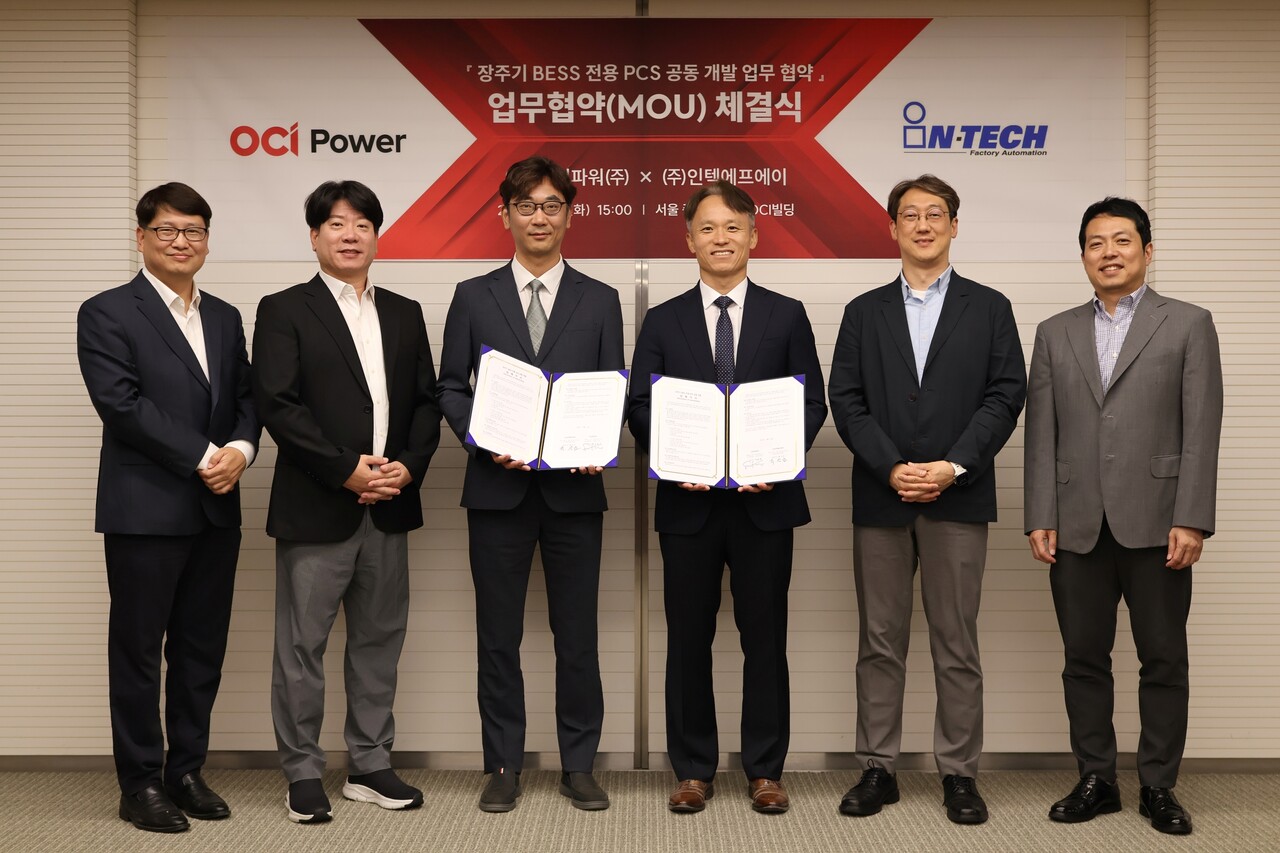
김성엽 OCI파워 대표(오른쪽 세 번째)와 주성남 인텍FA 사장(왼쪽 세 번째)이 협약 후 기념촬영을 하고 있다. [제공=OCI파워]태양광 인버터 전문기업 OCI파워(대표 김성엽)는 15일 서울 소공동 OCI빌딩에서 ESS 솔루션 전문기업 인텍에프에이와 함께 ‘장주기 BESS 전용 PCS 공동 개발’에 대한 업무 협약을 체결했다.이번 협약을 통해 양사는 최근 재생에너지 확대 기조에 맞춰 LFP 배터리 기반의 장주기 BESS 전용 전력변환장치(PCS)를 공동 개발하고 시제품 제작, 인증, 양산체계 구축 등에 협력한다.이를 통해 국내외 BESS 사업모델을 발굴하고 오는 2030년까지 새 정부의 재생에너지 확대와 계통 안정화 대응을 본격화한다는 계획이다. 특히, PCS 세부 사양 설계·개발·생산에 이르는 전 과정을 국내 기술력과 생산시설을 기반으로 양사의 역량을 동원하게 된다.김성엽 OCI파워 대표는 “장주기 BESS 사업은 새 정부의 재생에너지 확대 정책 달성을 위한 전력계통 안정화에 필수적인 분야”라며 “이번 JDM(Joint Developing Manufacturing) MOU를 통해 자사가 보유한 PCS 기술과 생산력을 강화해 순수 국내 기술력과 생산 역량 기반의 계통안정화 기술을 확보해 안전하고 효율적인 에너지 저장 시스템 구축에 기여하겠다”고 밝혔다.한편, 장주기 에너지저장장치(BESS)는 6시간 이상 장시간 에너지를 저장·방출할 수 있는 시스템으로 재생에너지의 출력 변동성 대응 및 전력계통의 효율적 운영에 핵심적인 역할을 한다. 장주기 BESS 도입은 재생에너지 확대와 함께, 에너지 안보와 산업 경쟁력 강화를 위한 전략적 수단으로 주목받고 있다. 전문가들은 피크 시간대 전력 수요 대응, 송배전 인프라 최적화, 비상 전원 확보 등 측면에서 BESS의 중요성을 강조하고 있다.뉴스본문 : 전기신문 

View Details
[Interview] OCI Power: From the U.S. and Japan to the Global Market
Blog

[Interview] OCI Power: From the U.S. and Japan to the Global Market

Interview with Yoo Beom-jun: How Does OCI Power Build Competitiveness in Overseas MarketsSuccessfully carrying out overseas projects requires more than expertise in a single area. Professionals need to be able to work with numbers while communicating effectively with others. Yoo Beom-jun, Head of the Strategic Sales Division, describes people with these capabilities as “ambidextrous talent.”His point is that professionals need to go beyond expertise in a single field and develop a broad understanding of other areas in order to remain competitive in global business. ▲ Yoo Beom-jun, Head of the Strategic Sales Division, OCI PowerAnother key point Yoo emphasized alongside “ambidextrous talent” is people development. He believes it is important to build an organization where people can learn from one another and grow together. He hopes OCI Power will become a company where employees think, “There are so many great people here. I can grow here, too.”So, how do OCI Power employees actually develop projects in overseas markets? We spoke with Yoo Beom-jun, Head of the Strategic Sales Division, about everything from how overseas projects get started to the company’s future business direction.Q. Could you explain how an overseas project typically progresses?A. Broadly speaking, you can think of it as five stages: opportunity development, project feasibility review, proposal and contract, EPC/installation/commissioning, and O&M. ▲ Overseas Project Development Process When an overseas project begins, the first step is identifying opportunities in the local market. We can identify opportunities ourselves, but we can also leverage the OCI brand. Local buyers or partners may introduce us to opportunities for target solar power plants or ESS projects. That is the first stage.The second stage is technical review. Specifications and environmental conditions vary from country to country, so we review the specifications of inverters and ESS equipment accordingly. In particular, when carrying out an EPC project, we assess the project’s feasibility by analyzing the expected return on investment.The third stage is proposing terms such as pricing, delivery schedules, warranties, and local after-sales service conditions, while also reviewing potential risks. Once these conditions are agreed upon, we enter into a contract with the project owner, which may be a government agency or a private developer.Once the contract is signed, we move on to the fourth stage: EPC. We first conduct engineering and design, then procure equipment based on the design and proceed with construction. We subsequently export our products, install them on site, and handle grid connection and commissioning.The final stage is O&M. Once a power plant begins operation, equipment issues may occur. We therefore provide maintenance services so that we can respond quickly to equipment failures in the local market.Q. Do you also directly propose projects?A. Of course. We also develop and propose projects ourselves.When government-supported programs or other construction companies in Korea explore overseas opportunities, we identify potential projects. Because we both carry out EPC projects and supply and distribute equipment, we can collaborate with engineering or construction companies to win projects or work with other EPC contractors.More specifically, we may approach a partner by saying, “There is an opportunity like this in this particular country and region. Would you like to work on it together?” Once we agree on the terms, the partner handles the design, while we provide quotations and supply equipment such as inverters, modules, and ESS, generating sales from the project.If we undertake the EPC project ourselves, we can generate margins from EPC, equipment supply, and O&M, which creates greater revenue potential but also involves more risk.By contrast, if we simply distribute equipment, the revenue is generated from the equipment supply, followed by after-sales service, resulting in relatively lower risk.However, if the total project cost is considered 100, the inverter accounts for less than 10%. The majority consists of land, construction and installation costs, as well as other equipment such as PV modules. When profitability and overall project feasibility are considered, it becomes easier to understand why we pursue EPC projects rather than simply supplying inverters.Q. Are there specific areas you focus on depending on the country?A. Since regulations and other conditions differ by country, it is naturally necessary to establish strategies tailored to each market.The U.S. is a large country with large-scale sites and increasingly high-capacity projects. As a result, a large number of our products have been deployed there, making the U.S. our largest source of sales.From an industry-trend perspective, the rapid expansion of AI data centers in the United States is driving a tremendous increase in electricity demand and rising electricity prices, particularly in major regions such as Texas. Even under the current administration’s policy direction, renewable energy continues to expand as the country seeks to meet this explosive growth in power demand.In addition, many projects installed 15 to 20 years ago are approaching the end of their operating lives. As a result, demand for repowering—replacing existing inverters with newer, higher-efficiency equipment—is also increasing significantly.In Japan, more than 200 units of our 500 kW-class medium- and small-sized inverters supplied since the 2010s have provided a stable foundation for our business.The Japanese solar market requires high-quality solutions with sophisticated grid interconnection capabilities and suitability for self-consumption systems. Products must also meet strict local standards, including JET certification.Considering Japan’s mountainous terrain and limited land availability, OCI Power is focusing on rooftop solar, distributed microgrids, and the market for replacing aging inverters. At the same time, we are expanding sales of key components and inverters through collaboration with local O&M partners, further broadening our presence in the market.The European market also has different characteristics from country to country. However, business opportunities have recently been expanding beyond simple component and standalone equipment sales into the EPC sector. As we continue to receive inquiries from the region, we are strengthening our response while exploring a range of business opportunities.Q. As you expand your business in the U.S. market, what differentiates OCI Power from global competitors?A. When entering the U.S. market, technological competitiveness in inverters is a basic requirement, but technology alone is not enough to establish a presence in the market.The U.S. currently maintains strong trade regulations that effectively restrict the entry of Chinese-made products and equipment containing components from ineligible countries of origin. Even if a product is completed in a designated eligible importing country, delivery may be rejected if it contains components originating from countries such as China. This requires detailed country-of-origin management and the ability to respond effectively to regulatory requirements.In addition, companies must complete local certification processes that can take at least a year, as well as meet strengthened grid interconnection standards and stringent cybersecurity requirements.Global Chinese competitors such as Huawei have strong price competitiveness. However, they currently face significant limitations in entering the U.S. market or, even if they enter, in receiving certain U.S. government subsidies or tax benefits. This can ultimately increase the overall cost of a project.Compared with leading European companies such as Germany’s SMA, OCI Power has a distinct advantage in its close collaboration with its U.S. local entities and affiliated-company network, allowing us to create strong synergies at the group level.Ultimately, OCI Power provides integrated services based on strong synergies among group companies. By covering the entire process—from business development and the distribution of equipment for solar PV and ESS projects to O&M—we can enhance our ability to respond to regulatory requirements and on-site needs.Our past experience of directly entering the U.S., establishing a local entity, developing projects, and carrying out EPC projects involved risks. However, it also gives us the ability to reliably deploy the equipment we manufacture and distribute ourselves, such as inverters, at project sites.Q. Are there any projects you would like to secure now or pursue in the future at OCI Power?A. Until now, OCI Power has primarily focused on a business model centered on inverter manufacturing and equipment supply to project sites.However, selling standalone inverters has clear limitations in terms of revenue growth and diversification. Furthermore, as the global renewable energy and solar industries become increasingly sophisticated, remaining solely an equipment supplier carries significant risks in terms of business scalability and diversification of revenue structures.Therefore, we first began expanding our business in Korea by taking the lead in project development ourselves and supplying OCI Power equipment in collaboration with capable construction companies. Initially, we focused on small-scale projects and established a business structure that could generate sales and project track records as quickly and reliably as possible.Based on our successful experience with large-scale equipment supply and EPC projects in Korea, we now want to fully implement this business model in overseas markets as well.Currently, our overseas business still tends to focus on equipment supply. Going forward, however, we plan to expand our capabilities by directly undertaking EPC projects, starting with smaller-scale projects in global markets.In the long term, our ultimate goal is to go beyond simple equipment supply and provide comprehensive renewable energy solutions covering the entire value chain—from business development to EPC and O&M—in global markets.(Written by Yu-seon Moon, OCI Power Press Corps)

View Details
The Key Device That Completes Solar Power Generation: The Inverter
Blog

The Key Device That Completes Solar Power Generation: The Inverter

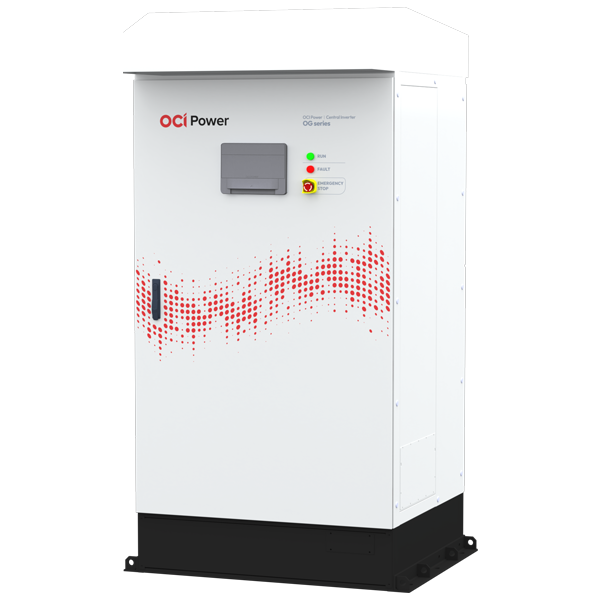
From Sunlight to Electricity: How Solar Power Generation WorksSolar power generation is a method of producing electricity by utilizing the light energy of the sun.When sunlight reaches the solar cells that make up a solar module, the semiconductor absorbs light energy, generating electrons and holes. The generated electrons and holes move in opposite directions due to the electric field inside the solar cell. Electrons move toward the n-type semiconductor, while holes move toward the p-type semiconductor, where they gather at their respective electrodes. The electrons then move through an external circuit, generating an electric current.Because solar power generates electricity using sunlight without burning fuel, it is an environmentally friendly form of power generation with no direct carbon emissions. It also produces very little noise or vibration during operation, allowing it to be used in a variety of settings, including homes and factories.However, electricity generated by solar cells cannot be used directly. To supply this electricity to the grid, it must first be converted. This is where the inverter plays a key role.[Term 1] Grid: An electricity supply network that delivers electricity generated by power plants to places where it is needed, such as homes and factories.The Key Device Connecting Solar Cells to the Grid: The InverterElectricity generated by solar cells is in the form of direct current (DC). However, the power grid uses alternating current (AC). An inverter converts the DC electricity generated by solar cells into AC electricity and supplies it to the grid.[Term 2] Direct Current (DC): A form of electricity in which electric current flows continuously in one direction.[Term 3] Alternating Current (AC): A form of electricity in which the magnitude and direction of electric current periodically change over time.The role of an inverter goes beyond simply converting electricity. Solar power generation is inherently intermittent, as the amount of electricity generated varies depending on weather and solar irradiance.In such conditions, the inverter controls the voltage and frequency of the electricity supplied to the grid, helping maintain stable power quality even when power generation fluctuates. It also monitors operating conditions in real time and protects the system when abnormalities occur.Types of Inverters: String Inverters and Central Inverters▲ String Inverter                                                                                                           ▲ Central InverterInverters can broadly be divided into string inverters and central inverters. Both convert DC electricity generated by solar cells into AC electricity, but they differ in how they process and manage power.A string inverter uses a distributed architecture in which an inverter is installed for each string. Because the power from each string can be independently converted and managed, string inverters are relatively easy to maintain and are suitable for small-scale solar systems, such as residential and commercial buildings.[Term 4] String: An electrical circuit consisting of multiple solar modules connected in series.A central inverter, on the other hand, uses a centralized architecture in which multiple strings are connected to and managed by a single inverter. It can integrate and manage the power generated by multiple strings and is capable of reliably converting large amounts of electricity, making it primarily suitable for large-scale solar power plants.So, which Korean company develops and manufactures these inverters? OCI Power.OCI Power’s Inverter Technology                ▲ OCIP 350 String Inverter                                           ▲ OG 4400 Central InverterOCI Power conducts inverter R&D at its R&D Center in Seoul and manufactures its products at its own facility in Gunsan, Jeollabuk-do.OCI Power’s inverter technology has received international recognition for its performance. Its inverters have been certified by the globally recognized certification body Bureau Veritas for a power conversion efficiency of 98.7%, demonstrating world-class performance.In the central inverter sector, OCI Power supplied Korea’s first DC 1,500V inverter in 2020 and has since expanded its product portfolio from 1.1 MW to 4.4 MW to meet the requirements of a wide range of projects.Based on this technological expertise, OCI Power has supplied inverters to various solar projects in Korea and overseas, including a large-scale 600 MW solar power plant in Texas, USA. Today, the company continues to expand its competitiveness in the power conversion market, backed by cumulative installations exceeding 12 GW worldwide.As the transition to renewable energy accelerates with the expansion of AI data centers and efforts toward carbon neutrality, the importance of power conversion technology continues to grow. Building on its accumulated technological expertise and extensive project experience, OCI Power is contributing to the transition toward sustainable energy.(Written by Jae-in Shin, OCI Power Press Corps)  

View Details
Why OCI Power Is Gaining Attention in the Era of AI Data Centers
Blog

Why OCI Power Is Gaining Attention in the Era of AI Data Centers

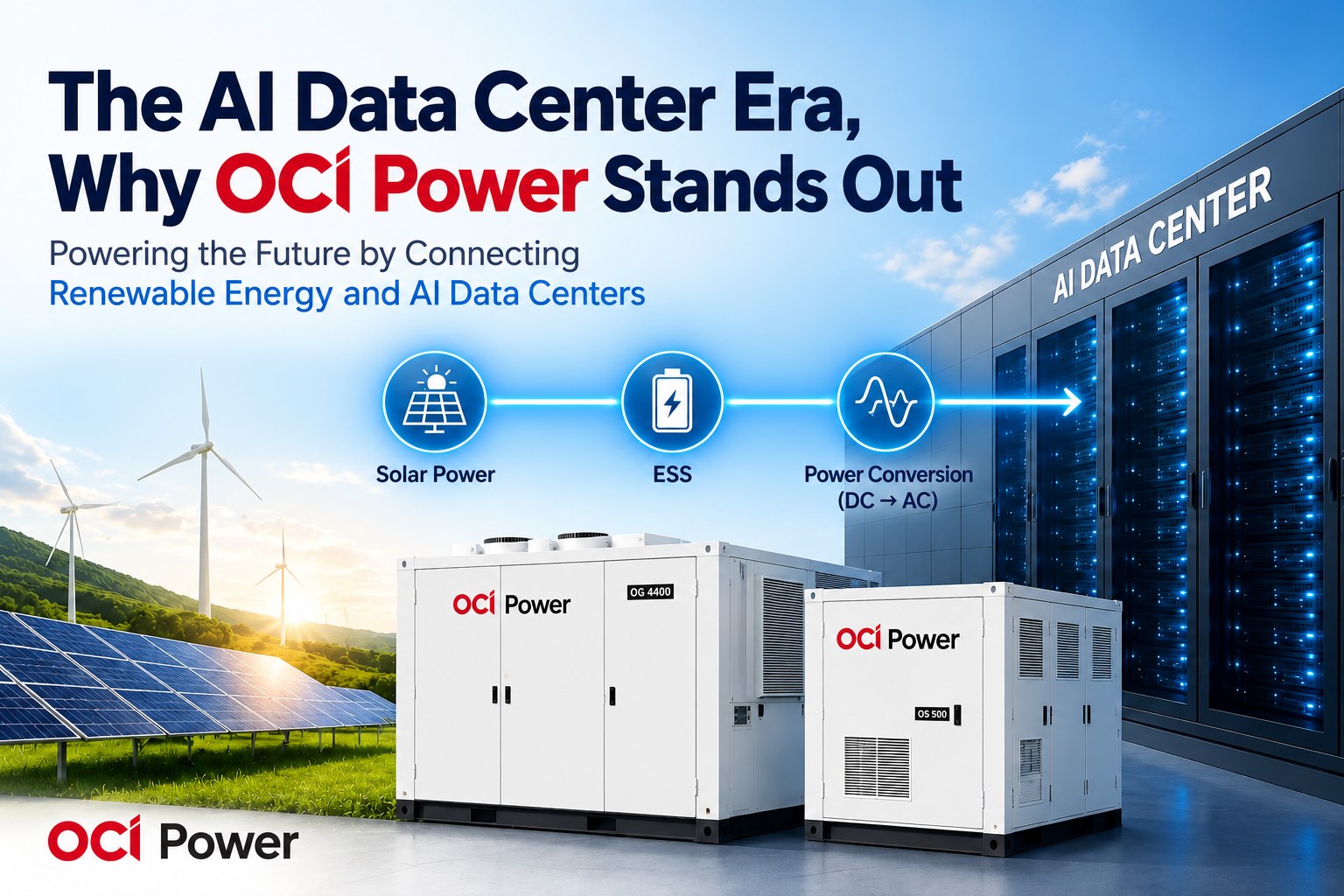
Powering AI: The Critical Role of ElectricityWhen we talk about the AI industry, the first things that often come to mind are semiconductors and GPUs. However, the true foundation supporting the AI era is electricity.As AI technology continues to advance, AI data centers are rapidly expanding, driving a significant increase in electricity demand. At the same time, as carbon neutrality has become a global priority, data center operators are facing the challenge of meeting growing power demand while also reducing carbon emissions. In response, global technology companies, including Google and Microsoft, are actively incorporating renewable energy into their AI data center operations.The Technology Connecting Renewable Energy with AI Data CentersSolar power generation is characterized by intermittency, meaning that the amount of electricity generated varies depending on sunlight conditions. For example, power generation may decrease at night or on cloudy days, making it difficult to produce sufficient electricity.To address this limitation, an ESS (Energy Storage System) stores excess electricity generated during the day and supplies it to the grid when solar power generation is insufficient, helping ensure a more stable power supply.However, the electricity generated by solar modules and the electricity stored in an ESS are both in the form of direct current (DC), which cannot be used directly by AI data centers. To be used by data centers, it must first be converted into alternating current (AC). Solar-generated electricity is converted from DC to AC by an inverter, while electricity stored in an ESS is converted by a PCS (Power Conversion System).Renewable energy does not end with power generation. For it to be actually utilized by AI data centers, electricity must be converted into a form that can be used by the facility. At the center of this process is power conversion technology.*[Term 1] Direct Current (DC): A form of electricity in which electric current flows continuously in one direction.*[Term 2] Alternating Current (AC): A form of electricity in which the magnitude and direction of electric current periodically change over time.“If I had to highlight just one of OCI Power’s technologies, I would introduce our power conversion technology.Inverters and PCS are, after all, equipment based on power conversion technology.” — Kim Seong-yeop, CEO of OCI Power                       ▲ OG 4400 High-Efficiency Modular Central Inverter                   ▲ OS 500 PCS for ESS                      OCI Power’s Global StrategyOCI Power identifies the United States as a key market for expanding its global business.Recently, the United States has been moving to strengthen regulations on Chinese-made power conversion equipment, including solar inverters, from a national security perspective. Because solar inverters and ESS PCS are critical components connecting renewable energy to the power grid, not only product performance but also the country of origin has become an important consideration.Against this backdrop, OCI Power is strengthening its competitiveness in the U.S. market based on its accumulated technological expertise and the trust associated with “Made in Korea.”The United States also saw rapid development of large-scale solar power plants throughout the 2010s, and OCI Power supplied inverters to numerous projects. As many of these plants have now been in operation for more than 10 years, demand for repowering is gradually increasing. OCI Power sees this growing demand as a new growth opportunity in the U.S. market, aligning with the company’s broader vision for future growth.*[Term 3] Repowering: A business involving the replacement of aging equipment at an operating power plant with newer equipment to improve power generation performance and efficiency.“OCI Power aims to continuously expand its systems and services based on our product competitiveness and ultimately grow into a company that provides integrated solutions to customers.”— Kim Seong-yeop, CEO of OCI PowerOCI Power continues to strengthen its competitiveness through ongoing technological development and global market expansion. As the importance of power infrastructure grows alongside the expansion of the AI industry, all eyes are on the future OCI Power is building.(Written by Jae-in Shin, OCI Power Press Corps)

View Details
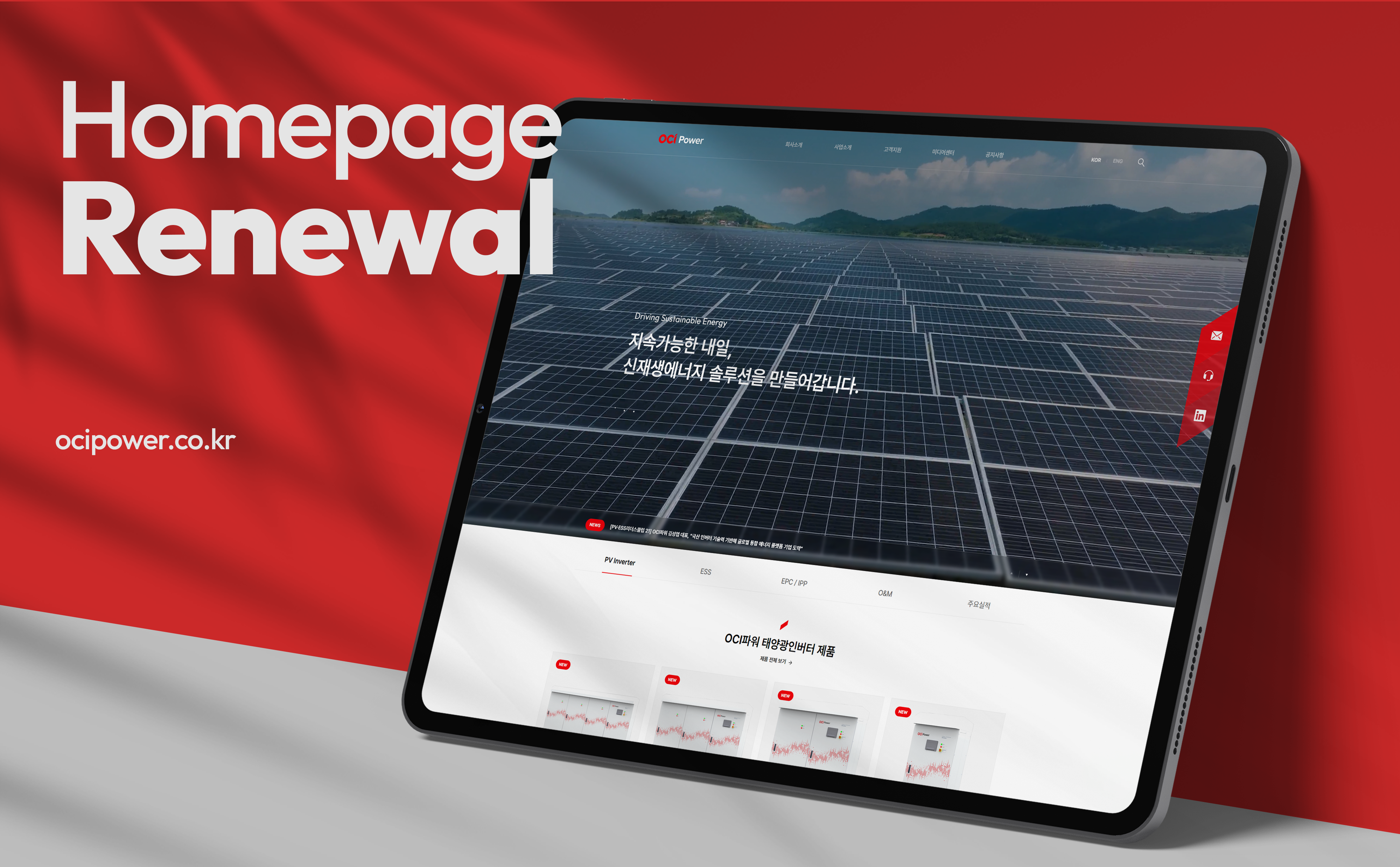
OCI Power Official Website Renewal
Blog

OCI Power Official Website Renewal

Hello from OCI Power.We are pleased to announce the launch of our newly redesigned official website ✨, created to provide our customers with a more convenient experience and easier access to the information they need.✅ Easier and Faster Access to InformationThe primary goal of this website renewal was to create a more customer-centric and user-friendly experience. 👌 We have simplified and streamlined the website navigation, making it easier and faster to find the information you need. The new website incorporates OCI Group’s brand identity and features a responsive design optimized for PCs, mobile devices, and tablets.The website has also been reorganized to provide intuitive access to information about OCI Power’s products, solutions, and services, allowing visitors to quickly find the resources and information they are looking for.✅ New Content PagesTo strengthen communication with our customers and provide richer insights into OCI Power and the renewable energy industry, we have introduced several new content sections. Newsroom: Stay up to date with the latest news and press releases from OCI Power. → Visit the Newsroom Data Room: Access and download our company profile, product brochures, technical materials, and other resources. → Visit the Data Room Blog: Explore the latest solar industry trends, technical insights, and stories from OCI Power. We will continue to share useful and relevant content on a regular basis. → Visit the BlogThrough these new content channels, we aim to provide our customers with practical, valuable information while creating a platform that connects OCI Power more closely with our customers and the solar energy industry.✋ Our Commitment Going ForwardOCI Power continues to drive innovation toward a sustainable future by providing key solutions for the solar energy industry, including PV inverters, ESS PCS, EPC, and O&M services.With our renewed website and newly launched content channels, we will continue to develop our website into a valuable communication platform where customers can access useful information and expert insights.We sincerely appreciate your continued interest in and support for OCI Power as a trusted provider of renewable energy solutions.Thank you. 🙇

View Details